Logo
25/08/2026
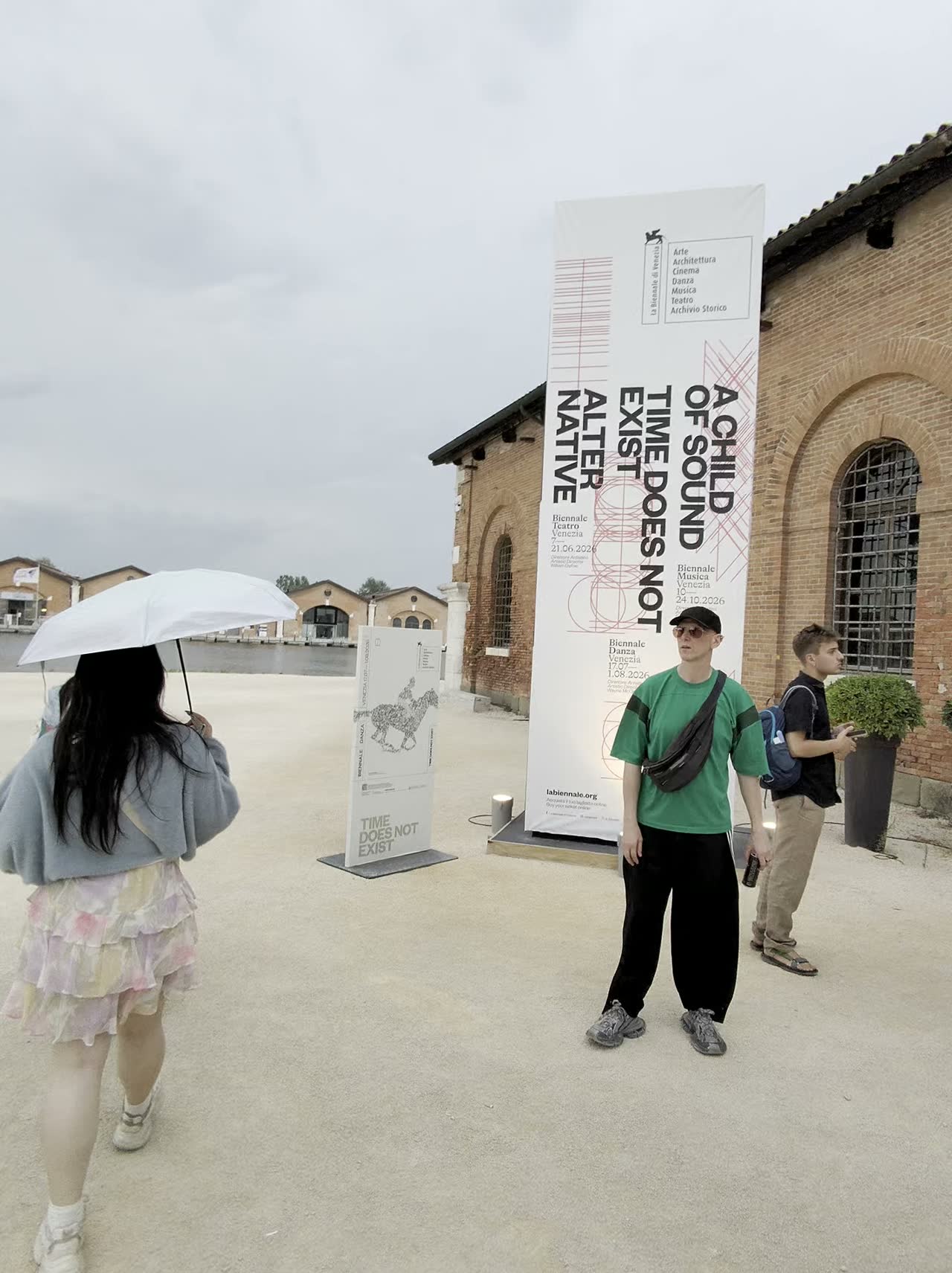
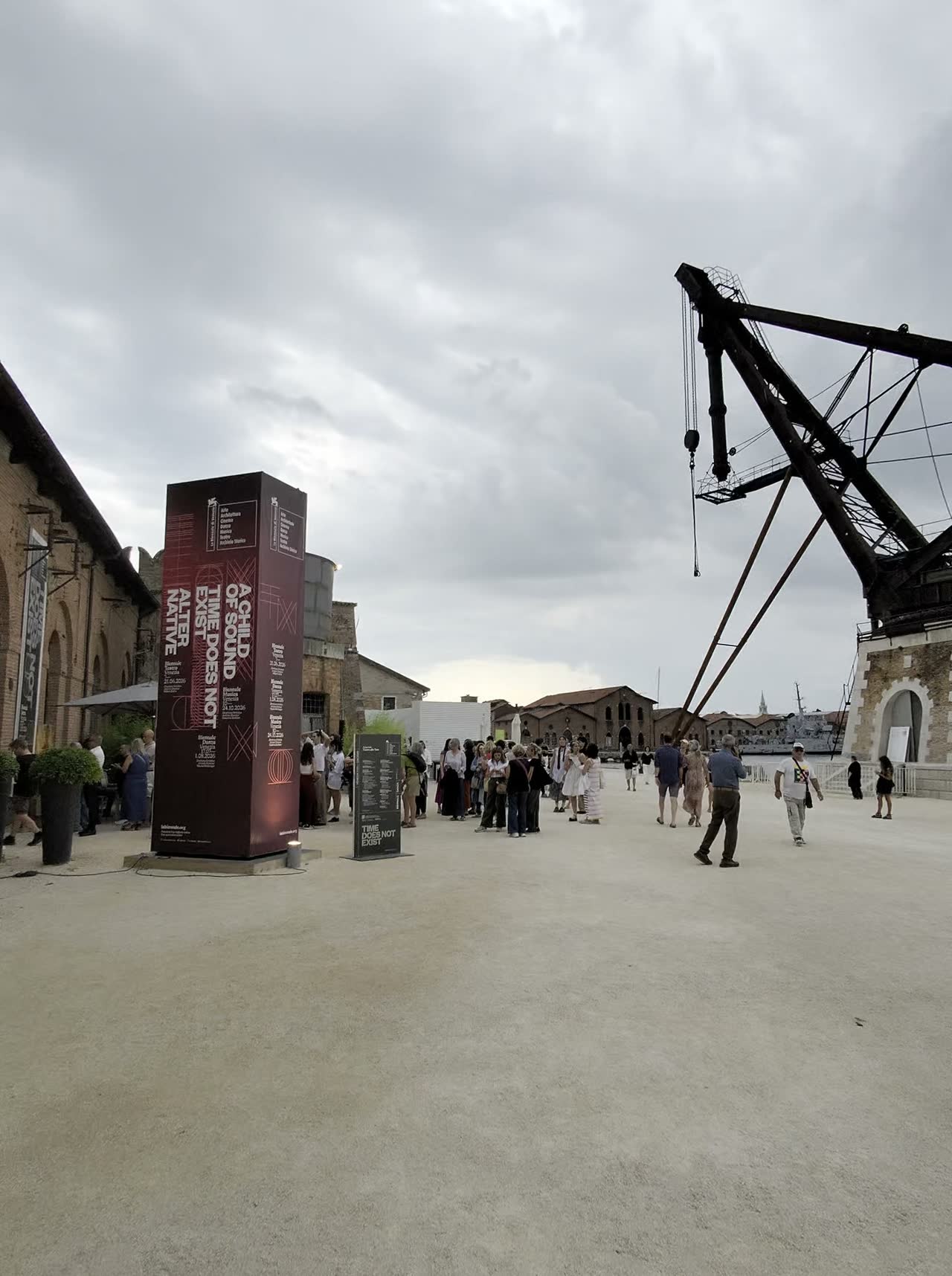
Time Does Not Exist. Postcards from Biennale Danza
Biennale Danza 2026 · "Il tempo non esiste / Time Does Not Exist"
Loading...
common.heroVideoAlt
Loading...
common.videoAlt
Define Power

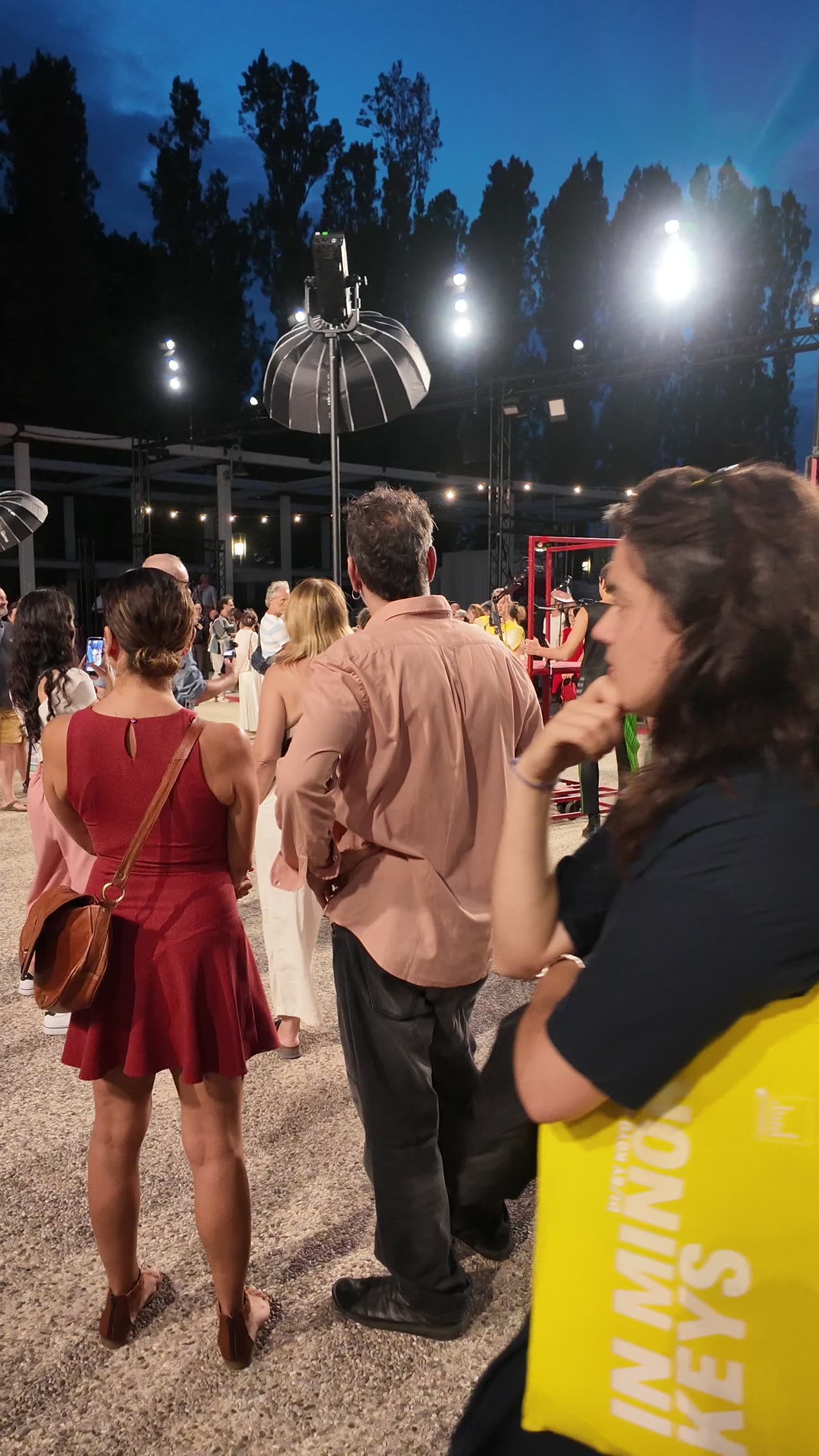
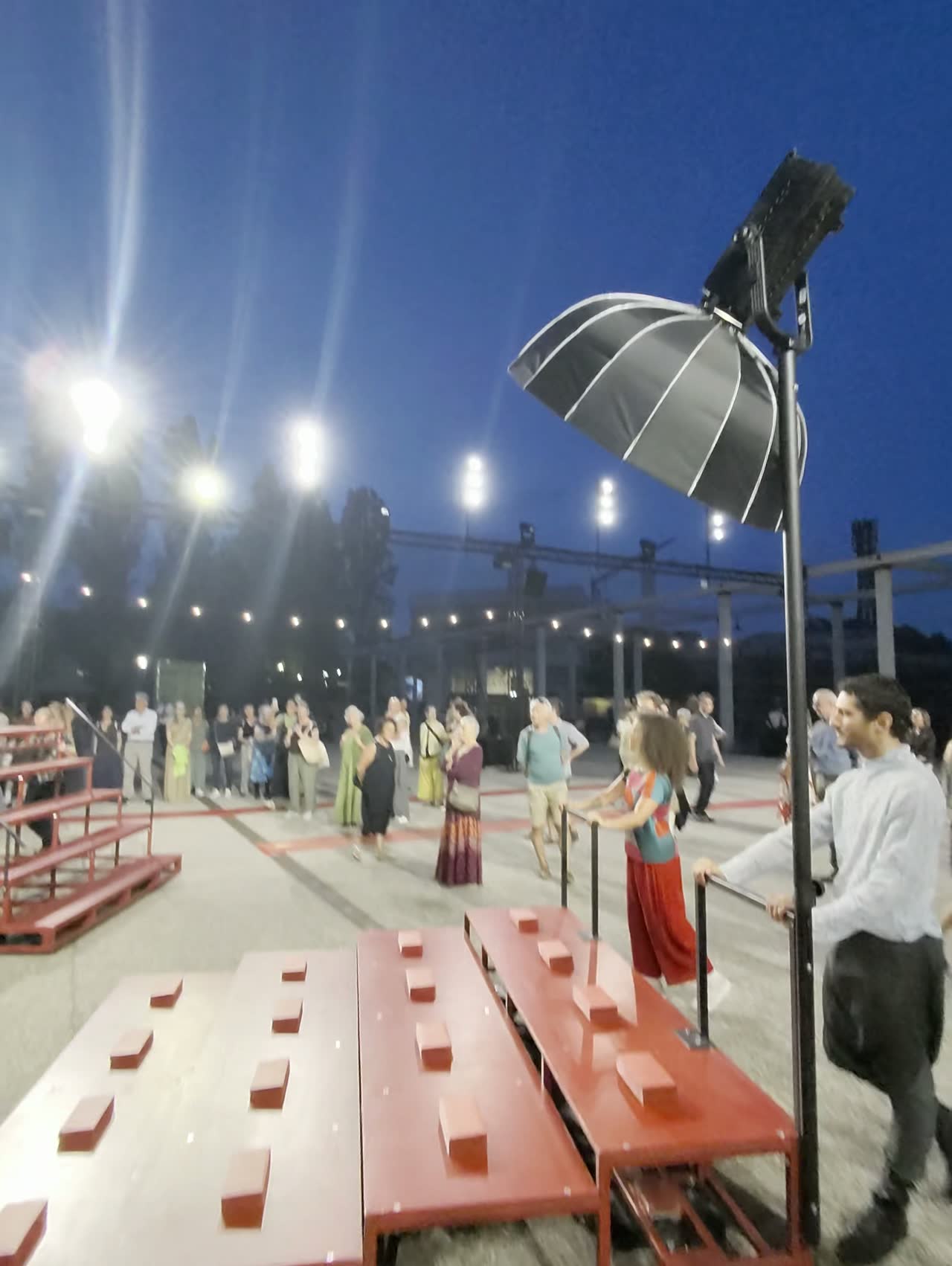
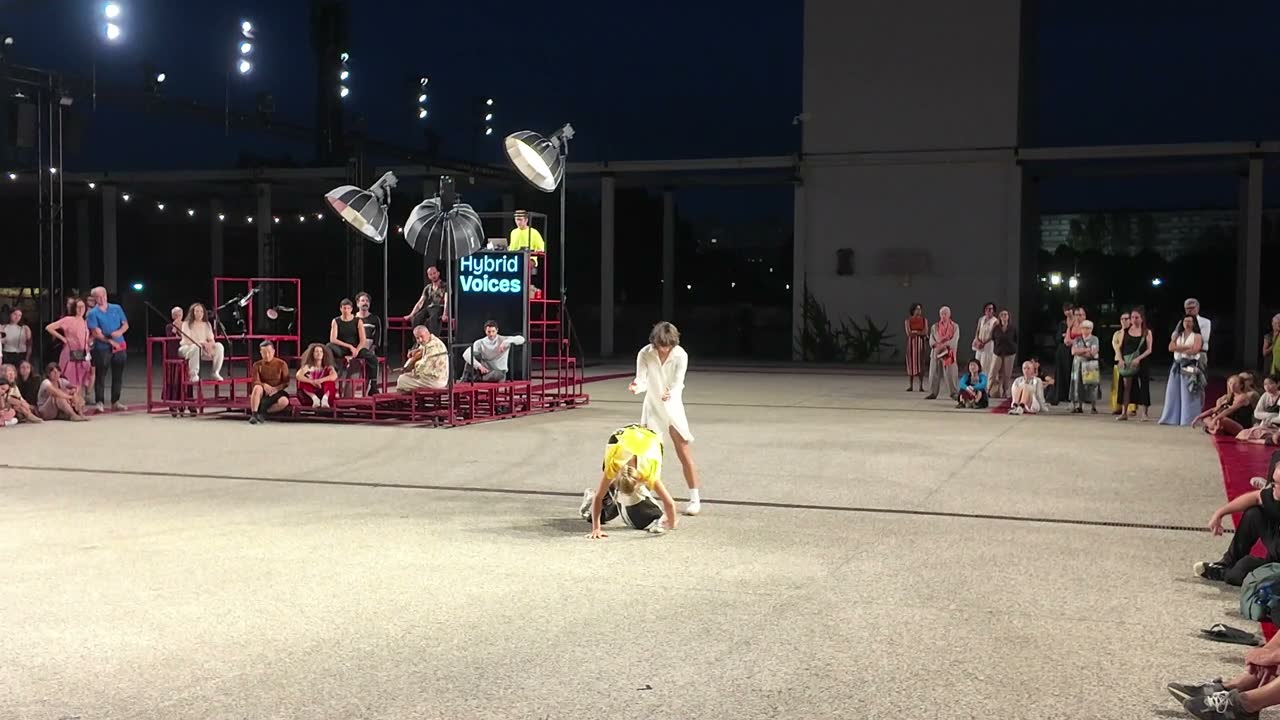
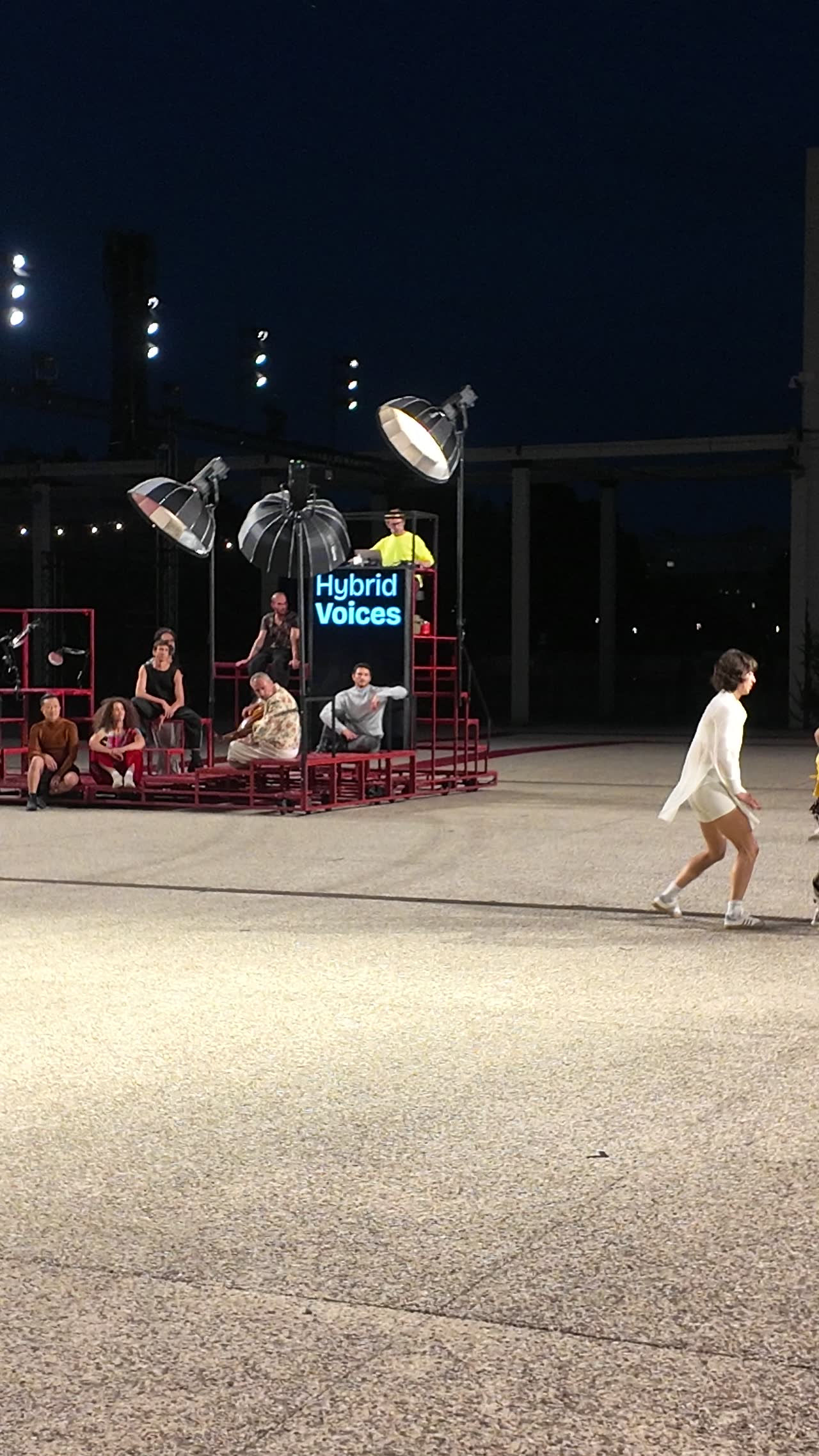
Some journeys begin nothing like you imagined and perhaps that is exactly why they begin well. On Friday evening, straight from the airport, instead of heading towards San Marco we drove the opposite way: to Mestre, to a vast concrete square that appears on no postcards. To Piazzale Divisione Acqui, a square named after the Italian division slaughtered by the Wehrmacht on Cephalonia in 1943 when, after the armistice with the Allies, it refused to surrender its weapons to the Germans. How aptly the venue had been chosen, I was yet to find out.


For now, I saw a crowd, red grandstands knocked together from scaffolding, and screens pulsing with the words:


Definire il potere. Define Power.


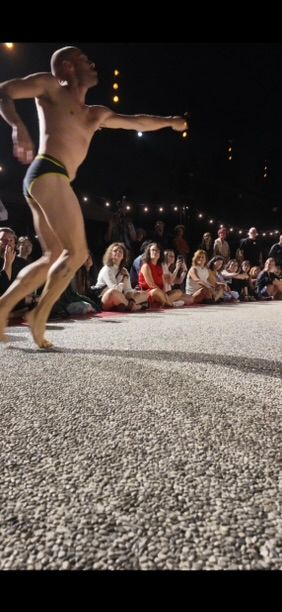
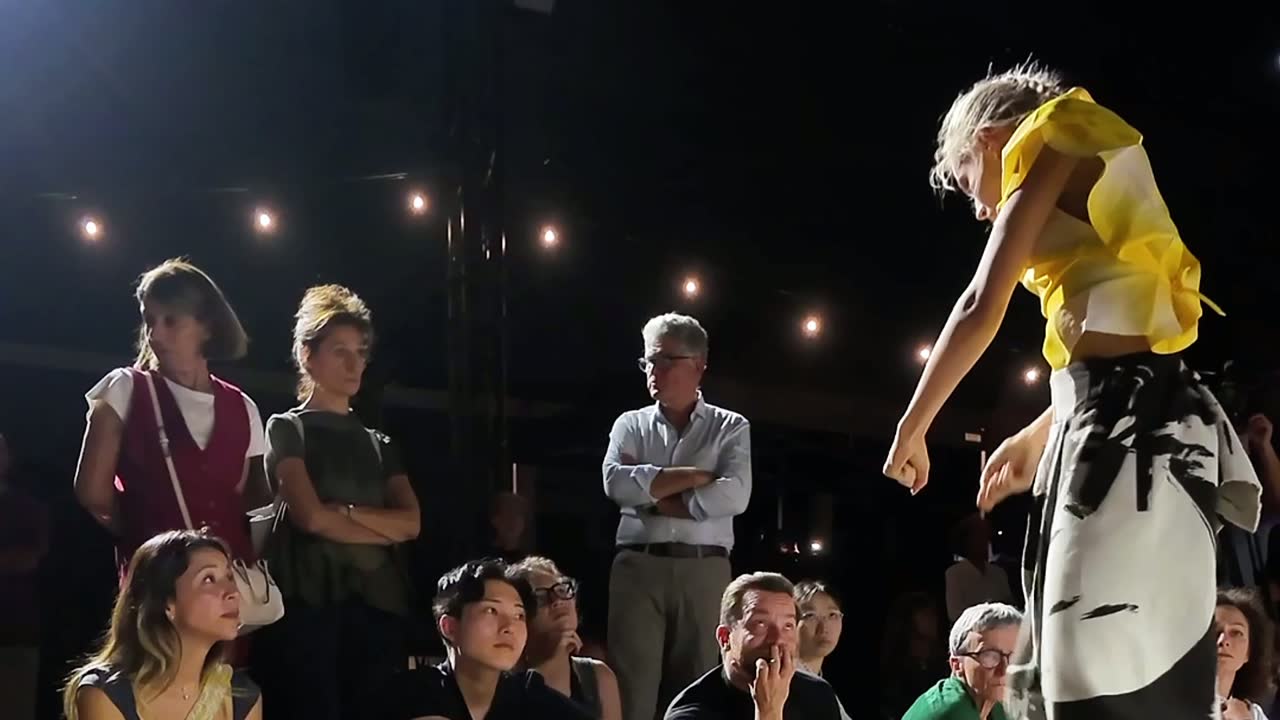
That is how our Biennale Danza began. The twentieth edition of La Biennale di Venezia's festival of contemporary dance, whose curator, Wayne McGregor, gave it the motto "Il tempo non esiste / Time Does Not Exist". Our first encounter with it, though, was not the velvet of a theatre box but "Dance People" by Omar Rajeh, Mia Habis and the Maqamat company: a hundred minutes you could not simply call a show, because — as the programme fairly warned, it "is not a performance to observe from afar. It's a gesture to share. A space to inhabit".


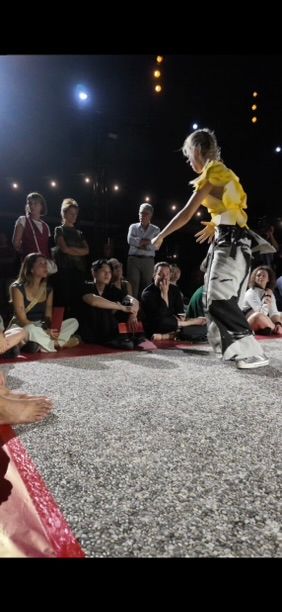
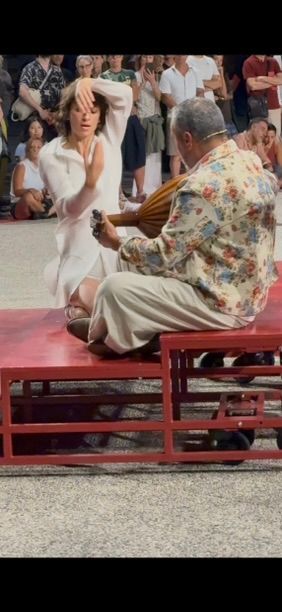
Live music: Mathias Delplanque's electronics, Ziad El Ahmadie's oud and the voice of Abdul Karim Chaar circled the square just as the dancers did. Ten artists from different parts of the world, from different traditions of movement. Rajeh calls his practice "Circling": the body is not one body but many. Many centres of gravity and of meaning, many points of communication. We watched from up close, at arm's length, as theory turned into pure expression: tension, fall, rise, run.


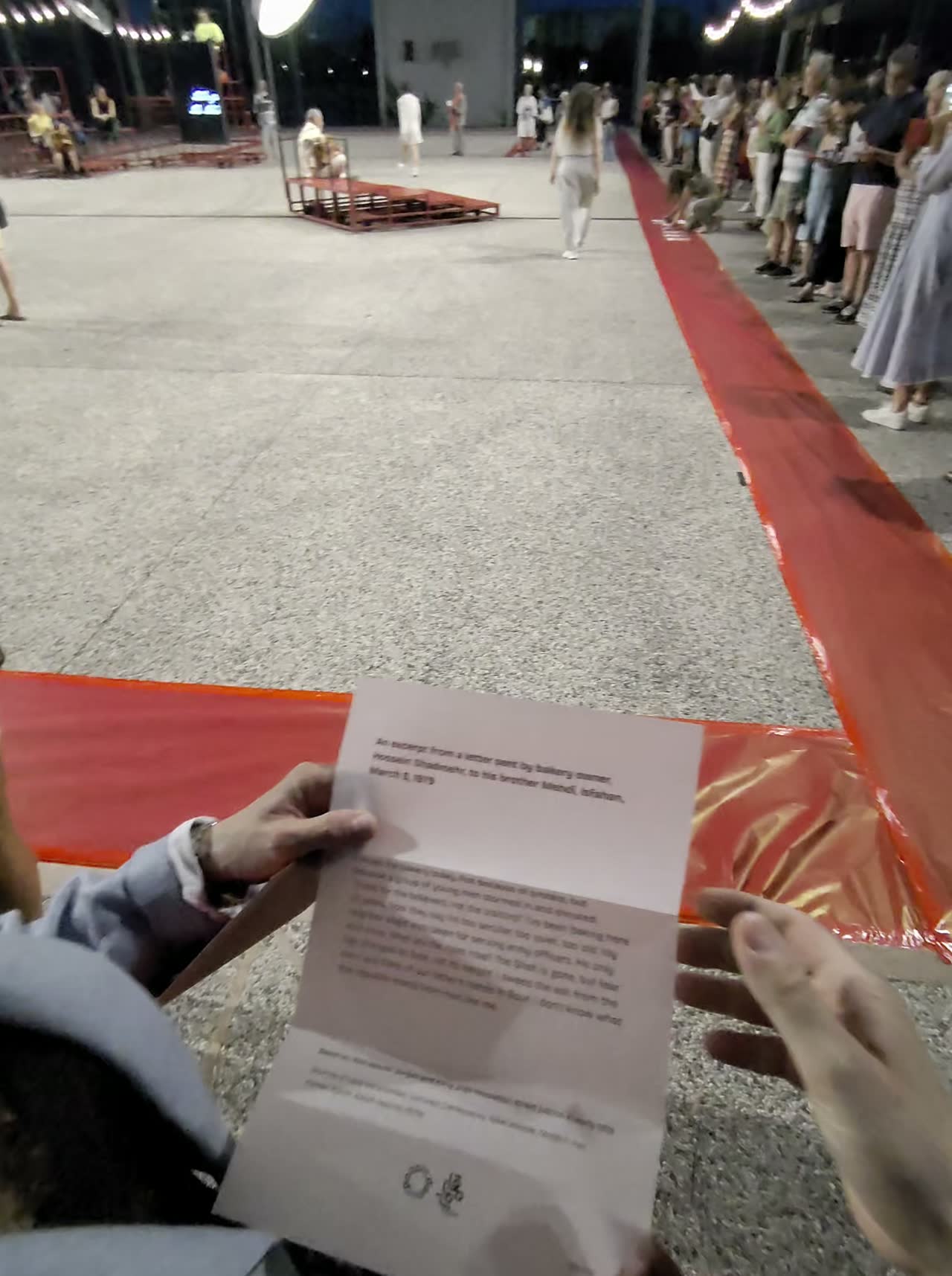
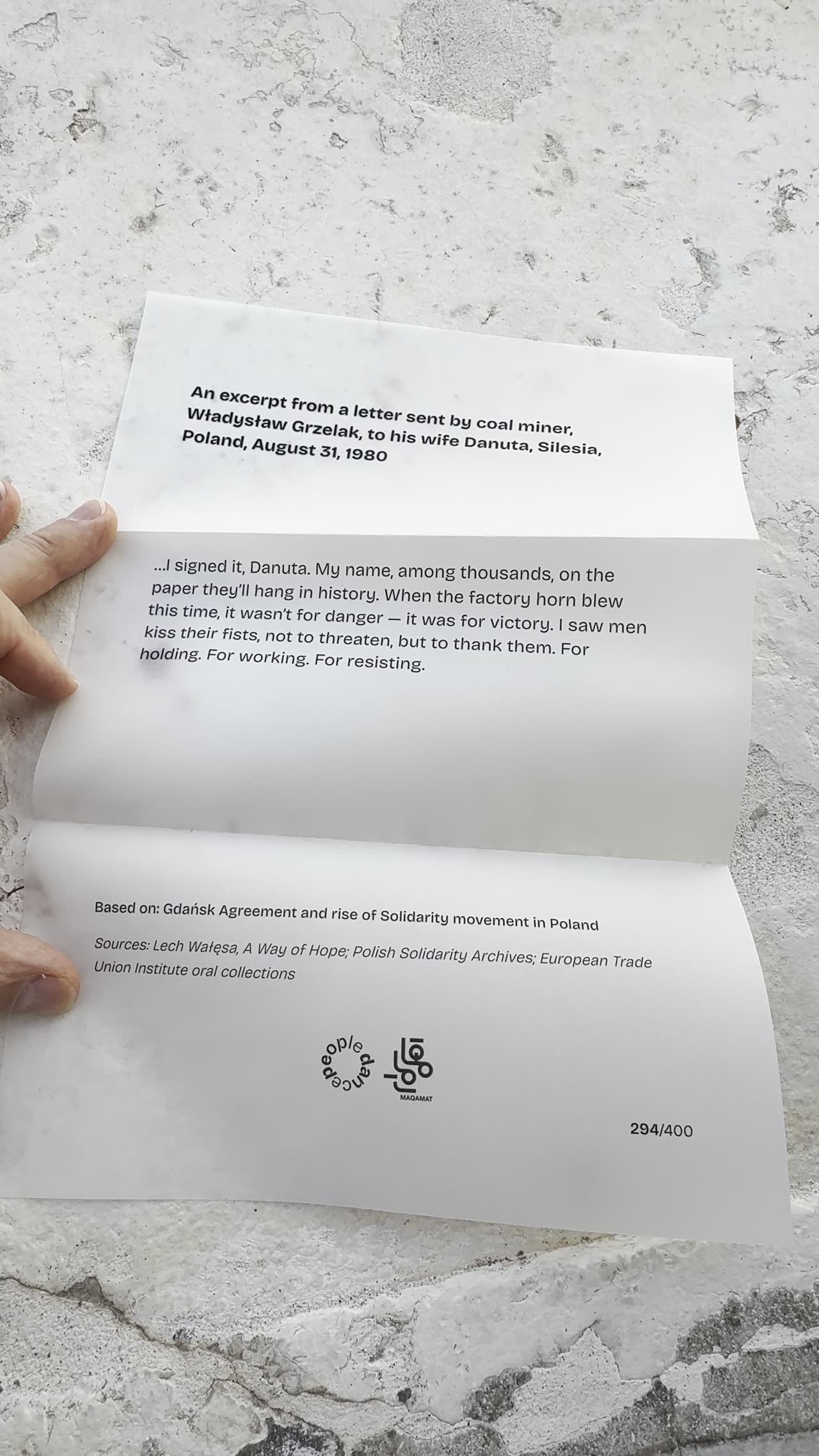
And then someone pressed into my hand a red envelope holding a translucent sheet folded in half. Numbered like a print from a limited edition: 294/400. I unfolded it and read. First in disbelief, then with the kind of emotion that tightens the throat because it arrives without warning. "An excerpt from a letter sent by coal miner, Władysław Grzelak, to his wife Danuta, Silesia, Poland, August 31, 1980":


"…I signed it, Danuta. My name, among thousands, on the paper they'll hang in history. When the factory horn blew this time, it wasn't for danger — it was for victory. I saw men kiss their fists, not to threaten, but to thank them. For holding. For working. For resisting."


The date says everything: the day the Gdańsk Agreement was signed. At the bottom of the sheet, in fine print, the sources on which this reconstruction was based, among them Lech Wałęsa's "A Way of Hope" and the Polish Solidarity Archives. I had flown from Poland to Venice so that, on a square in Mestre, by some strange twist of fate, a Lebanese choreographer could hand me a piece of my own history. As a Pole I felt recognized,not as a tourist, but as the heir to a certain experience.


My wife received a sheet from another world and another year: an excerpt from a letter sent by bakery owner Hossein Shadmehr to his brother Mehdi, Isfahan, March 5, 1979 — seven weeks after the Shah fled, three weeks after the triumph of the revolution:


"I closed the bakery today. Not because of protest, but because a group of young men stormed in and shouted: 'Bread for the believers, not the traitors!' I've been baking here for years. Now they say I'm too secular, too quiet, too old. My neighbour was taken for serving army officers. What are the rules now? The Shah is gone, but fear changed its face, not its weight. I sweep the ash from the oven and think of our father's hands in flour. I don't know what this republic wants from men like me."


Around us, people were reading other letters, from other revolutions. And on the screens, the same screens that had ordered us to define power, names, places and dates kept returning: victims of the violence of power, from different corners of the world and different decades. Of revolts, protests, revolutions. A story we in Poland know from family archives turned out to be terrifyingly and consolingly universal at once: everywhere the same courage, the same fear changing its face but not its weight, the same factory sirens and the same empty places at the table. Rajeh, after all, knows what he is talking about: his Beirut choreographic centre, Citerne, was forcibly dismantled in 2019, and the question "What is the space of democracy?", which "Dance People" poses, is for him anything but theoretical.


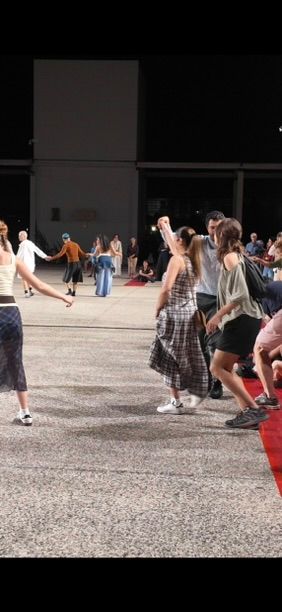
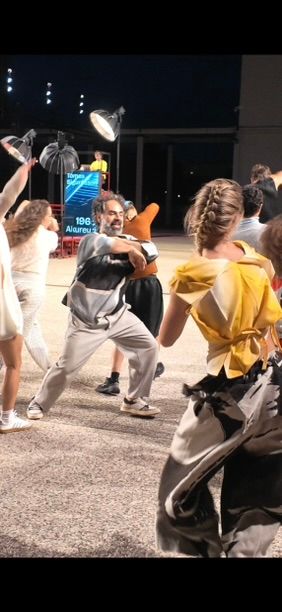
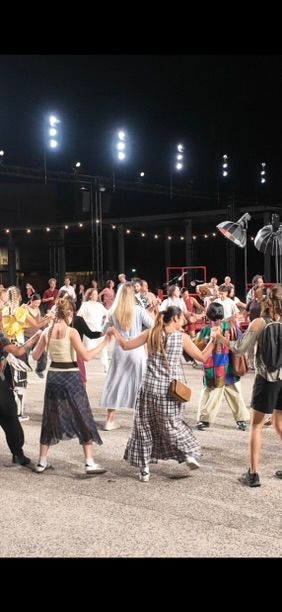
Towards the end came the thing for which, as I think today, Omar Rajeh had planned it all: the boundary between stage and audience first came loose, then simply disappeared. Dancers pulled people out of the crowd, someone pulled in a neighbour, the neighbour pulled in the next few, and… suddenly everyone was dancing: children, tourists, residents of the surrounding blocks, us. Define power. That evening, on a square bearing the name of the executed, for a moment nobody held it. Or perhaps we all did?
Loading...
common.galleryVideoAlt
Loading...
common.galleryVideoAlt
Loading...
common.galleryVideoAlt
common.galleryImageAlt
Loading...
common.galleryVideoAlt
Loading...
common.galleryVideoAlt
Come with Us to Country

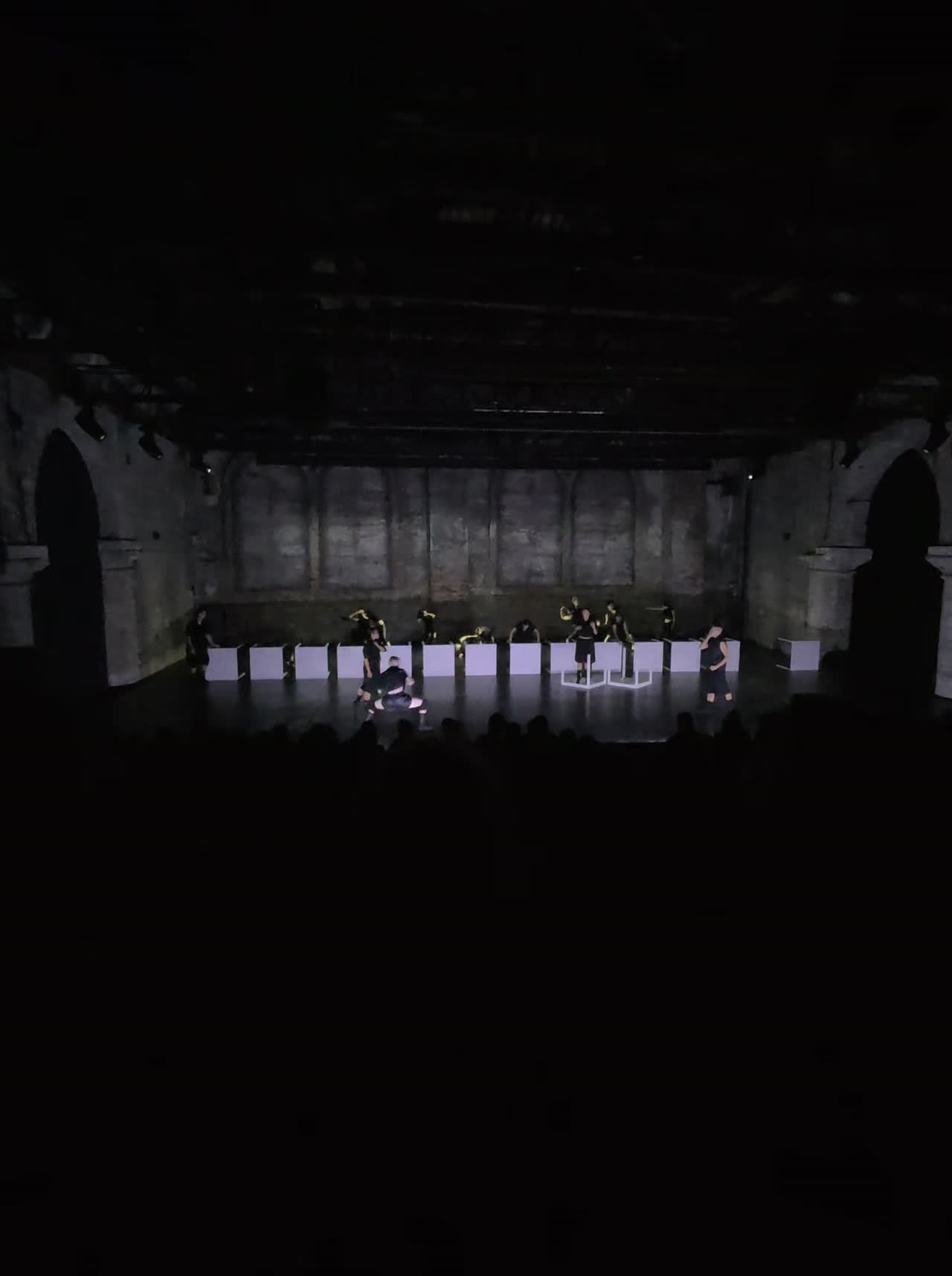
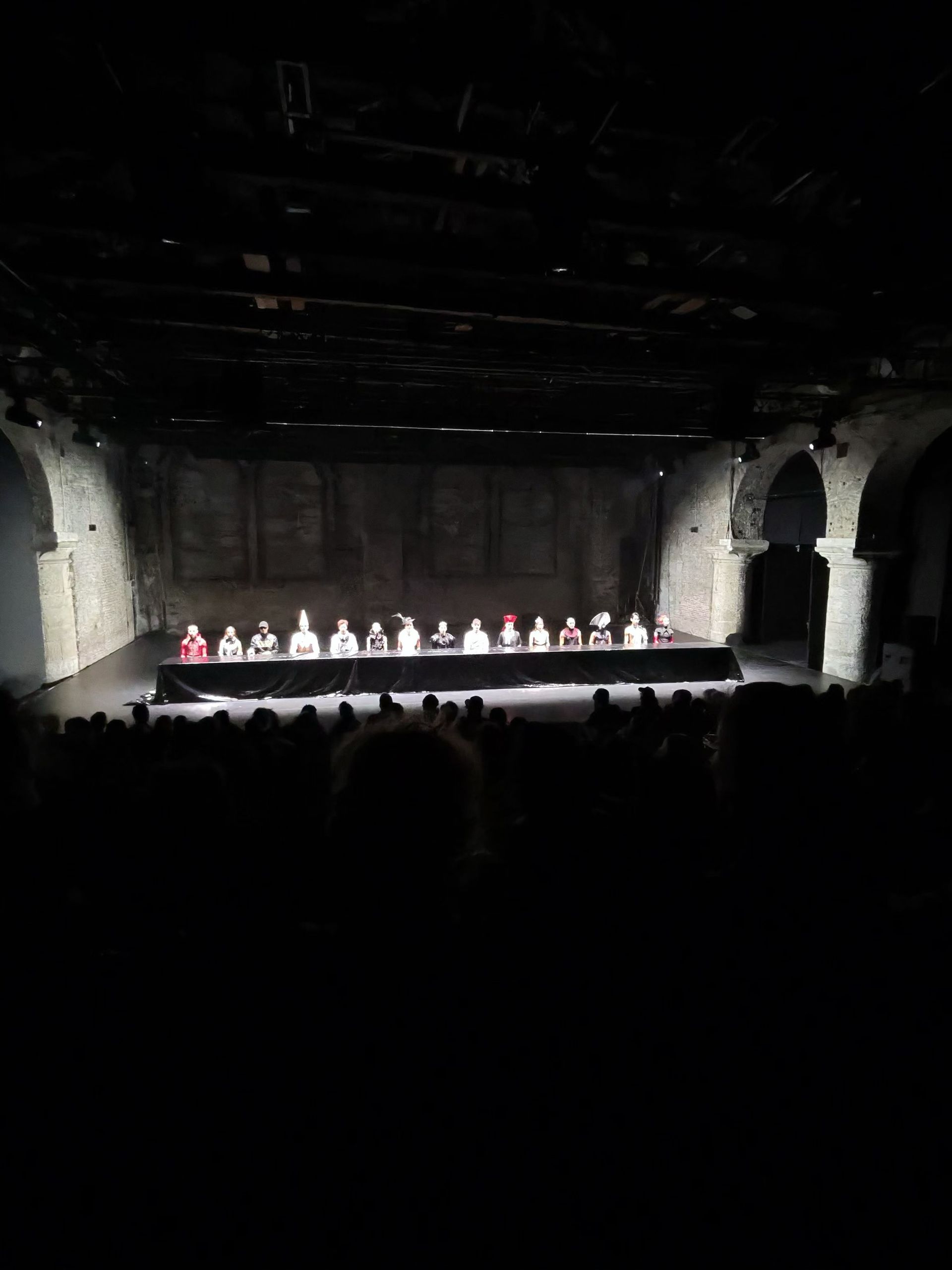
The next evening we traded the concrete of Mestre for Teatro Malibran, a stage in operation since 1678, hidden in the back lanes of Cannaregio. The European premiere of "Terrain" by Bangarra Dance Theatre: the first ensemble in the history of this award (until now, the Golden Lion for Lifetime Achievement had gone to individual masters — Cunningham, Bausch, Forsythe, Guillem…), the first Australians and the first First Nations artists to receive the Biennale Danza's Golden Lion.


The programme extended its invitation in verse:


"Come, come with us to Kati Thanda-Lake Eyre. Where the cracked salt blinds and the silence deafens. Where the long shadows sweep towards the horizon, waiting for the deluge. Come with us to Country."


Nine scenes of Frances Rings's choreography about a salt lake that is a desert for most of its life and fills with water once in a generation, and not a single word anyone needed to translate for us. Dance crosses borders and languages in a way no literature will ever match: twelve dancers embodied 65,000 years of unbroken culture and passed it on directly, bypassing the dictionary. It is also timeless, quite literally. The music of David Page, who died in 2016, still plays and — as the programme declares — "remains a living heartbeat" of this story. "Terrain" was created in 2012, the same year Australia's Federal Court recognised the Arabunna people's native title to the lands around Kati Thanda.


Accepting the Lion, Stephen Page, the man who practically built the modern Bangarra, spoke of the wounds of colonisation: "We are the conscience of this history." Born of the Munaldjali people of south-east Queensland, he trained at NAISDA and danced with Sydney Dance Company, and in 1991, at just 26, became artistic director of the very young Bangarra — leading it for 31 years, until 2022, and turning it into one of the world's most important First Nations dance companies.


Frances Rings, his successor, Bangarra's artistic director and co-CEO since 2023, put it even more simply. In a sentence that could be the motto of the entire festival: "First Nations stories belong everywhere."

Loading...
common.videoAlt
Superposition

I came for a dance festival and left with physics. In his programme essay, McGregor begins not with choreography but with Carlo Rovelli, the quantum-gravity physicist who argues that time is not a river flowing uniformly through the universe but a web of relations between events; that our "before" and "after" are a property of perspective rather than of the world. It was this motto that led me to Rovelli and his "The Order of Time". I may write about the book separately — it deserves more than a paragraph.


Here, one thing will do: dance embraced all of this long before the physicists.


Omar Rajeh claims that:


"when space is not defined by shape or fixed form, then time no longer follows the same logic. In my practice, I do not approach space as a fixed form, but as a field of relationships that is constantly shifting. In this perspective, time grows, widens, narrows down and builds a rhythm that is not necessarily confined to a fixed tempo. Time, in this sense, is a void measured by actions rather than forms."


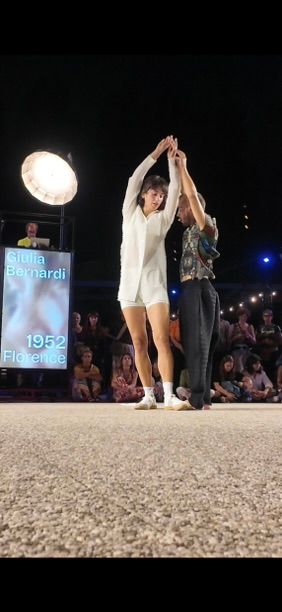
Bangarra can dance 65,000 years of tradition in sixty minutes. And Rajeh builds his timeline out of people: across the glowing screens and translucent sheets scrolled an entire card-index of witnesses:


Hagar of Mount Lebanon, 1810;

Mei Lien, Canton 1852;

Eva Johansson, Stockholm 1946;

Giulia Bernardi, Florence 1952;

Alma Fehrenbach, Dresden 1958;

Amadou Keïta, Bamako 1968;

Sophia Delgado, Buenos Aires 1970;

Pedro Domingos, Luanda 1979;

Grace M., Johannesburg 1994;

Yara Bin, Amman 1999;

Bishnu Thapa, Kathmandu 2001;

Maya P. Thompson, Minneapolis 2020.


Somewhere among them, our August '80 and Isfahan '79.


Back home, I looked for these names in the archives and… found nothing. The places and dates are real; the people were invented — painstakingly reconstructed from sources, because those who are truly ordinary are rarely written into history by name. Rajeh had to create them in order to tell the truth.


And it was only with that list that I understood what may be the most important thing: it is our own time and place that give events their meaning. For us Poles, August 1980 is the axis of the world. We measure our parents' biographies, and our own, against it. But on the square in Mestre it stood in one line with the Red Turban revolts, the coups in Bamako and Kathmandu, the peasant anger of Mount Lebanon, the Argentine dictatorship, the uprisings of Johannesburg and Gwangju — and with the quiet years of Stockholm or Florence, where power changed hands without a shot being fired.


This does not make our history any less extraordinary; it means that extraordinariness is not a property of events but of perspective. Exactly like Rovelli's "before" and "after". From up close, each of those places was the centre of somebody's world. There, in Mestre, they hung all at once, side by side, above a single square.


If that is not superposition, I don't know what is.

common.galleryImageAlt
Hubris

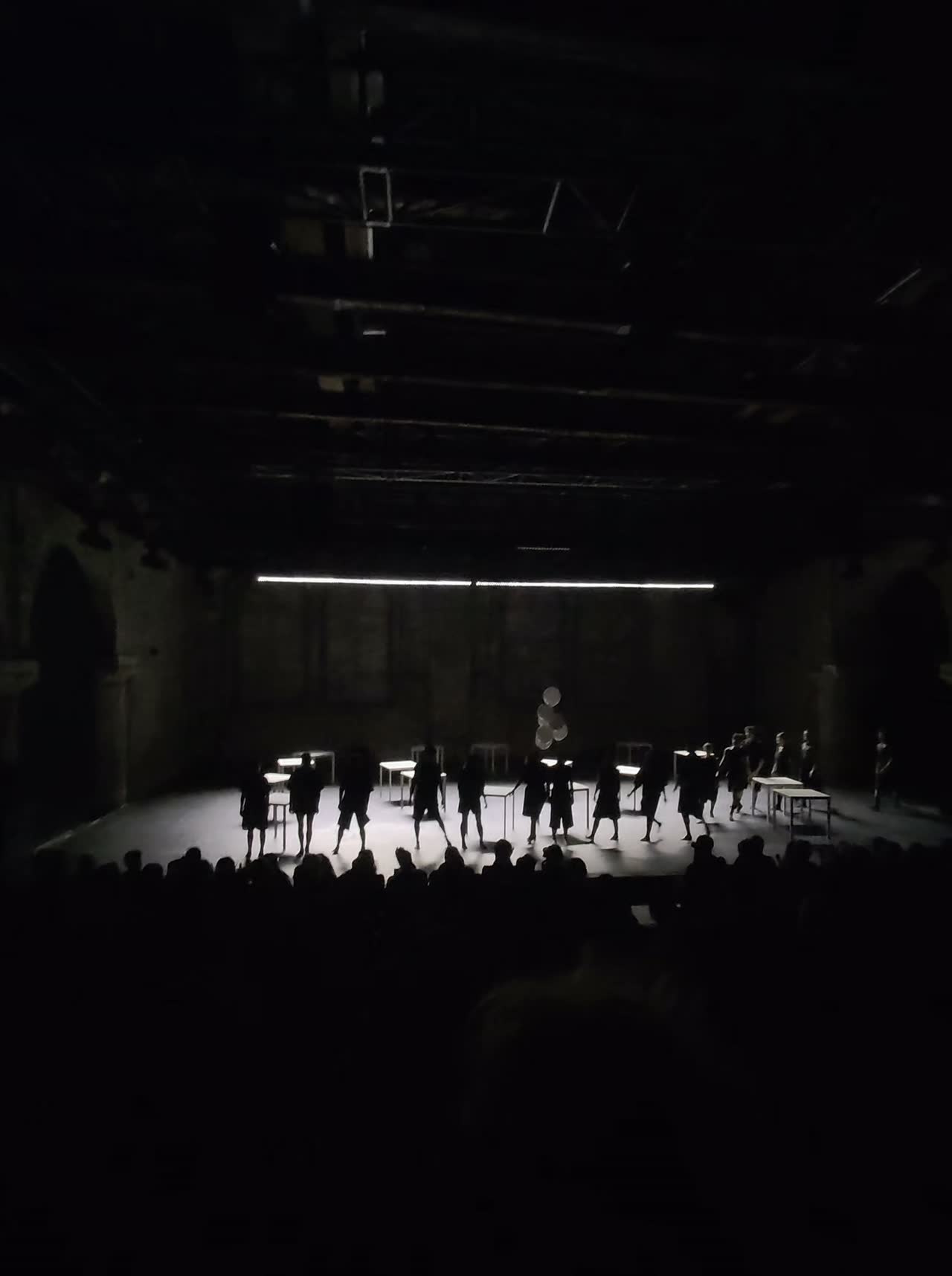
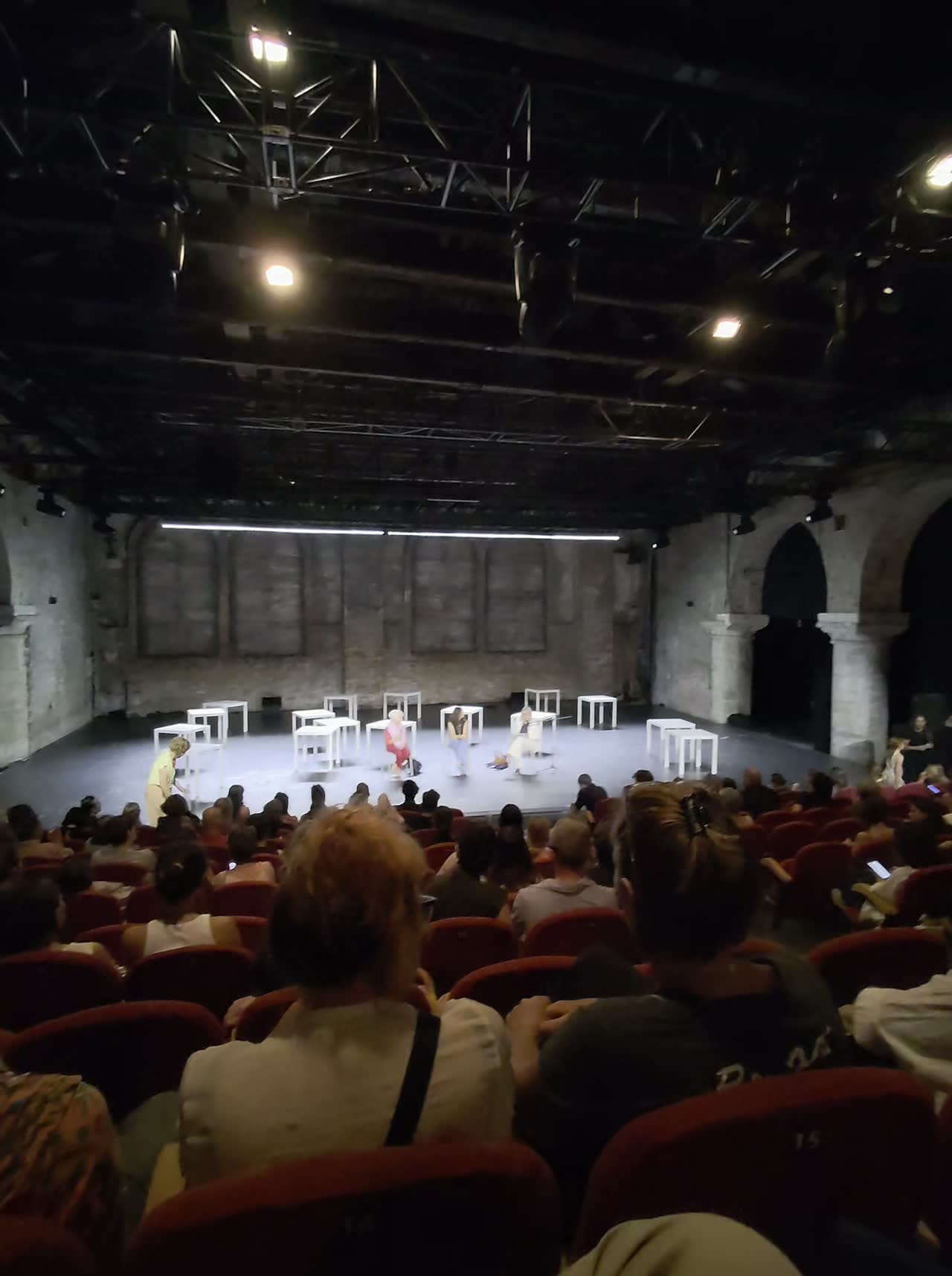
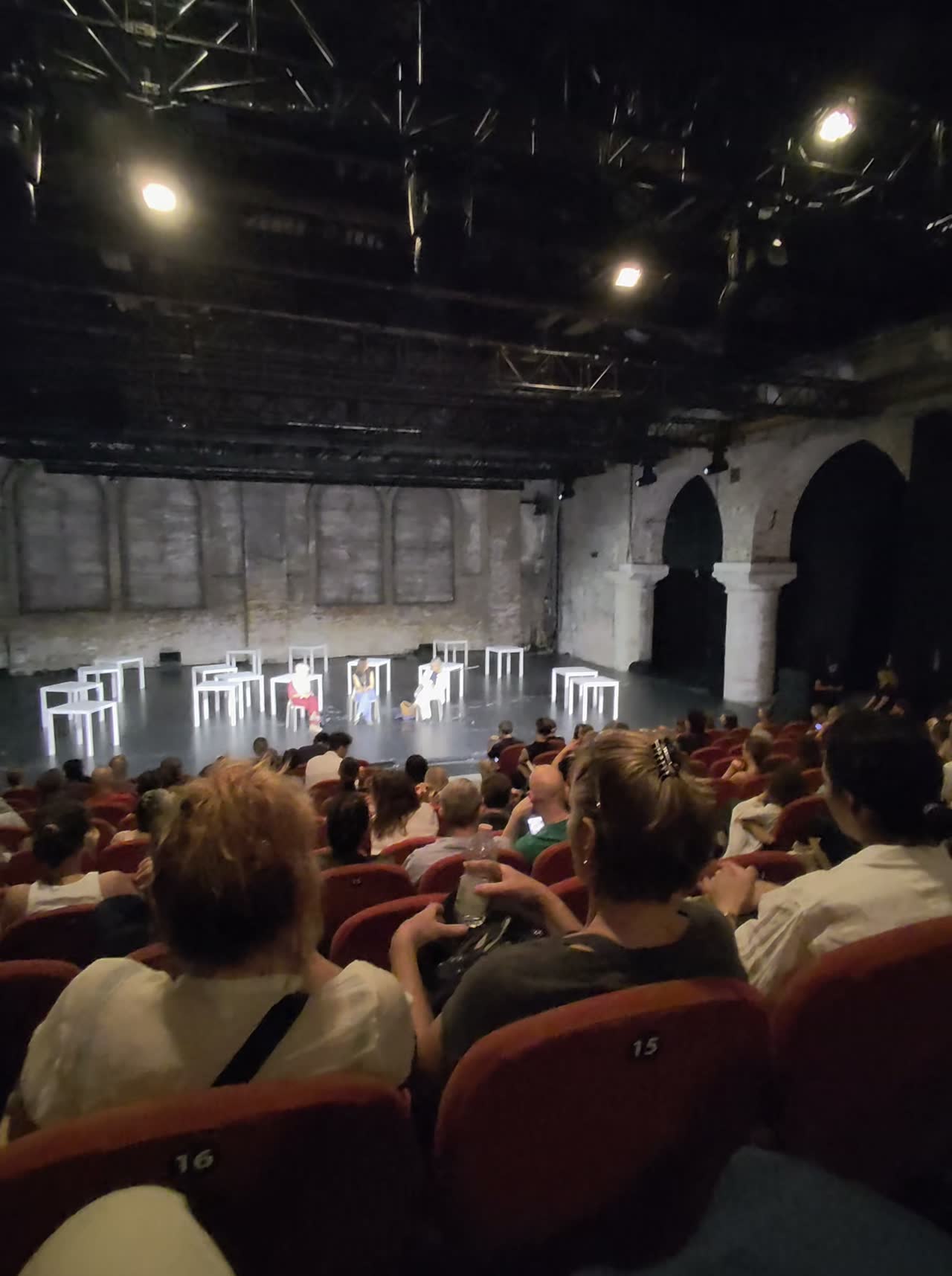
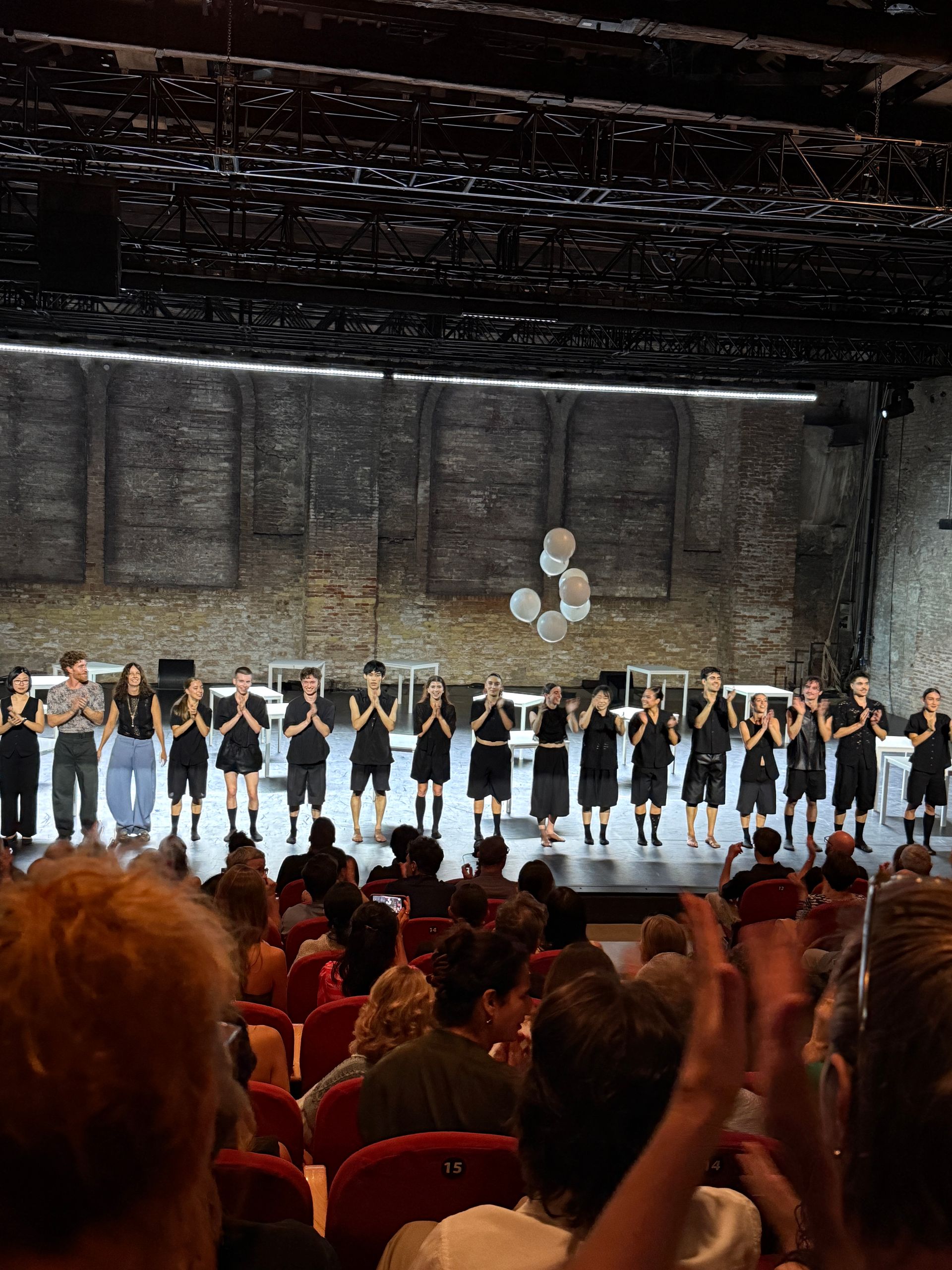
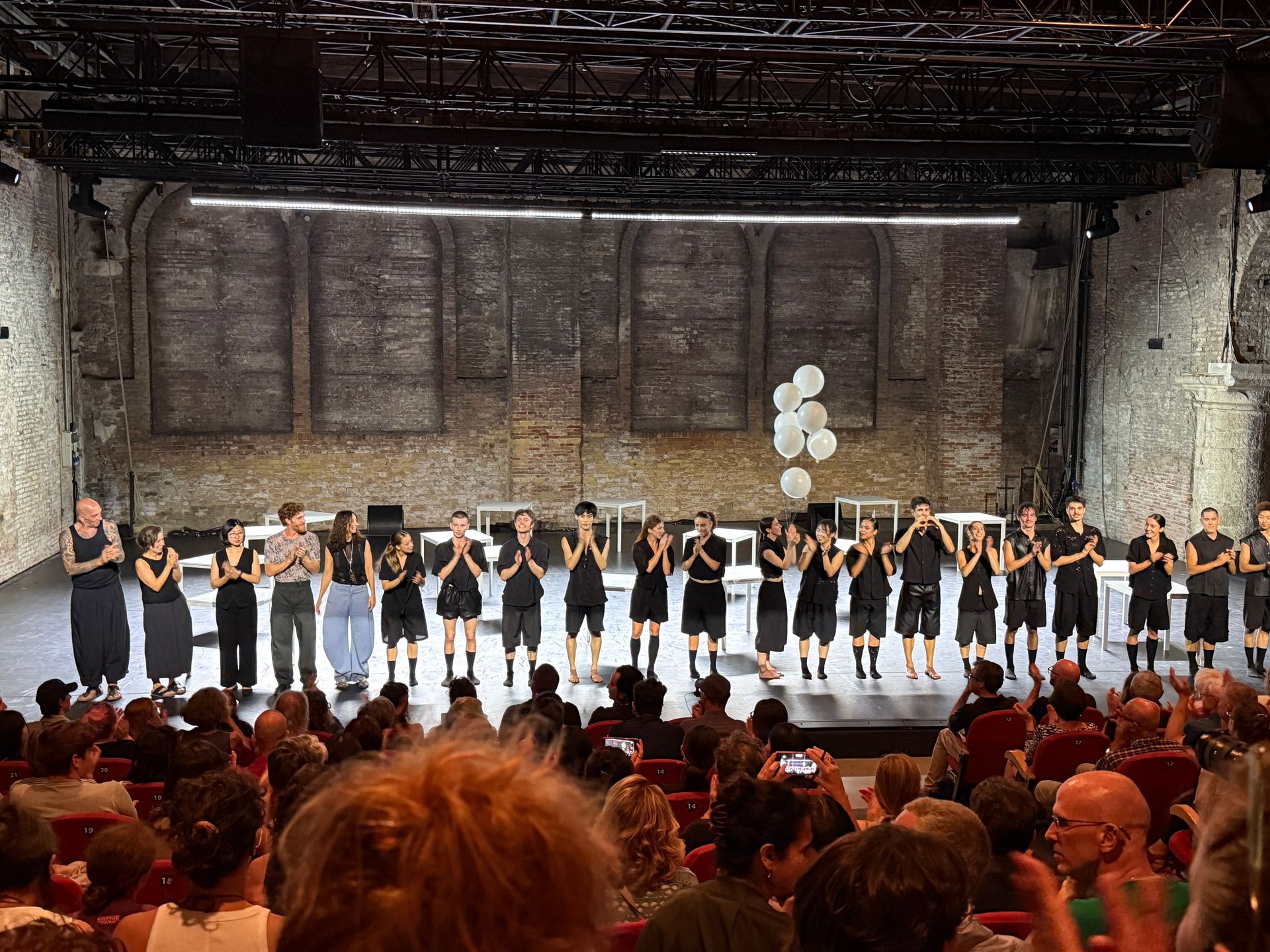
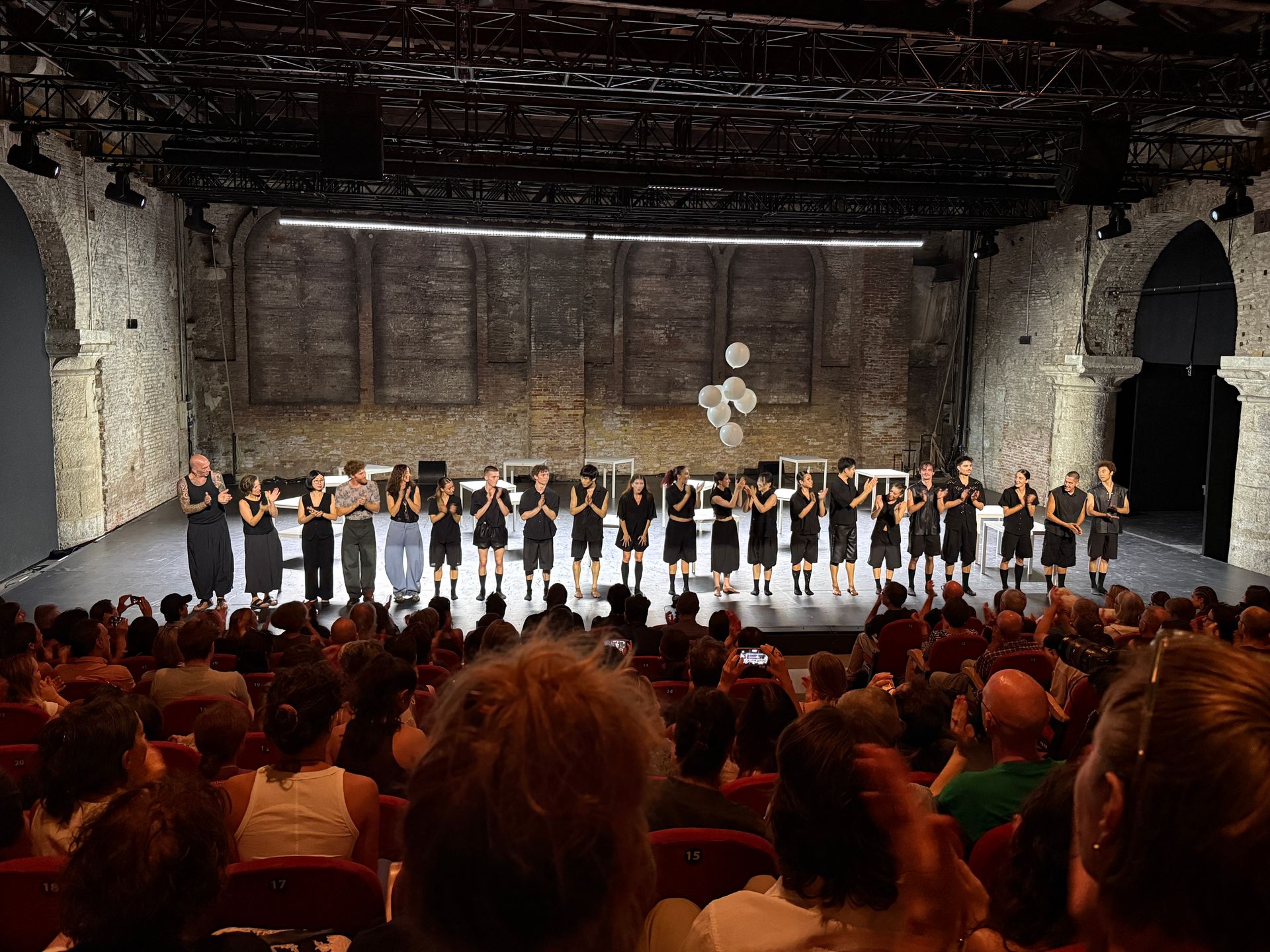
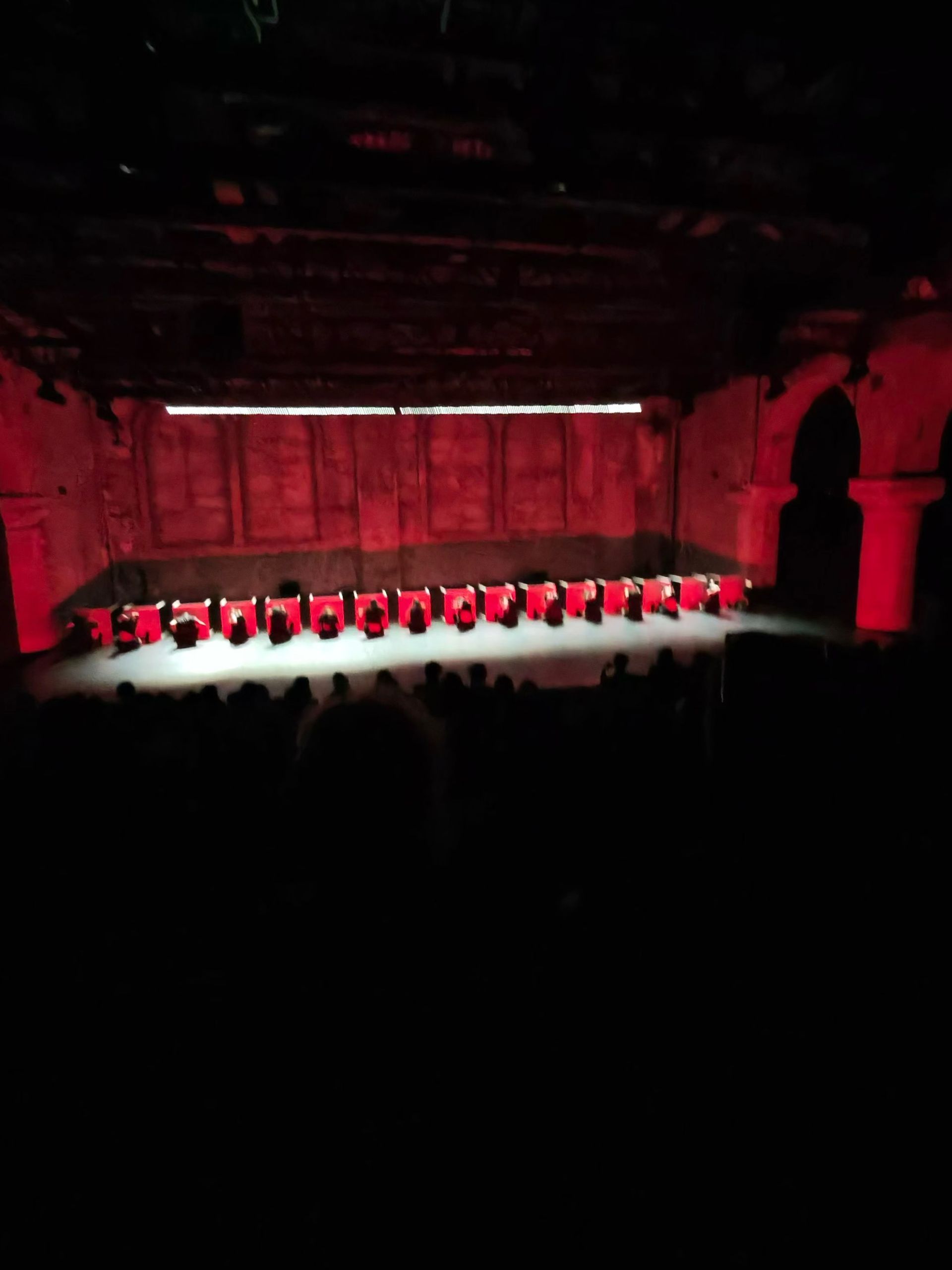
Finally, in the Arsenale, at small scene of Teatro alle Tese, we met with the youngest energy of the festival: Biennale College Danza: sixteen dancers from all over the world who, during the College residency, worked with Maxine Doyle, choreographer of Punchdrunk and "Sleep No More". Their joint world premiere bears a title after which nothing needs to be added: "Hubris".


The story is told with minimal means: white tables, balloons, black costumes and light. And power again, this time watched from the inside, as in Greek theatre: hubris, which drives the mighty to reach for more than a human being can carry; and audacity, without which no one would ever stand up to hubris. In the score, Bach — "The Art of Fugue" in the version by Jeff Mills and Kronos Quartet — sat alongside a recording of Zohra Orchestra, Afghanistan's first all-female orchestra, and "Farkhundeh" by the Afghan rapper Sonita Alizadeh.


Doyle herself writes in the programme, point-blank:


"Democracies are crumbling, women's rights are being diminished and, in some regimes, eradicated. Monsters in suits dominate our economies."


Sixteen young people, a few tables and balloons were enough to turn that diagnosis into another chapter of the universal story. The same story carried by the sheets and screens of Mestre. Power does not age. Fortunately, neither does audacity.

Loading...
common.videoAlt
The Next Cast

On Tuesday, back home, I spread our sheet number 294/400 on the desk and for a long while could not put it down.


Venice, Rovelli and dance all insist that time does not exist.


Maybe that is why a letter from August 1980, a letter from Isfahan, the salt of Kati Thanda and Greek hubris fit into a single weekend without getting in each other's way.


The story of power and human dignity has no dates. What it has are successive casts. And choreography.


And sometimes, as unexpectedly as on a Friday evening on a Mestre square named after the Wehrmacht's victims, it asks everyone to dance.

Loading...
common.galleryVideoAlt
Loading...
common.galleryVideoAlt
Loading...
common.galleryVideoAlt
Loading...
common.galleryVideoAlt
Loading...
common.galleryVideoAlt
Loading...
common.galleryVideoAlt
common.galleryImageAlt

© 2026 Jarek Jurczak