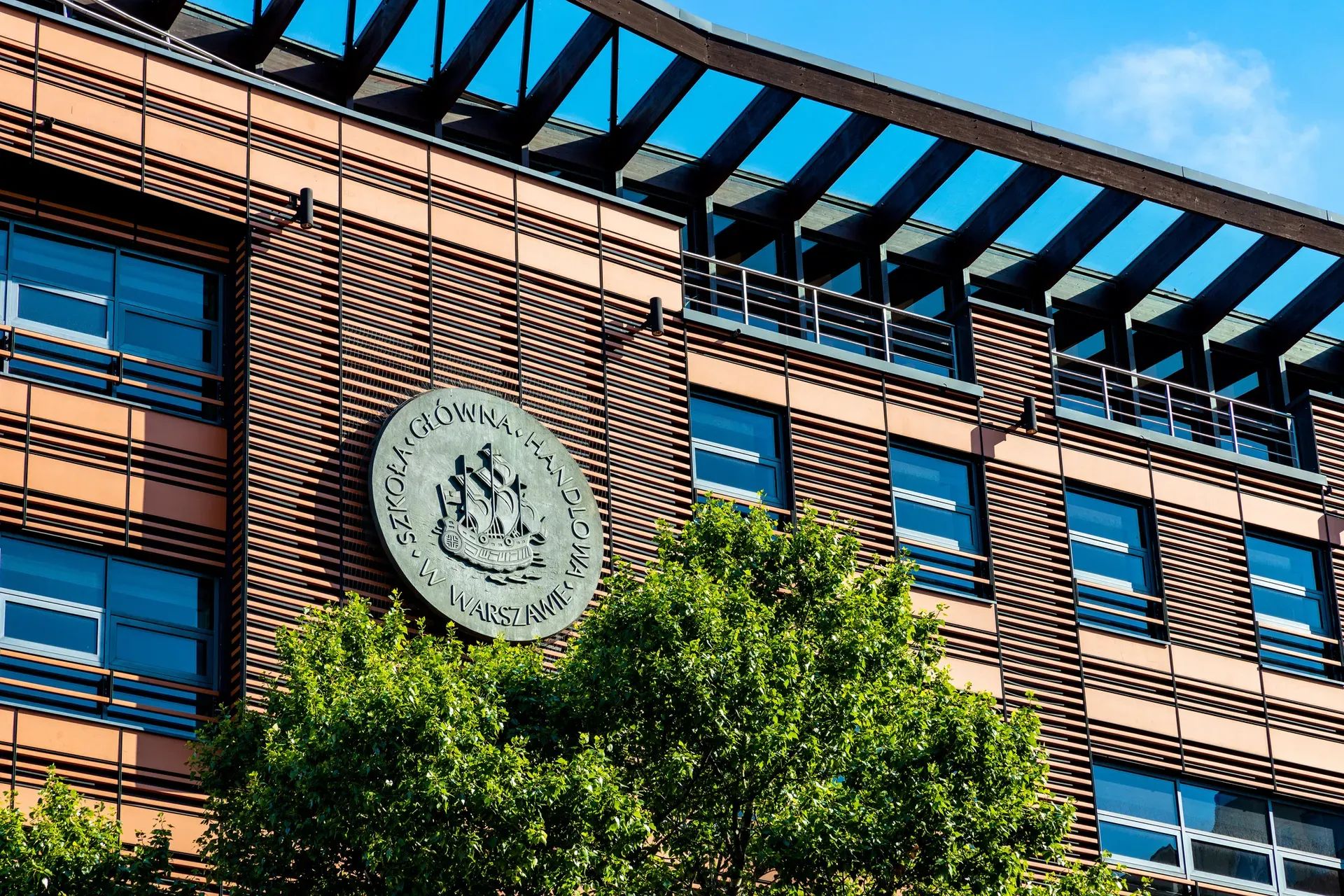
After completing my undergraduate degree, I pursued graduate studies in international economic relations at the Warsaw School of Economics, driven by a desire to forge a career in public institutions, international organizations, or diplomacy. My undergraduate experiences blending economic theories with legal frameworks strongly influenced this decision. I was particularly intrigued by the role of economic law in Europe, prompting me to explore these interactions more deeply at both SGH and the University of Warsaw Law School.
During my graduate studies, studying rulings of the European Court of Justice, I became deeply intrigued by the phenomenon of merger control, particularly how governmental agencies assess the legality of business transactions, often reaching opposite conclusions for the same merger. This was especially fascinating in a transatlantic context, where, for instance, the U.S. Department of Justice (DOJ) or Federal Trade Commission (FTC) might approve a transaction that the European Commission could block or vice-a-versa. This discrepancies of outcomes highlighted to me that there must be a fascinating world of divergent legal norms, economic theories, and institutional frameworks that governing and have a profound impact on economic activity through merger control in different jurisdictions.
I learned that in the U.S., the antitrust review process tends to emphasize consumer welfare and market efficiency, whereas the European Commission often places greater emphasis on maintaining competitive market structures. The design of the review processes also varies, with the U.S. agencies typically relying on judicial proceedings, while the European Commission employs a more administrative approach. Additionally, the institutional set-ups reflect these differences, as the European Commission acts as both investigator and decision-maker, contrasting with the U.S. system’s separation of powers. Ultimately, politics can weigh heavily on the outcome, with geopolitical considerations and national interests sometimes influencing decisions. This complex interplay of legal, economic, and political factors which makes merger control a rich area of study, was so appealing precisely due to its interdisciplinary nature and a real life example of how different regulatory environments shape global business strategies.
My fascination with the intricacies of merger control and the divergent decisions of regulatory bodies led me to investigate institutions in a broader sense. I became particularly interested in how institutions—ranging from legal and regulatory frameworks to political and economic systems—influence the international competitiveness of countries, jurisdictions, or supra-national polities. This line of inquiry revealed that robust institutions can significantly enhance a nation's competitive edge by fostering a stable and predictable environment for business operations. Conversely, weak or inconsistent institutions can hinder economic performance and deter investment.
Driven by a desire to understand these dynamics more deeply, I embarked on academic exploration that culminated in my decision to pursue Ph.D. studies and the international Ph.D. Programme in Comparative Analysis of Institutions, Economics, and Law (IEL) in Torino, Italy, offered the ideal platform for this endeavor. Coordinated by the University of Torino and Collegio Carlo Alberto, the program is supported by a consortium of globally renowned institutions, including Université Paris 1 Panthéon-Sorbonne (France), University of Ghent (Belgium), Wissenschaftszentrum Berlin für Sozialforschung (WZB, Germany), and London School of Economics and Political Science (United Kingdom). This interdisciplinary program focuses on the comparative study of institutions, economics, and law, equipping students with a comprehensive understanding of how these elements interact in different contexts. The curriculum addresses complex issues in global economic governance, international trade, and institutional development, providing a rich blend of theoretical knowledge and practical insights. With faculty members who are leaders in their fields and a diverse cohort of students from around the world, the IEL program fosters a vibrant academic community and encourages innovative research. The emphasis on comparative analysis and the exploration of various institutional frameworks perfectly aligned with my research interests. The program’s focus on global economic governance and the role of institutions in shaping economic policy offered the tools and intellectual environment necessary to delve into these critical issues. For a detailed account of my experiences and the insights gained from the IEL program, stay tuned for a separate blog post.
My academic journey was enriched by opportunities that extended far beyond the traditional classroom setting, offering arenas where leadership and initiative were not just encouraged but essential for success. As the first founder and elected president of the Student Club for International and European Law, I was thrust into a role that demanded more than academic knowledge; it forced me to learn how to formulate a compelling vision, act diplomatically, and the gain the ability to inspire and mobilize peers towards common goals. This position was a test for my leadership skills, challenging me while organizing events, discussions on pressing legal issues, and building a cohesive community passionate about international and European law. The experience was transformative, teaching me the delicate art of balancing diverse opinions and fostering an environment where debate and collaboration could flourish.