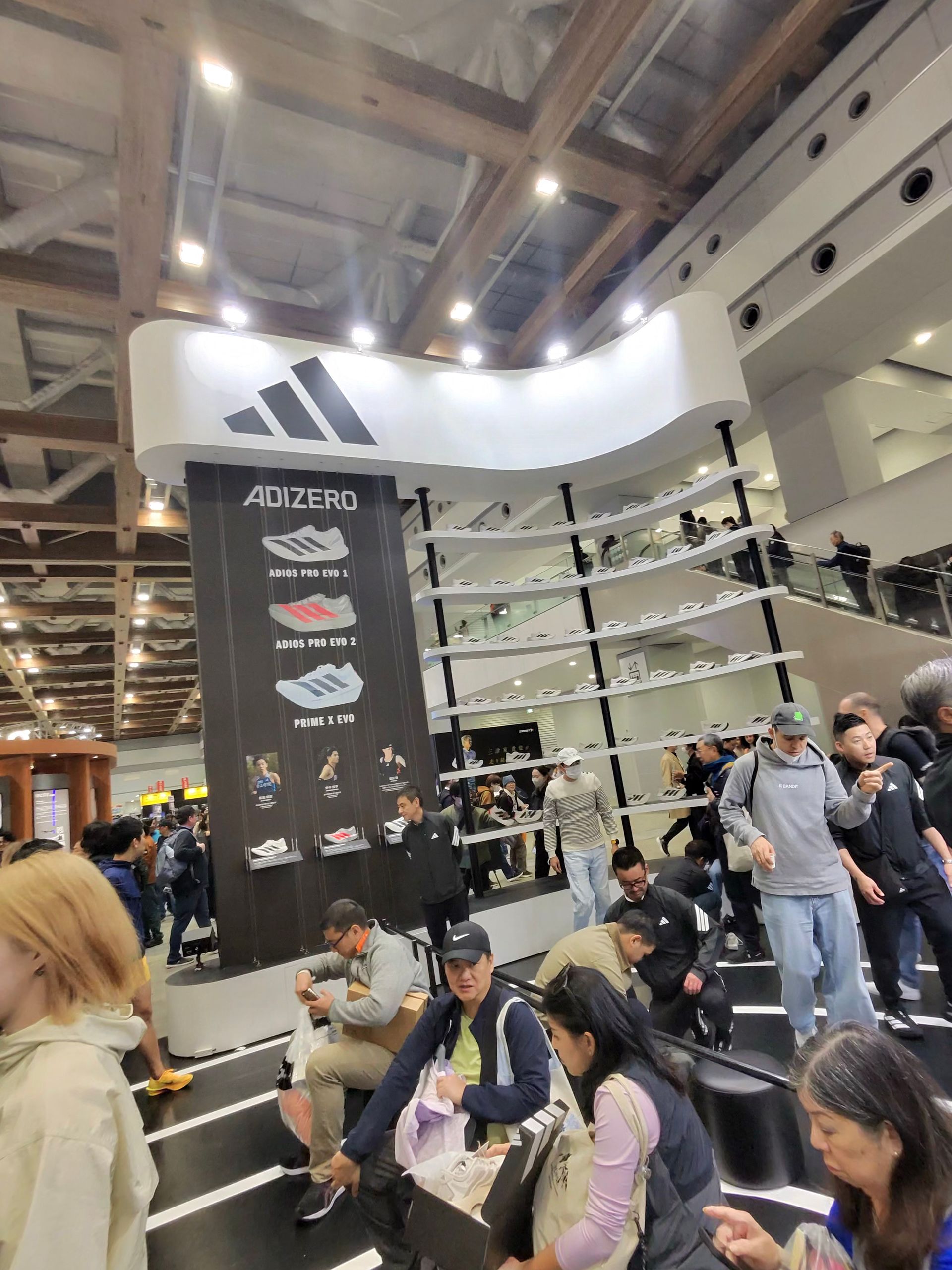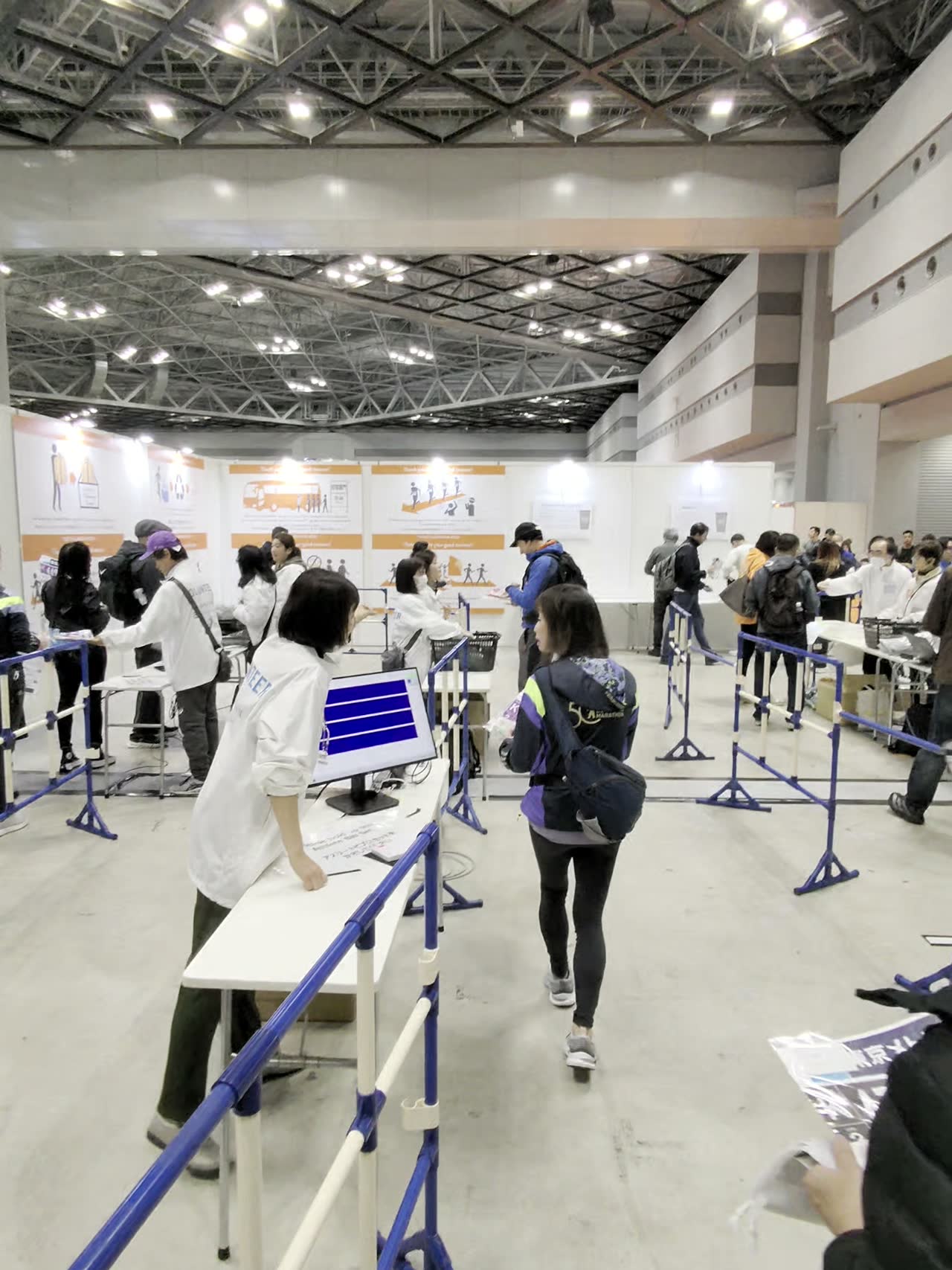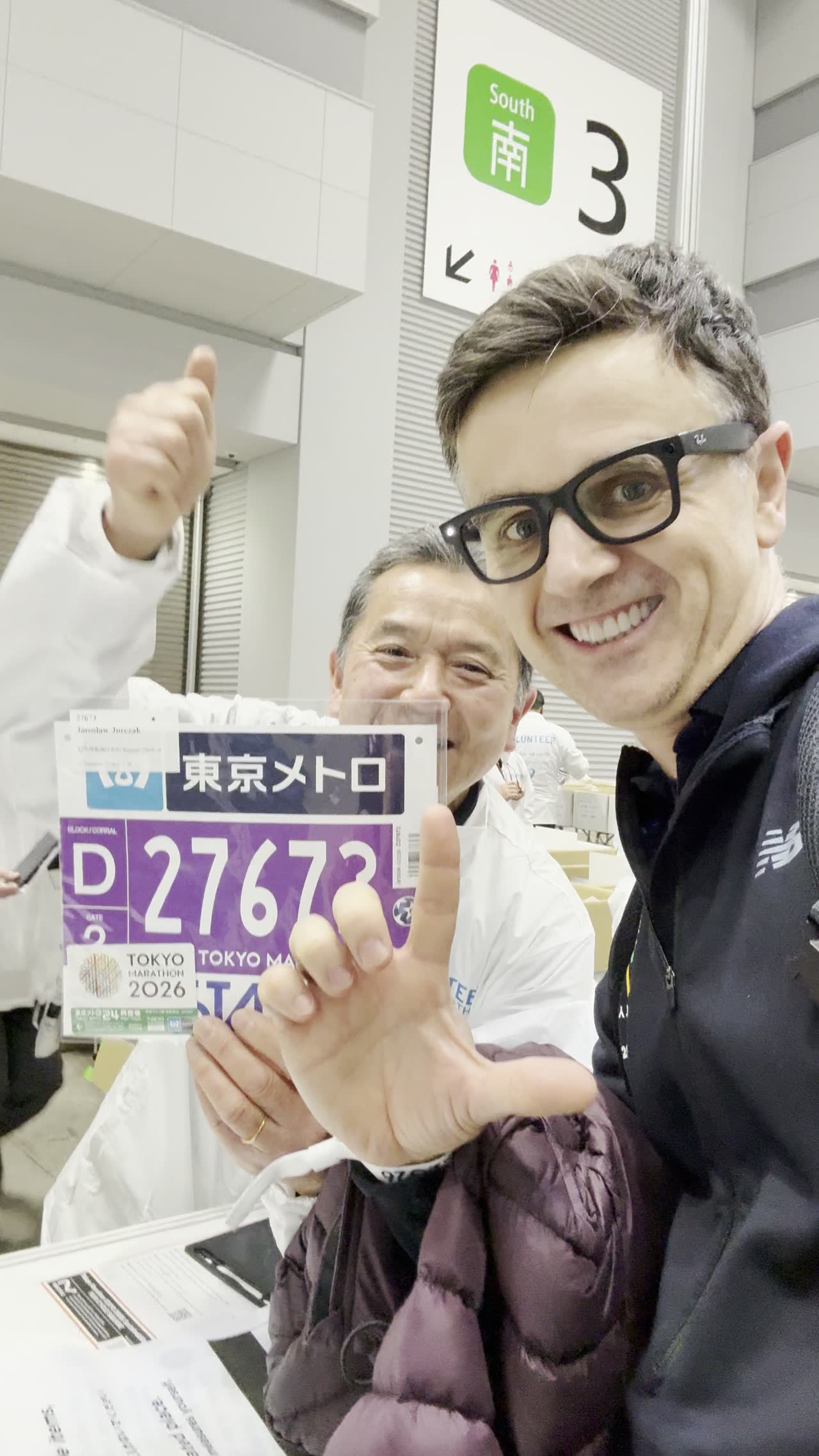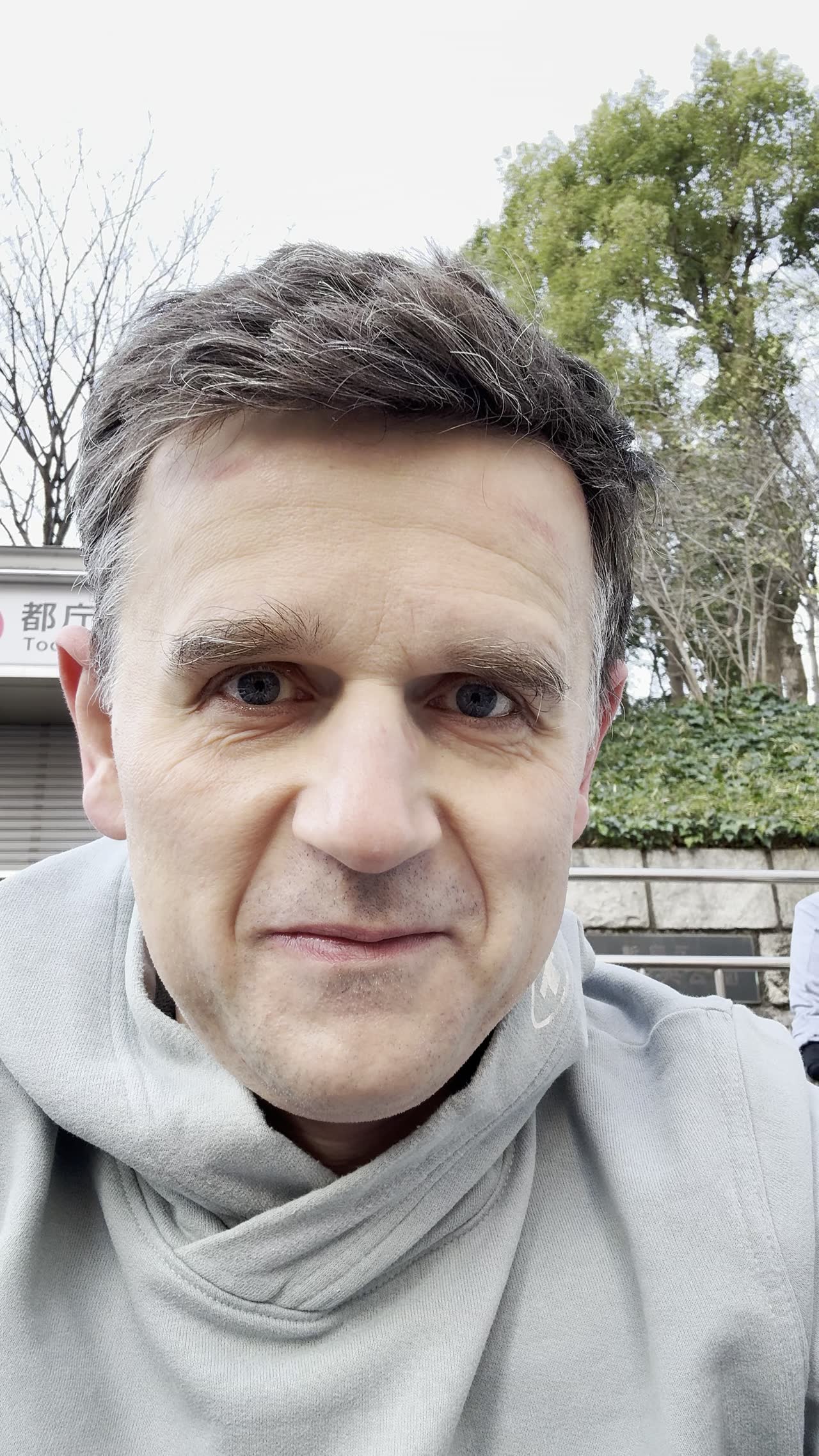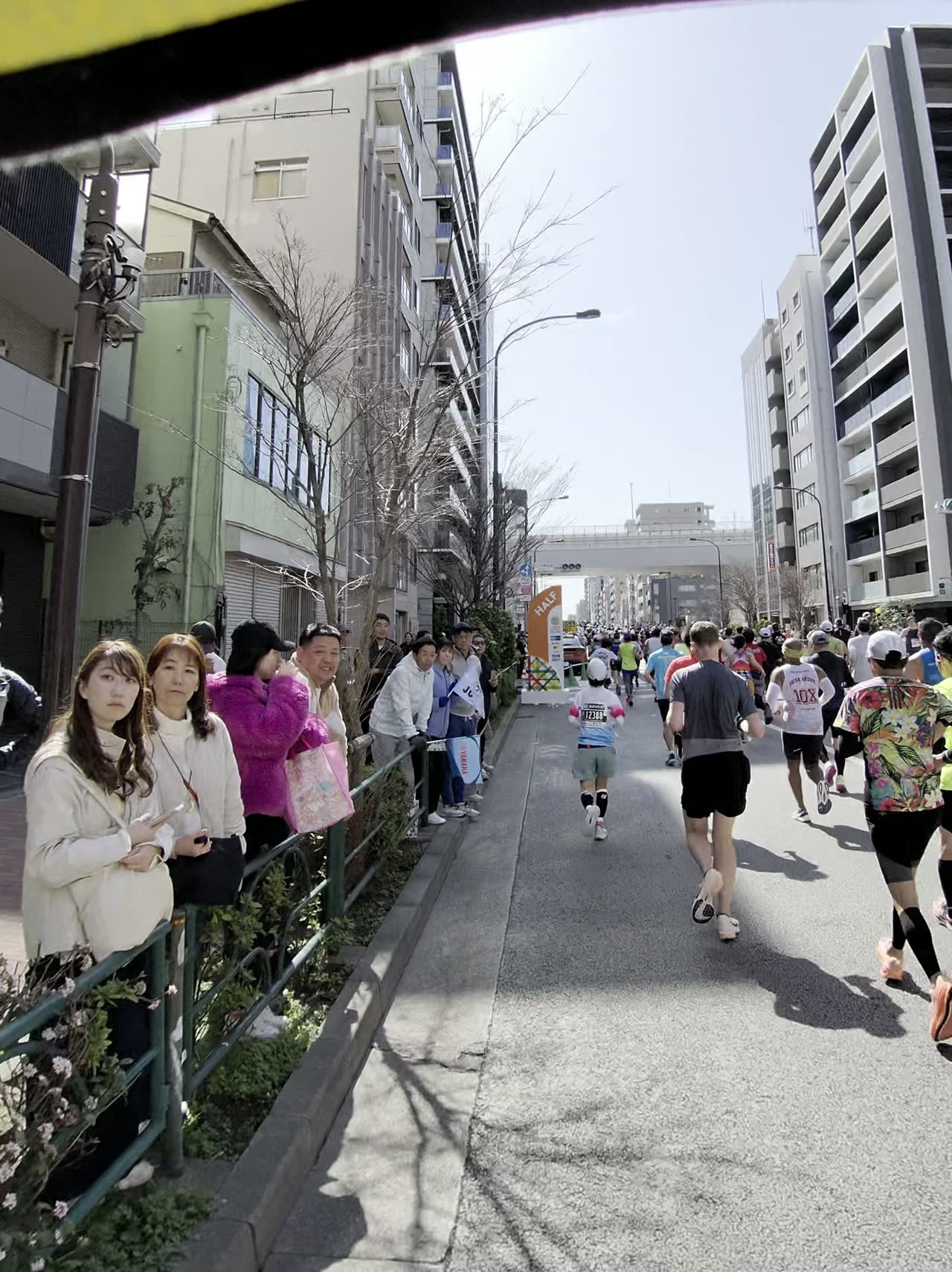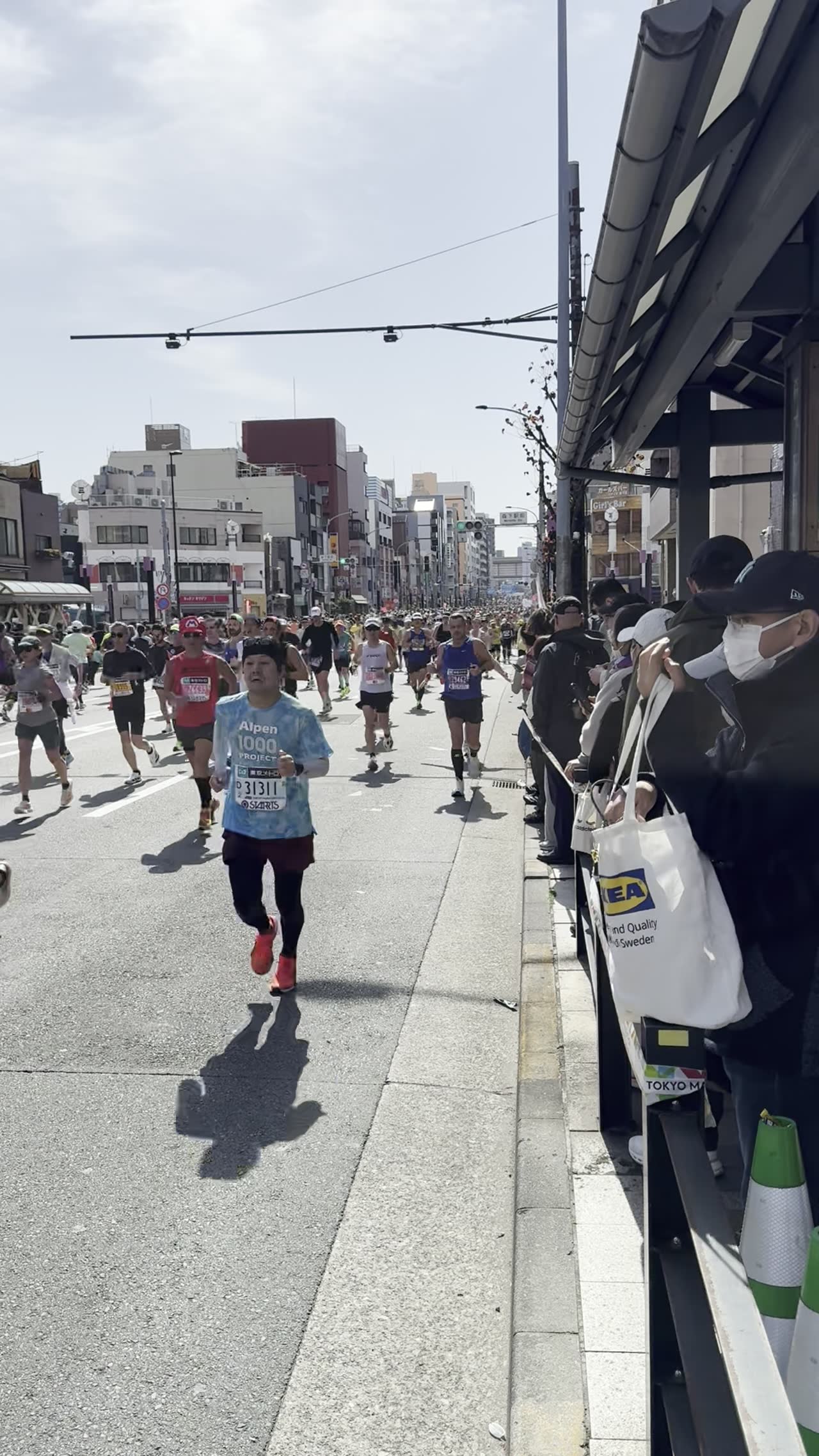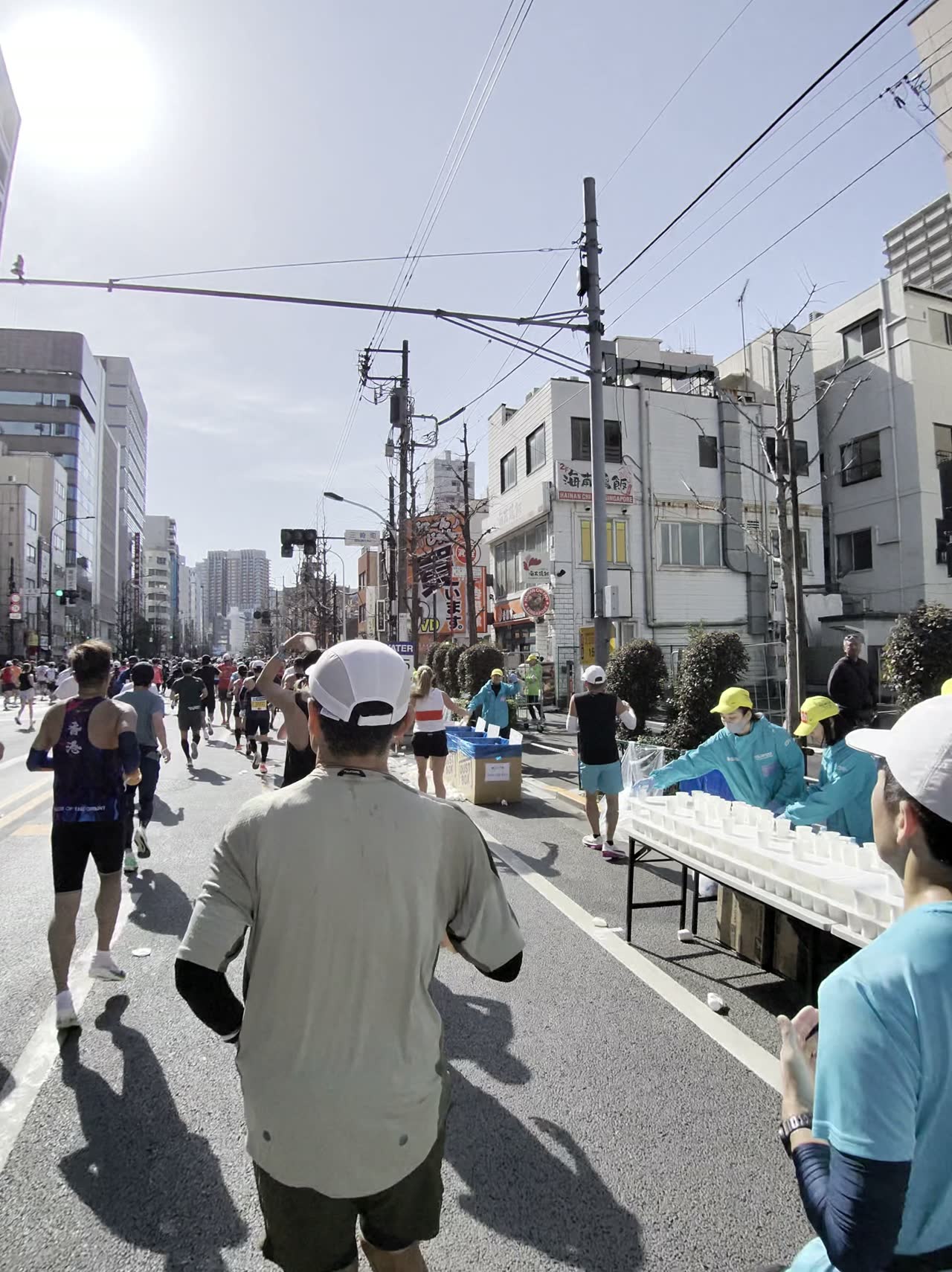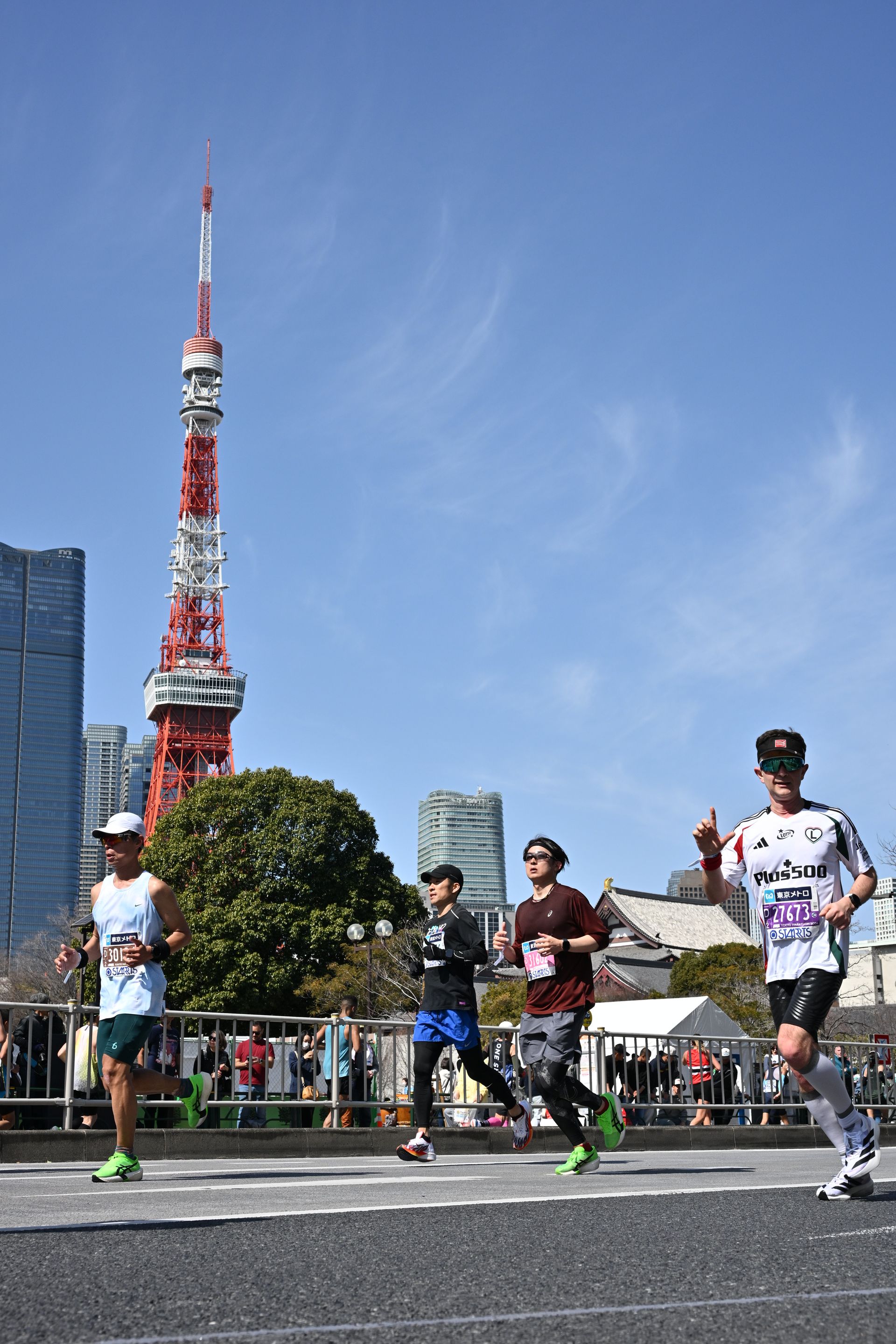
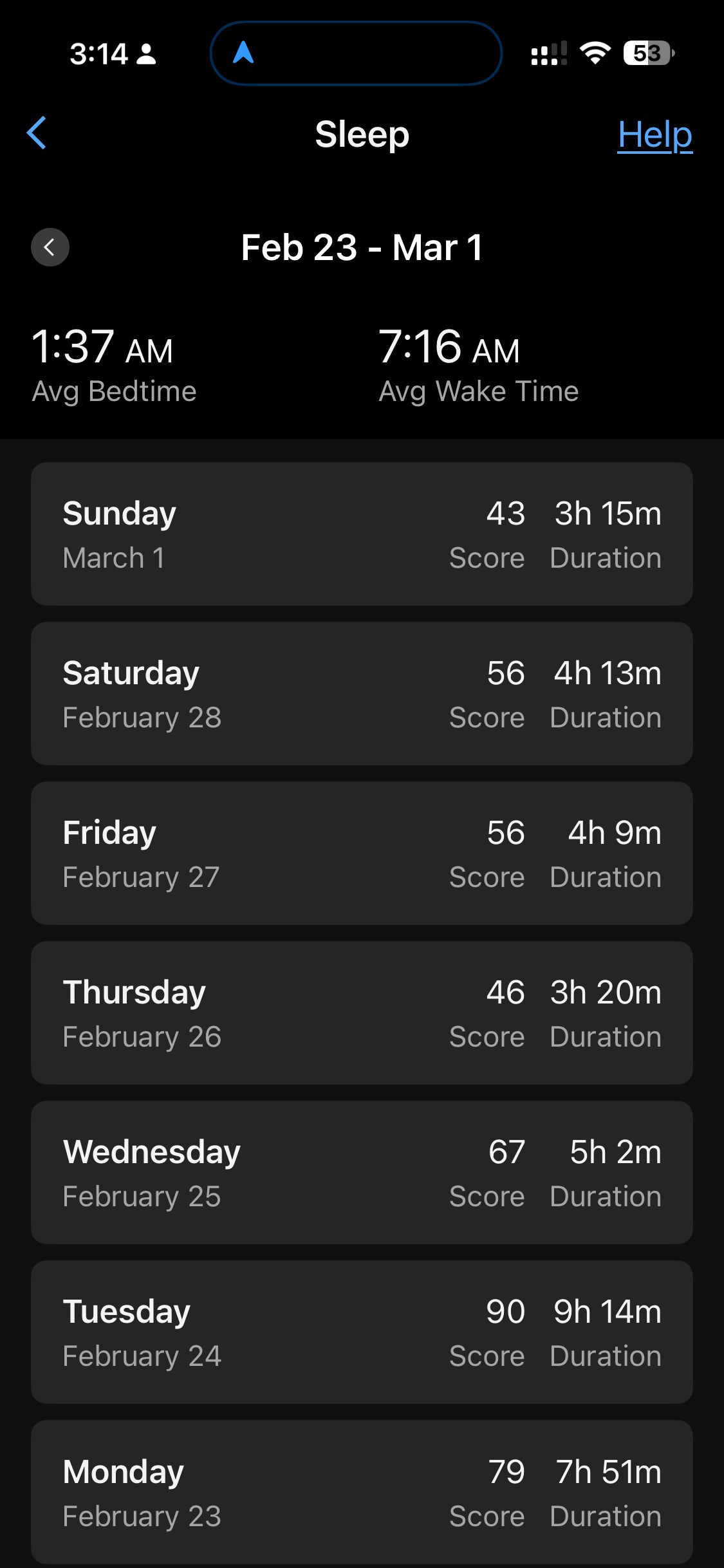
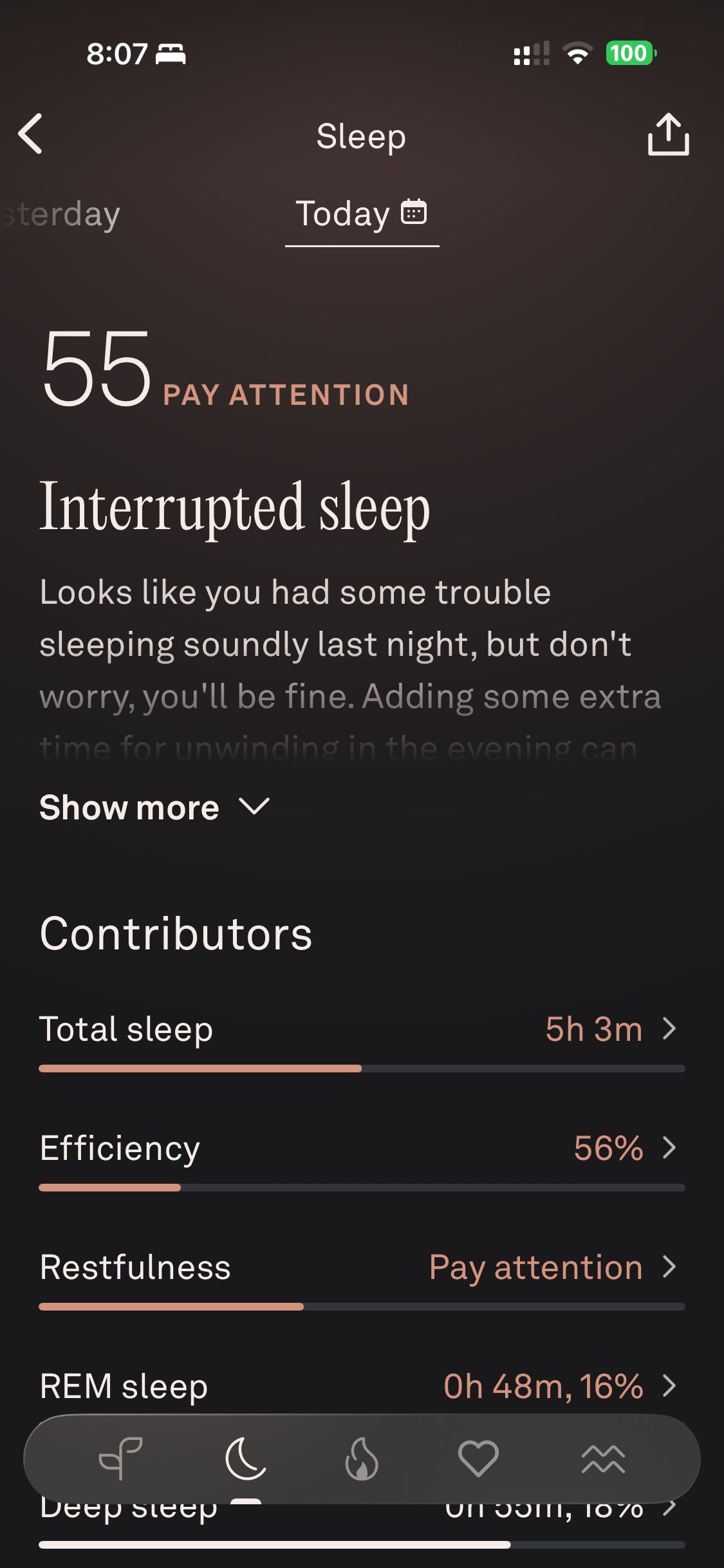
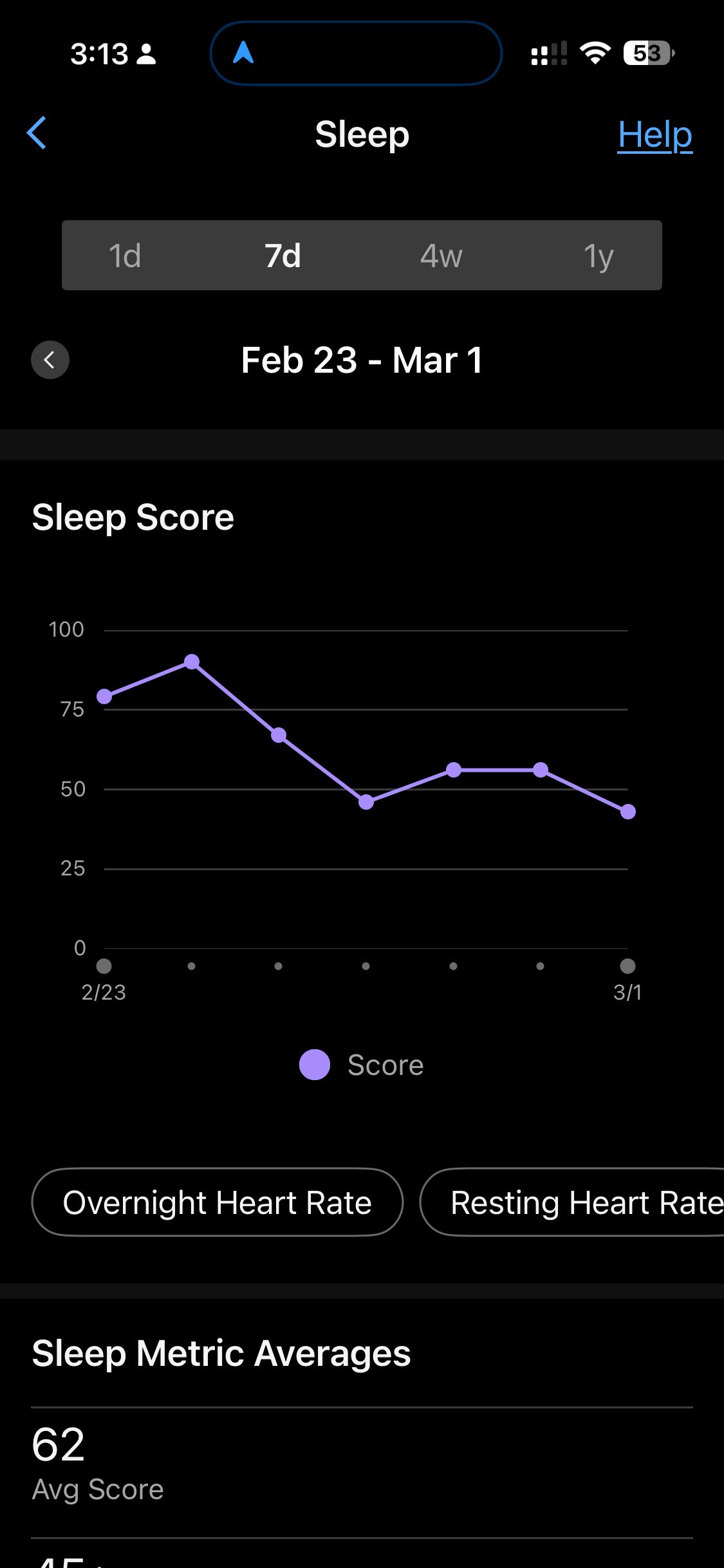
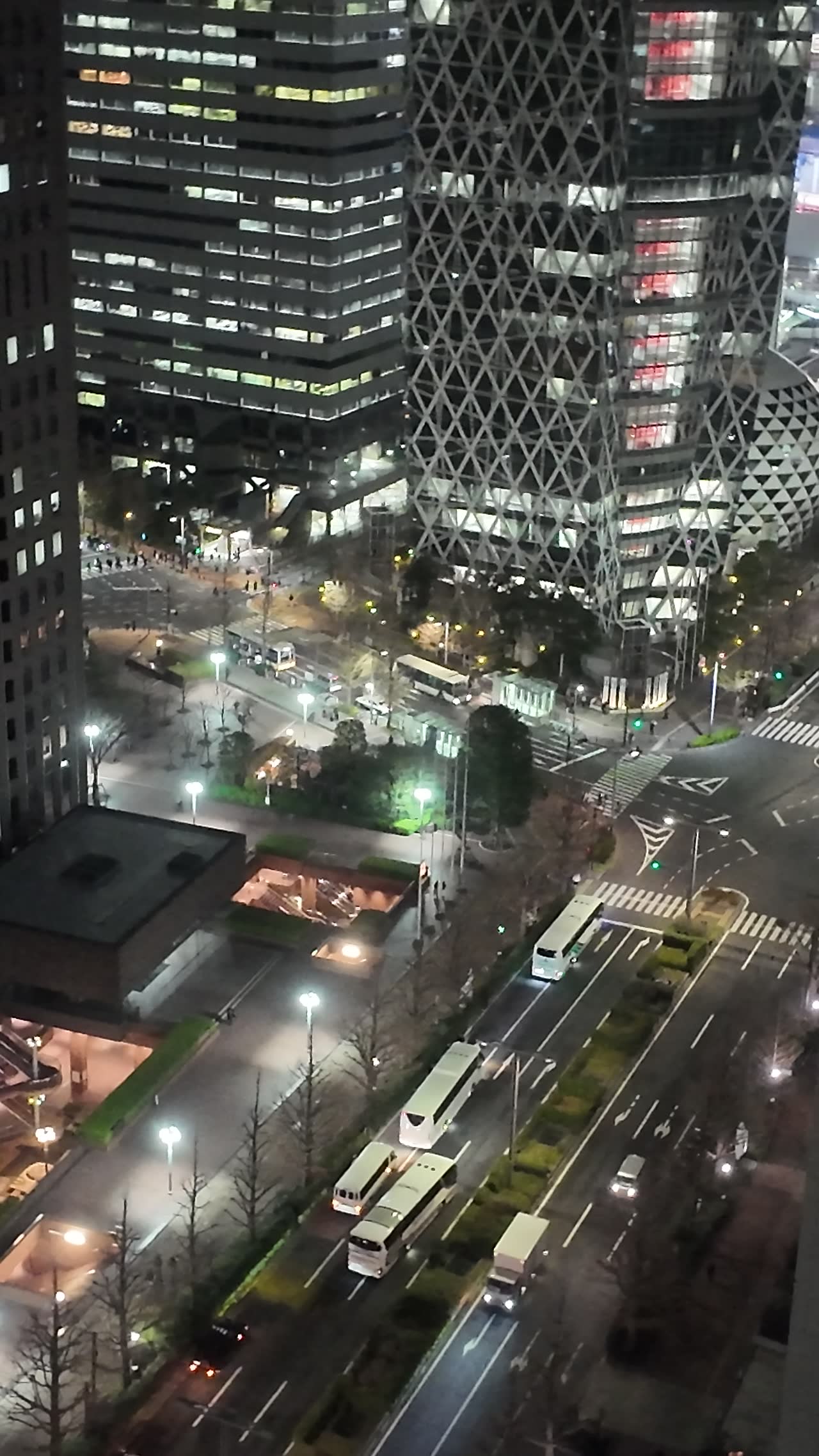
This is the fourth night in a row I've slept three hours. All week I've been going to bed at midnight and waking before three — not from excitement, but from the kind of exhaustion that feeds on itself. Insidious jet lag, sightseeing plans, and sessions in the European Football Clubs leadership programme. The lectures start at nine in the morning Boston time, which is eleven at night in Tokyo. I sit in a dark room listening to strategy presentations on the New York Liberty and pretend to be alert, while outside, Tokyo pulses with life and shows no sign of ever pausing.
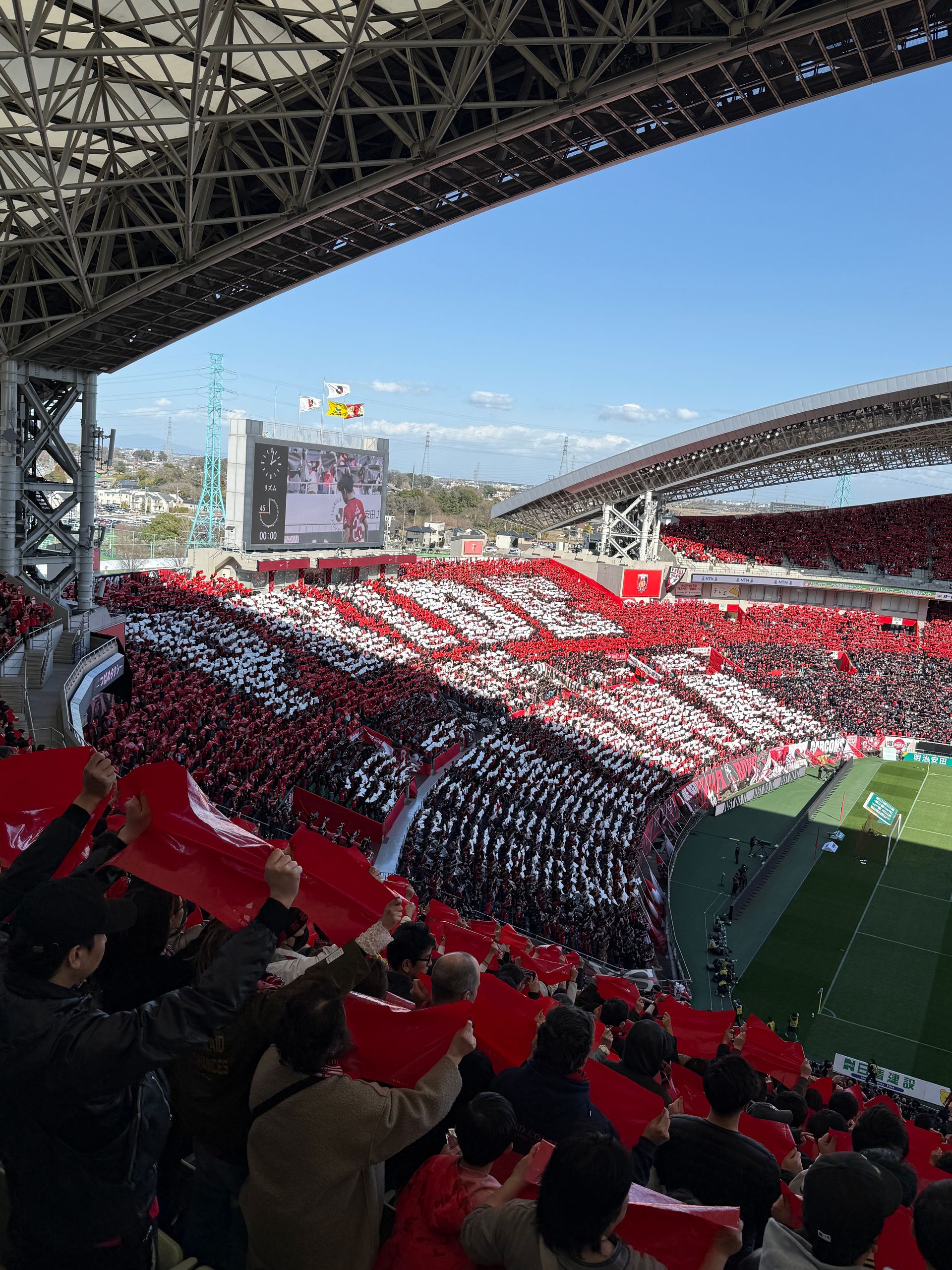
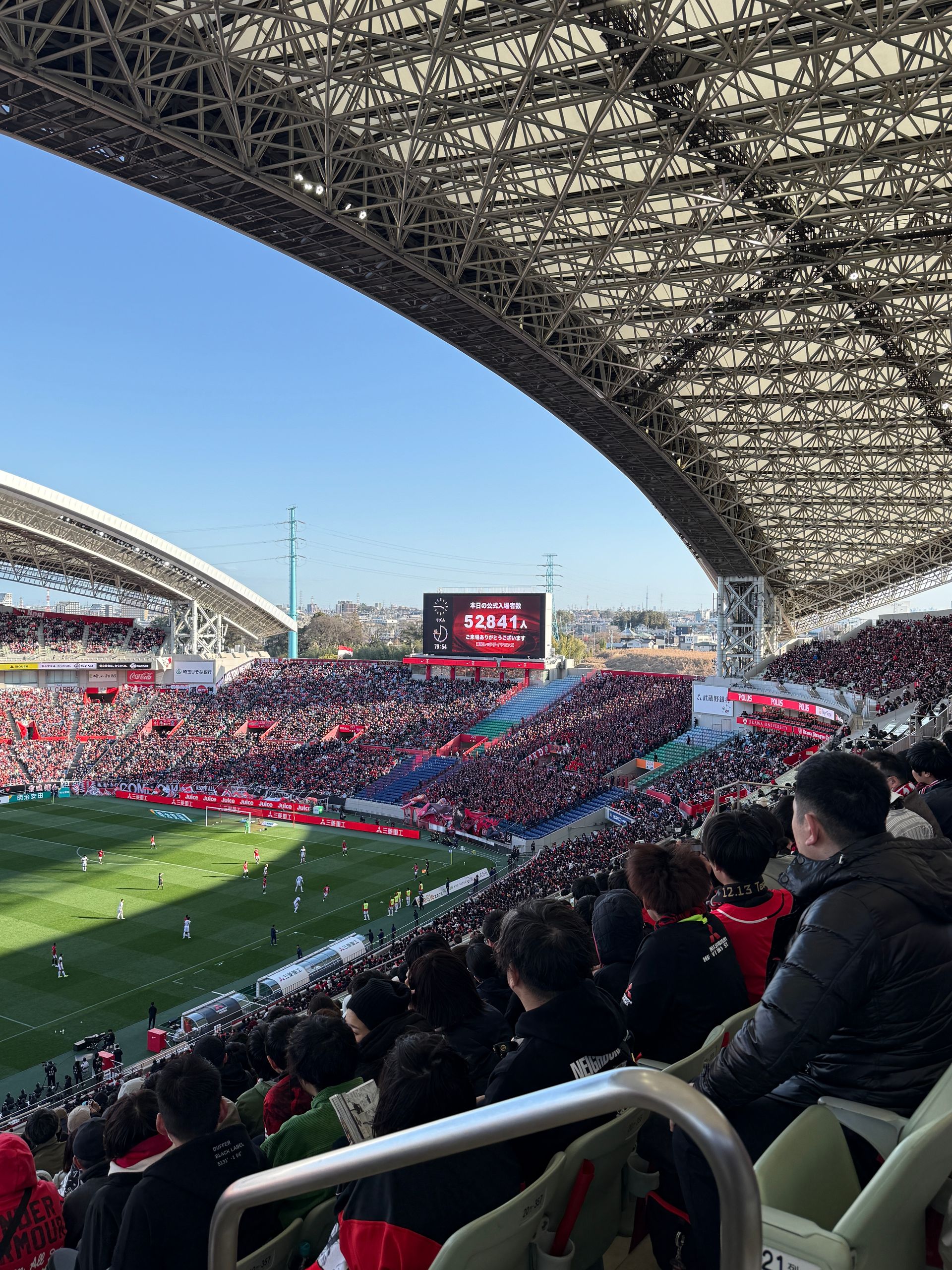
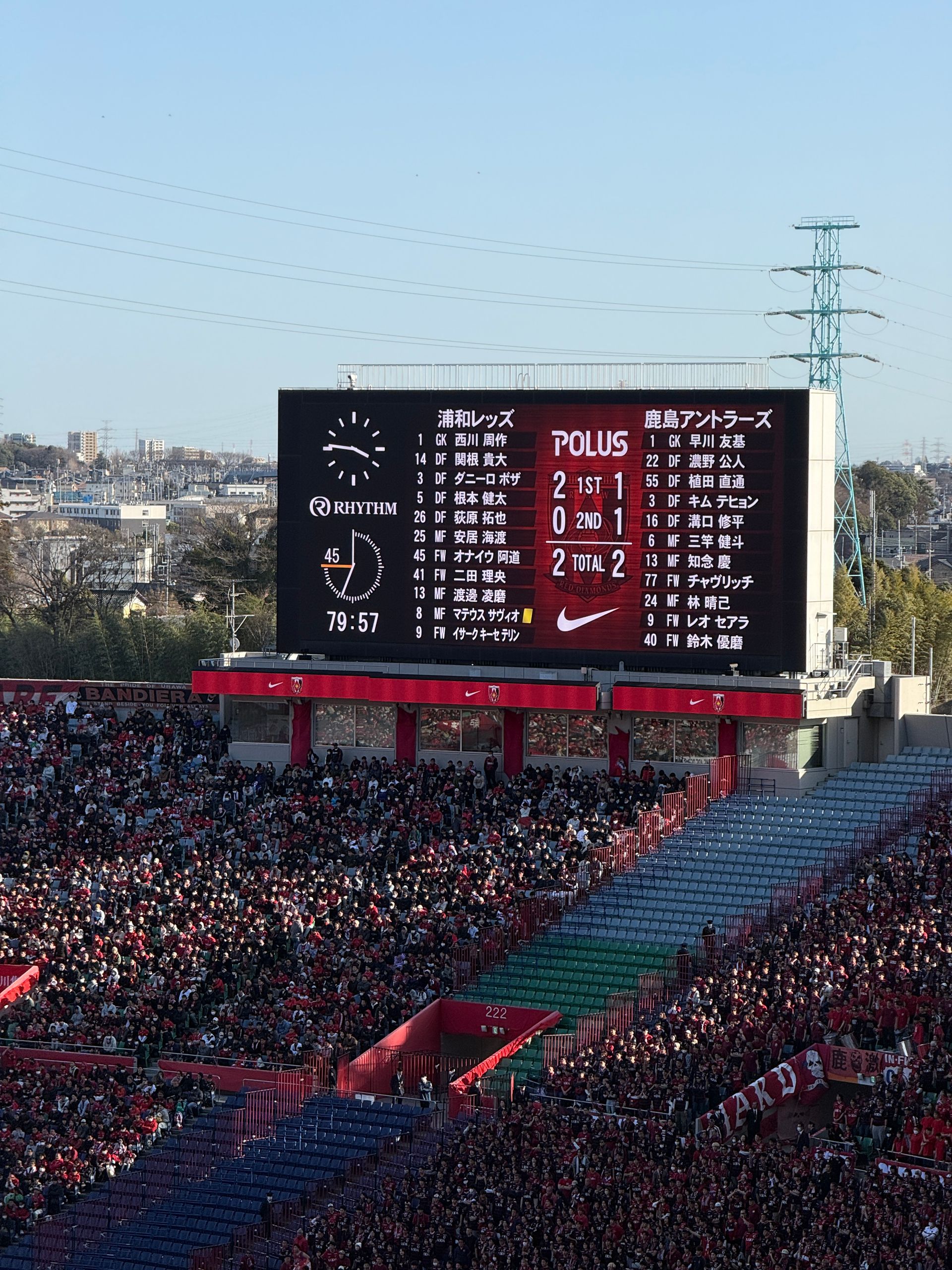
Yesterday — Saturday — my wife and I went to watch Urawa Red Diamonds play in Saitama— something I may write about in a future post. We got back late in the evening. Wired from the game, I laid out everything on the bed: race vest, bib, gels, course map. On the map I marked the spots where my wife would be waiting to high-five me. I analysed the route — where I could hold pace, where I'd need to ease off. I finished building my playlist and took magnesium. Around midnight I fell asleep.
And woke up again at three. By four I knew I wouldn't get back to sleep. I lay with my face in the pillow and cried — just like that. I had 249 days of preparation behind me. Every two weeks I would review plans, spreadsheets, Garmin data. Race-day nutrition protocols, pace simulations, blood tests, VO₂ max testing. I would post stories and reels on social media to keep my goal publicly "accountable". I even received nine bespoke songs generated in Suno by my brother-in-law in an unlikely collaboration with my youngest daughter.
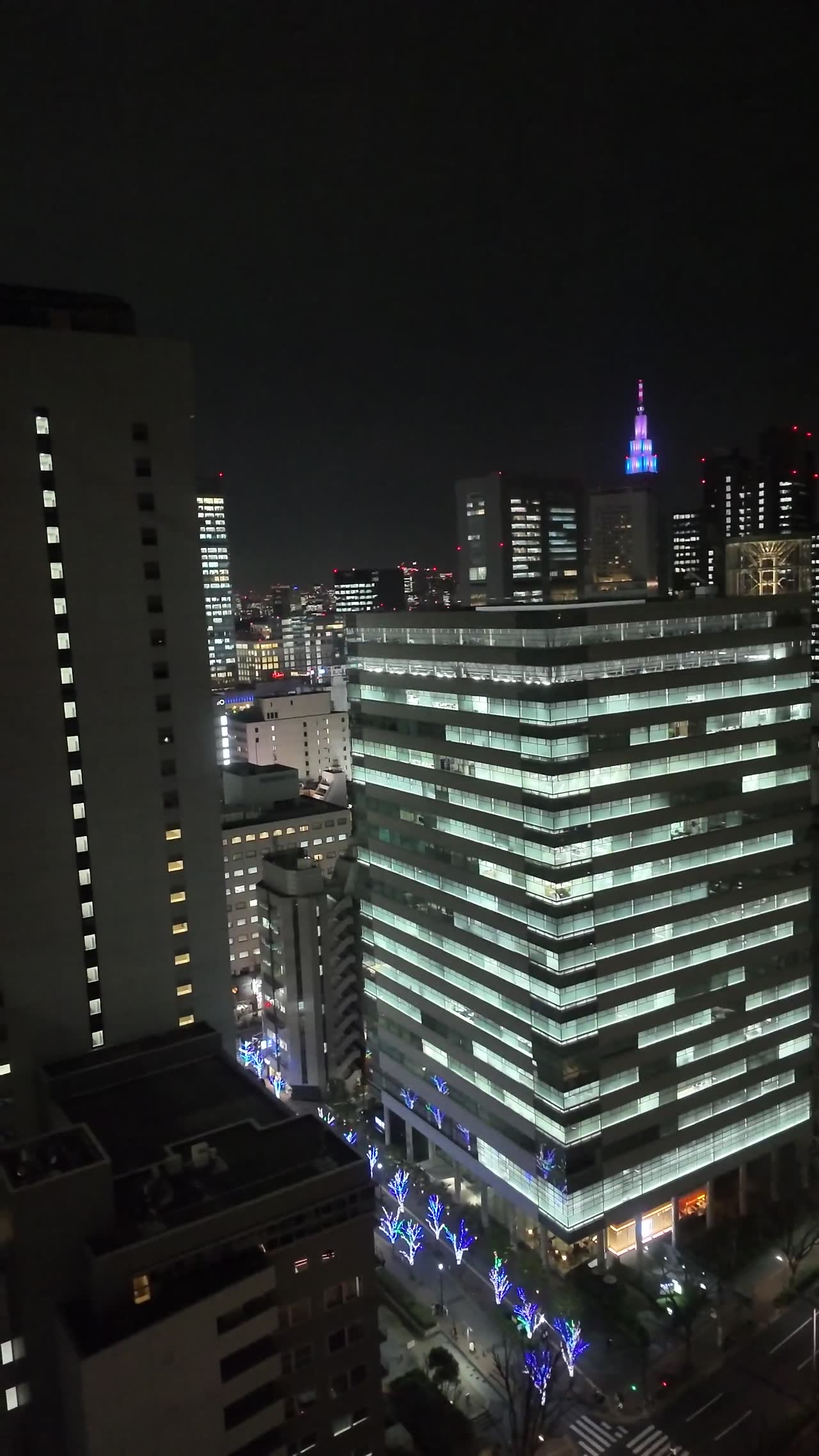
And now, six hours before the start, I'm lying sleepless in a room on the thirtieth floor of the Keio Plaza Hotel, howling into the pillow with frustration.
I got up eventually and looked through the window. Tokyo in the middle of the night looks like an ocean of lights with no horizon in sight. The city doesn't sleep — and it's entirely indifferent to the fact that I'm standing here, thinking.
Does showing up at the start line even make sense anymore?
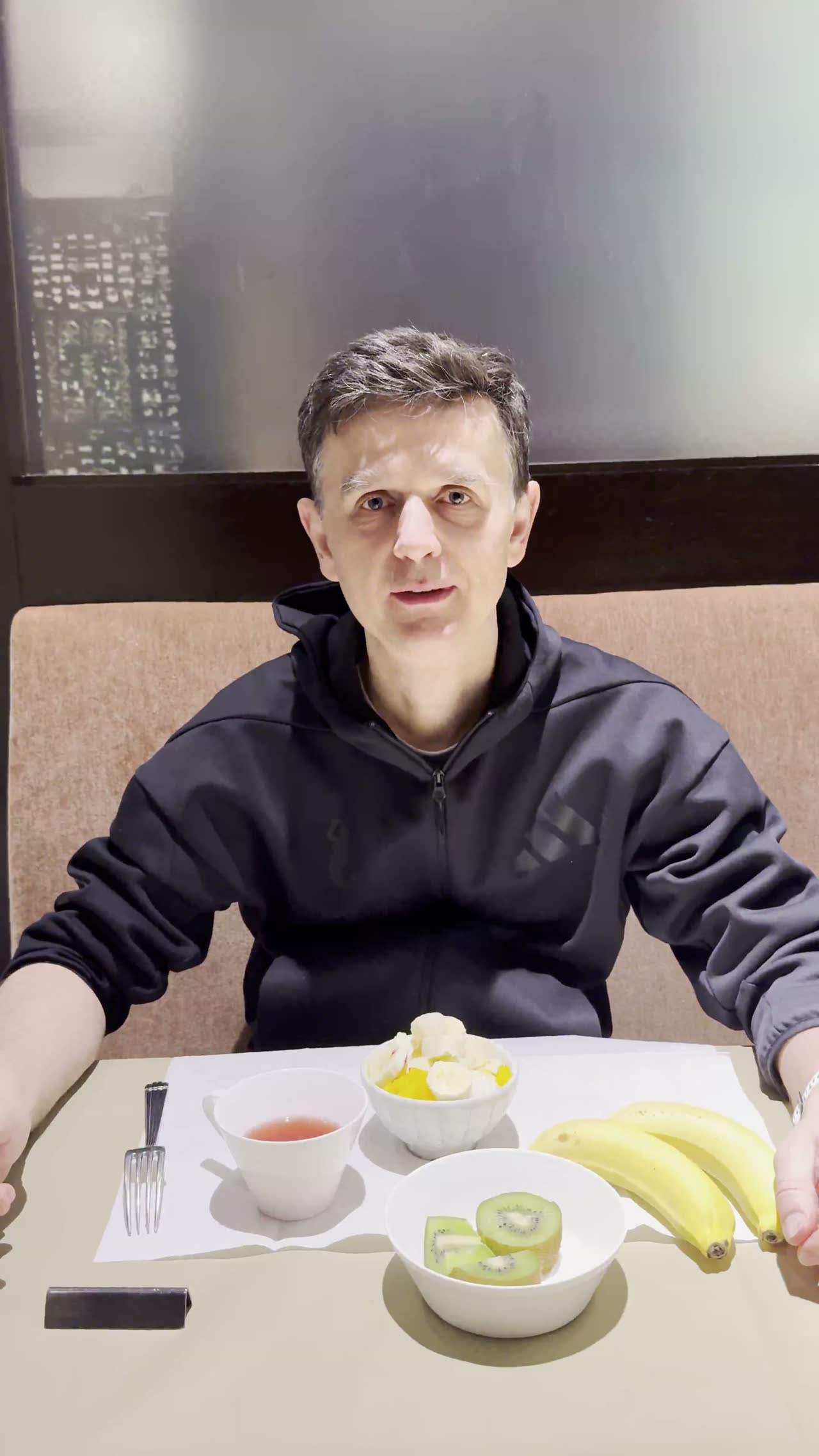
I'd chosen this hotel because it was two minutes from the start zone. From 5:00 a.m. it offered breakfast for runners. I went down, ate bananas with mango and rice, came back up and tried to sleep again. The glucose spike turned into a glucose crash and, this time, it worked. At eight the alarm went off.
Resignation. I feel it throughout my body. Out of helplessness, it's not even anger anymore — just resignation. I want to sleep more. But I get up and go.
Someone in Poland sent me a message during the night. It’s stayed with me: enjoy every step, take it easy. That's a plan. Probably the only sensible one.
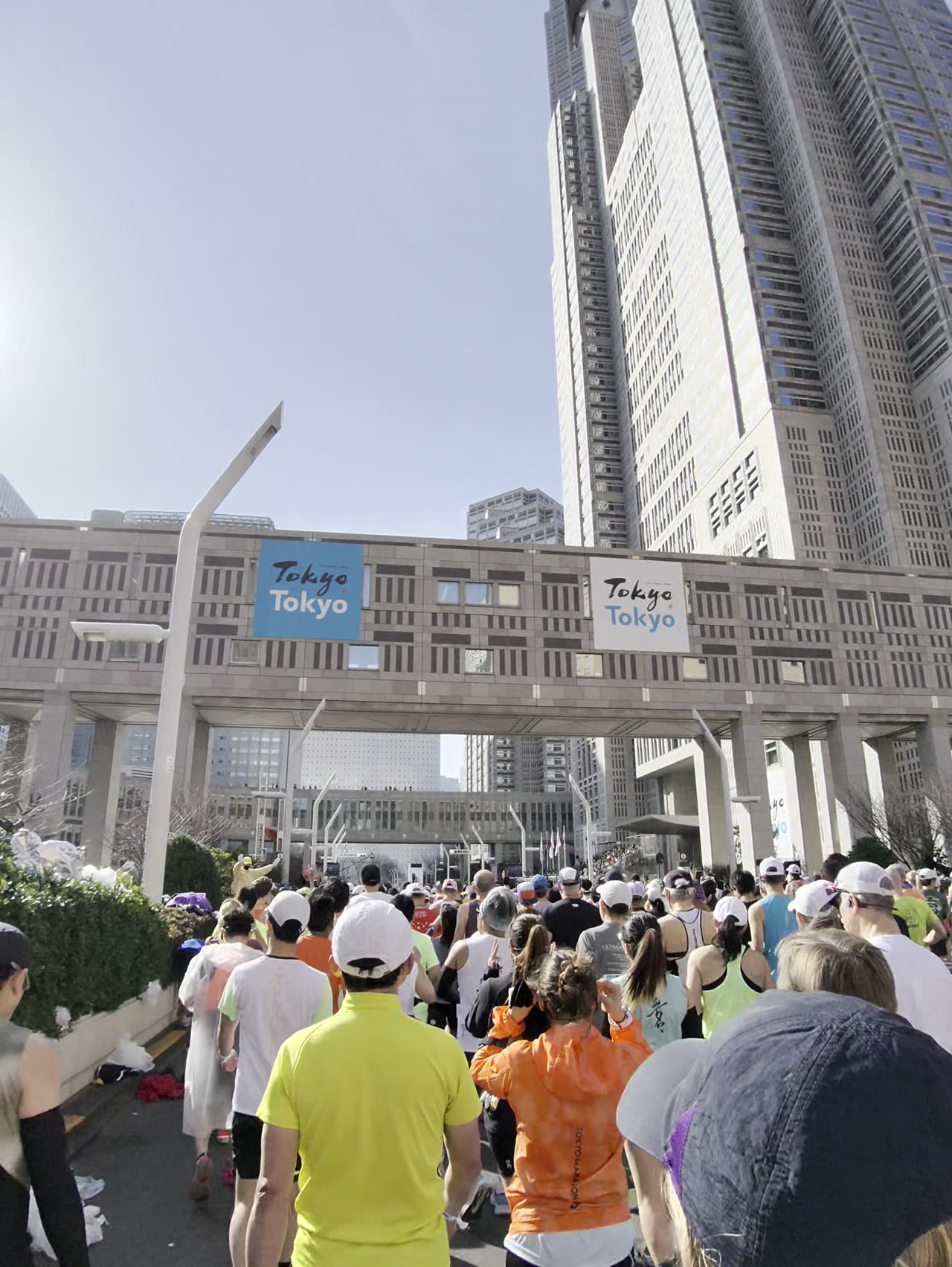
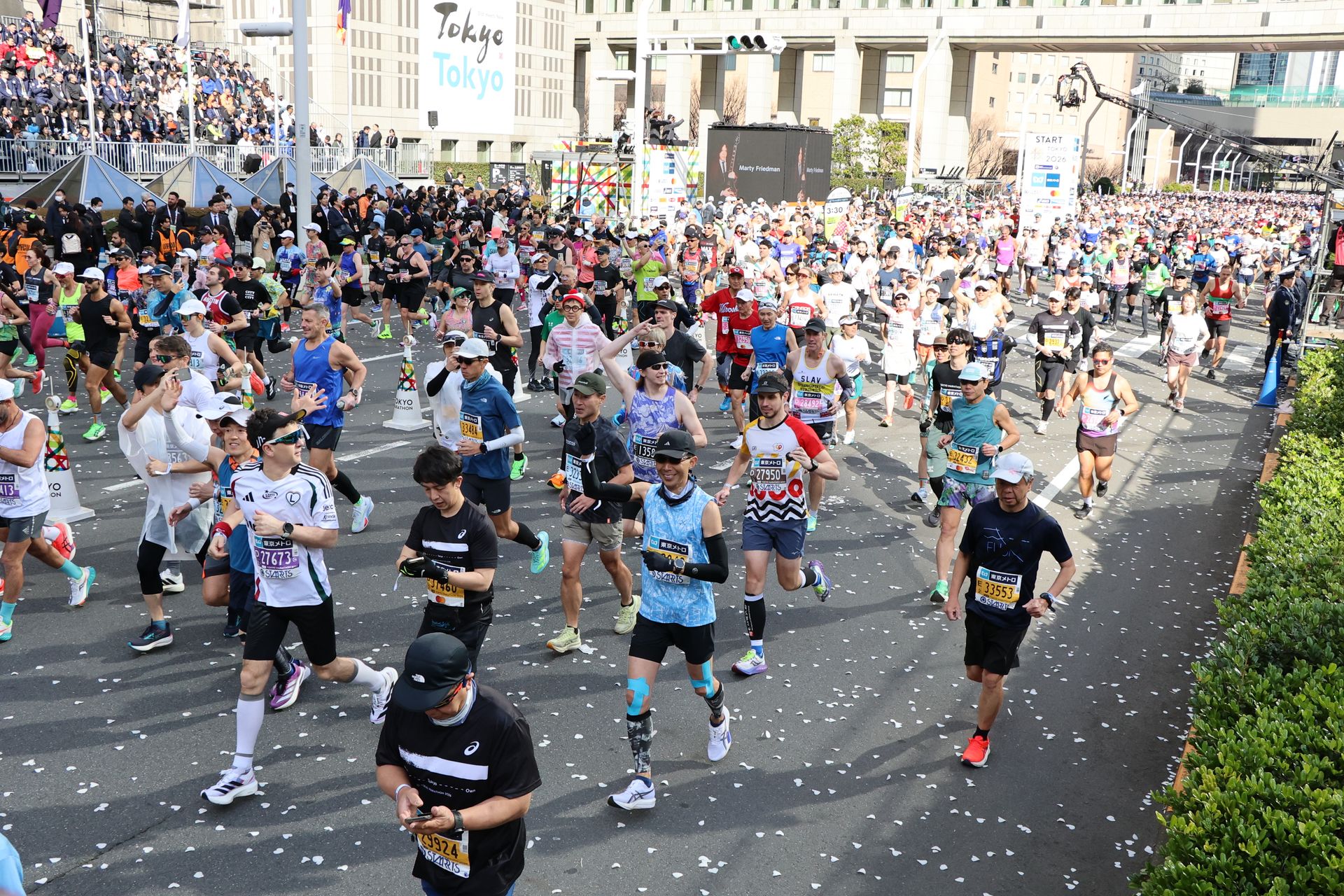
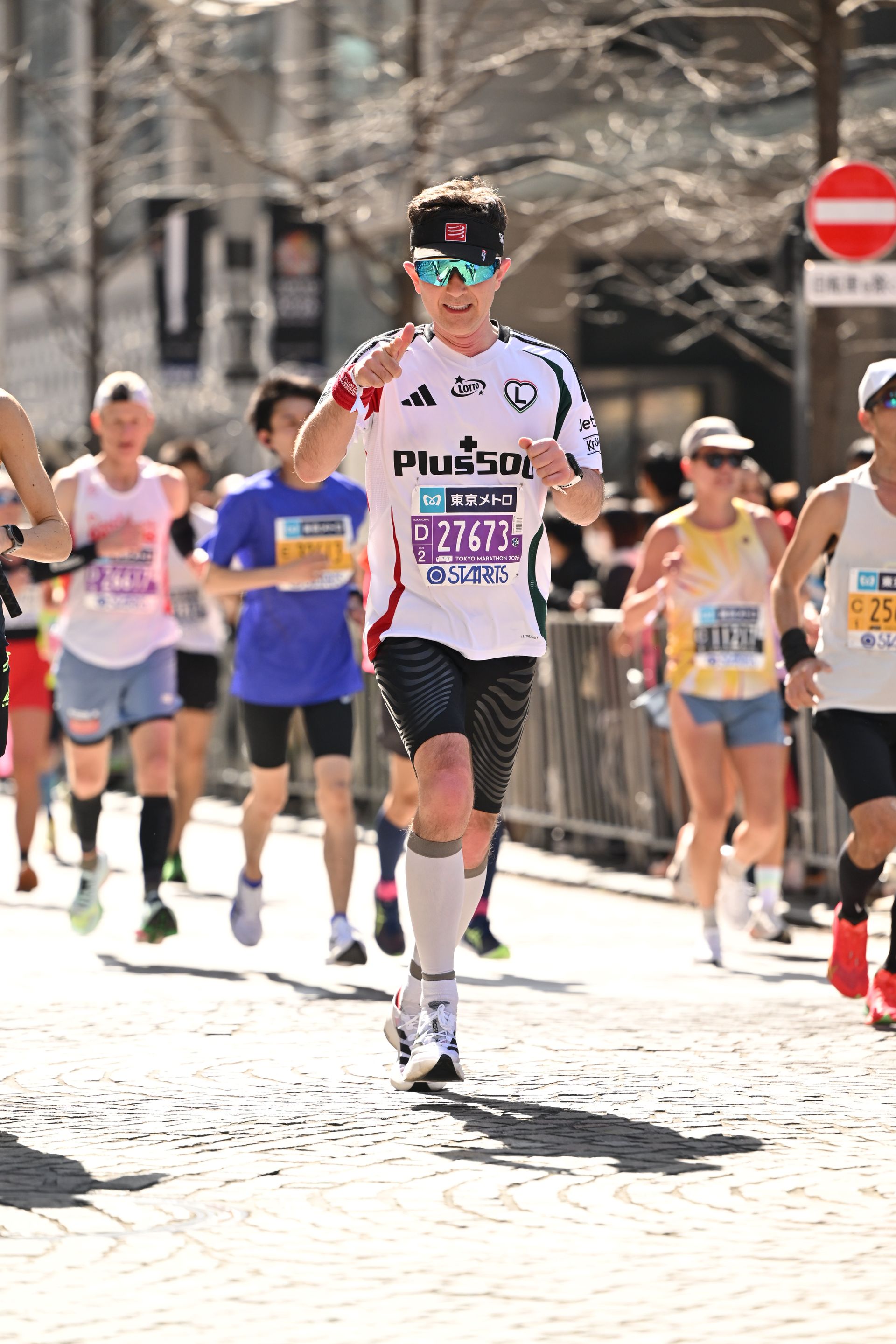
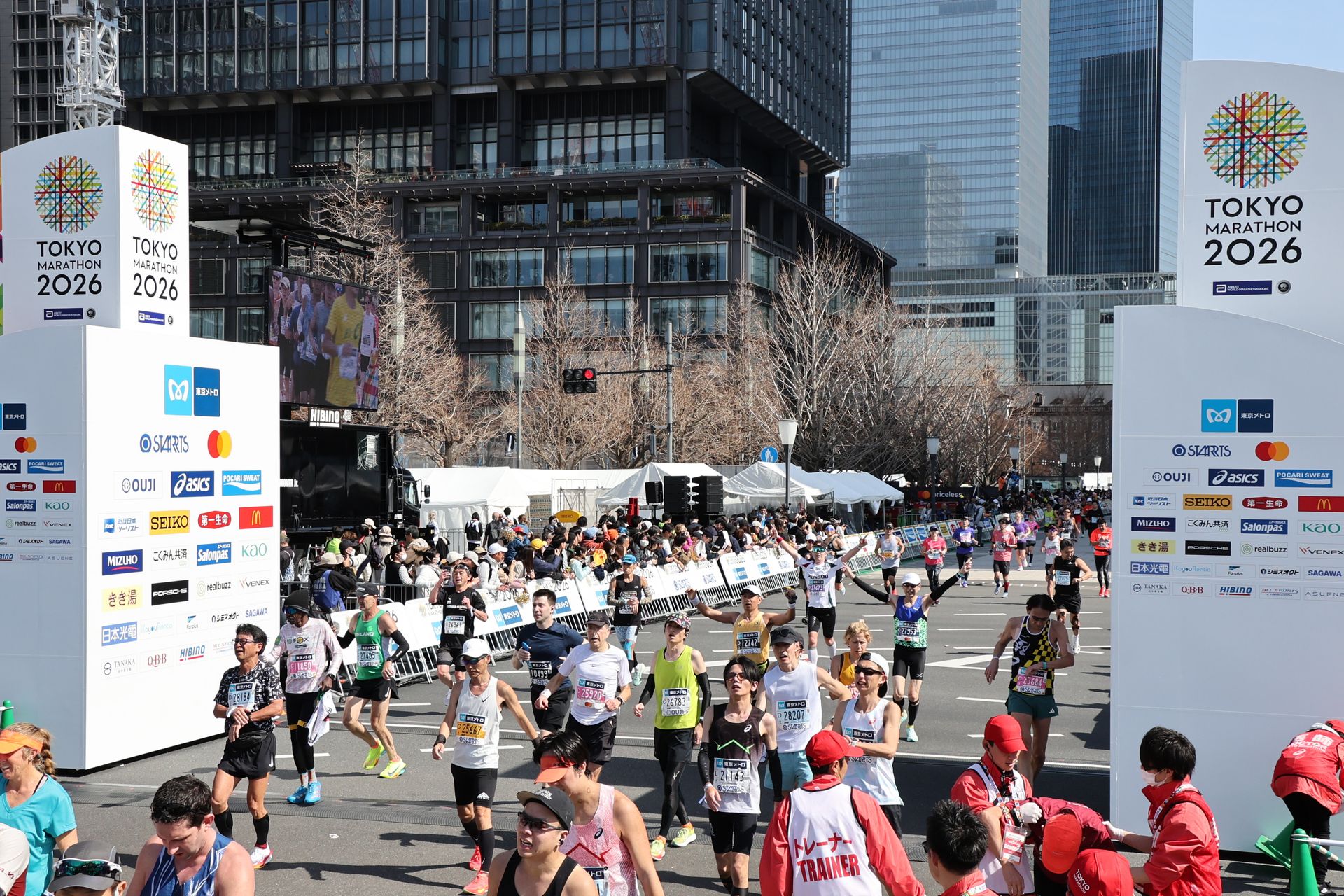
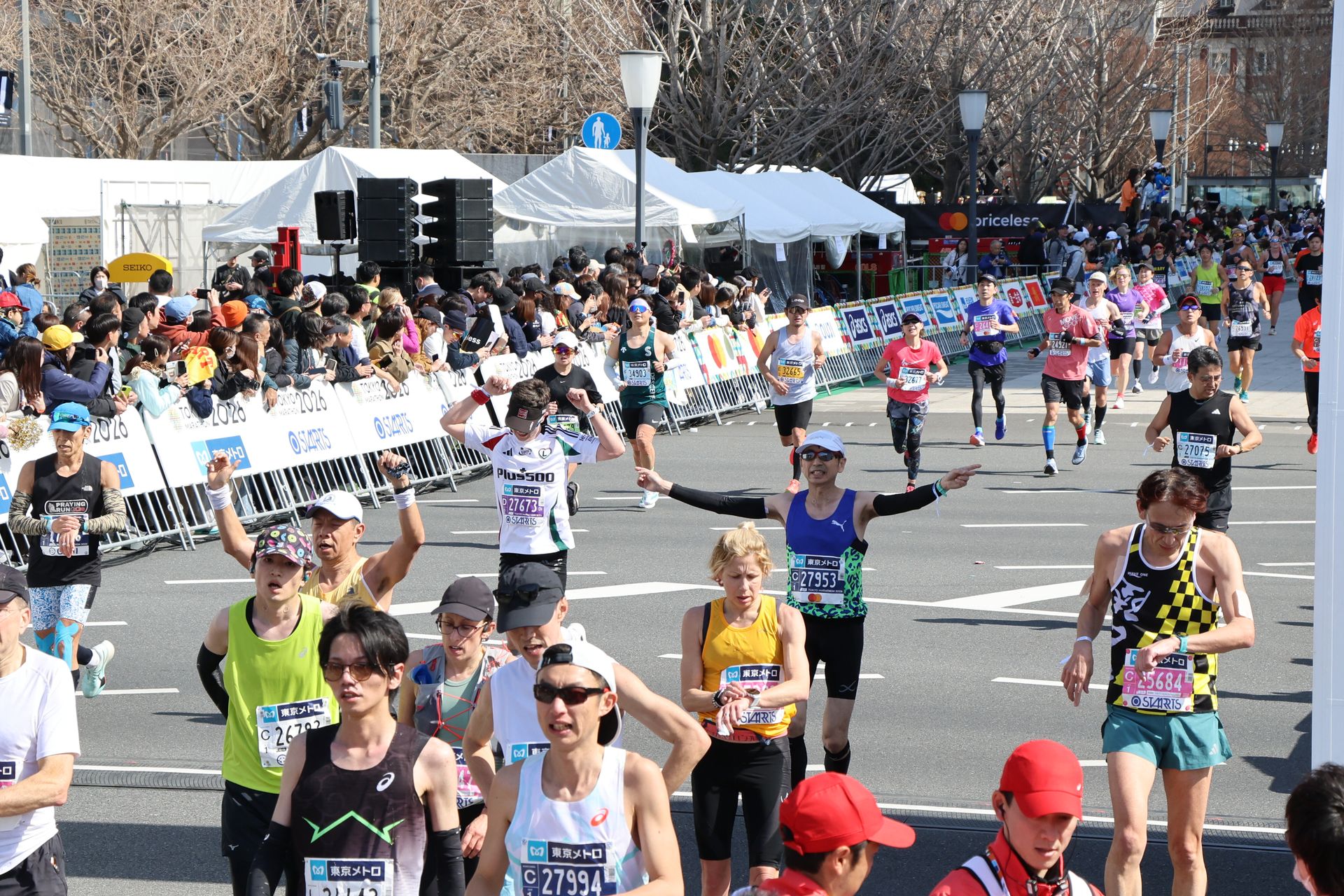
So I change my goal — from "breaking my personal best" to "finishing the race". With some kind of dignity intact. And if I'm only going to finish, it might as well be enjoyable. I can take it slowly. With a PB or without, the finish-line medal photo will look the same. The morning is cool but sunny. I approach the start line and get emotional like a child. My voice breaks. I can finally savour this moment, full of light. To the sound of a guitar solo played on a raised platform by Marty Friedman of Megadeth, I cross the start line. The Japanese clearly have quite an abstract sense of humour.
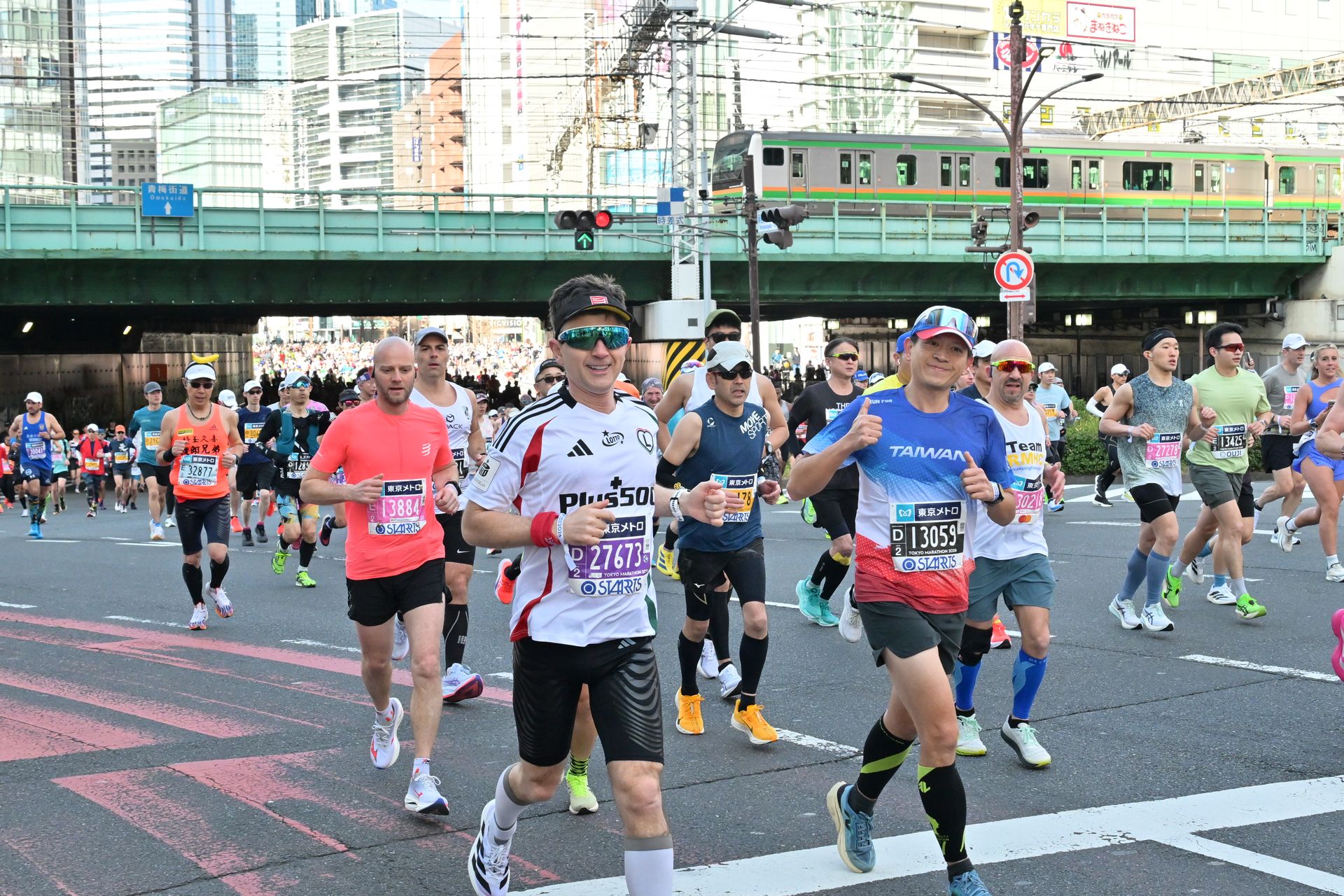
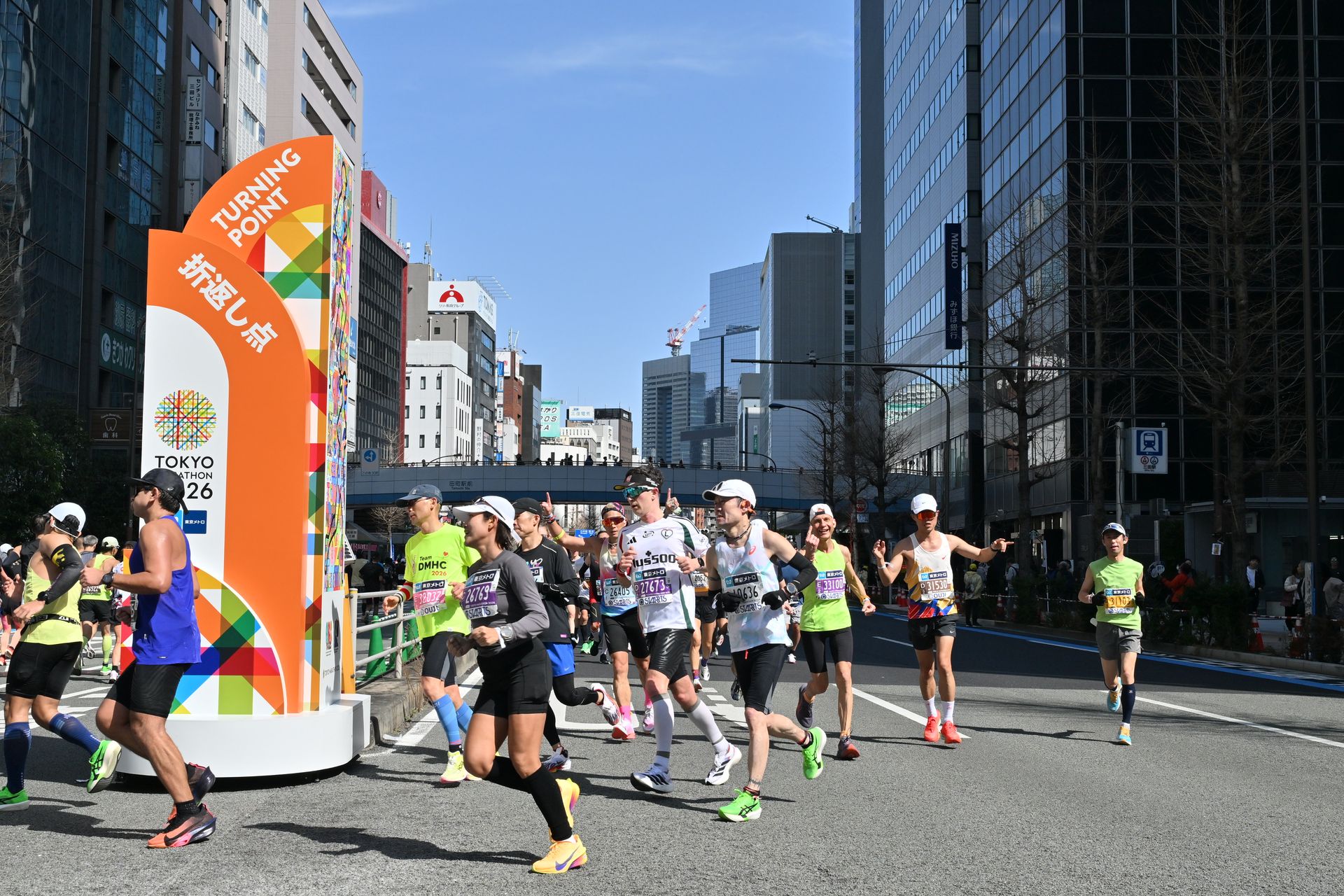
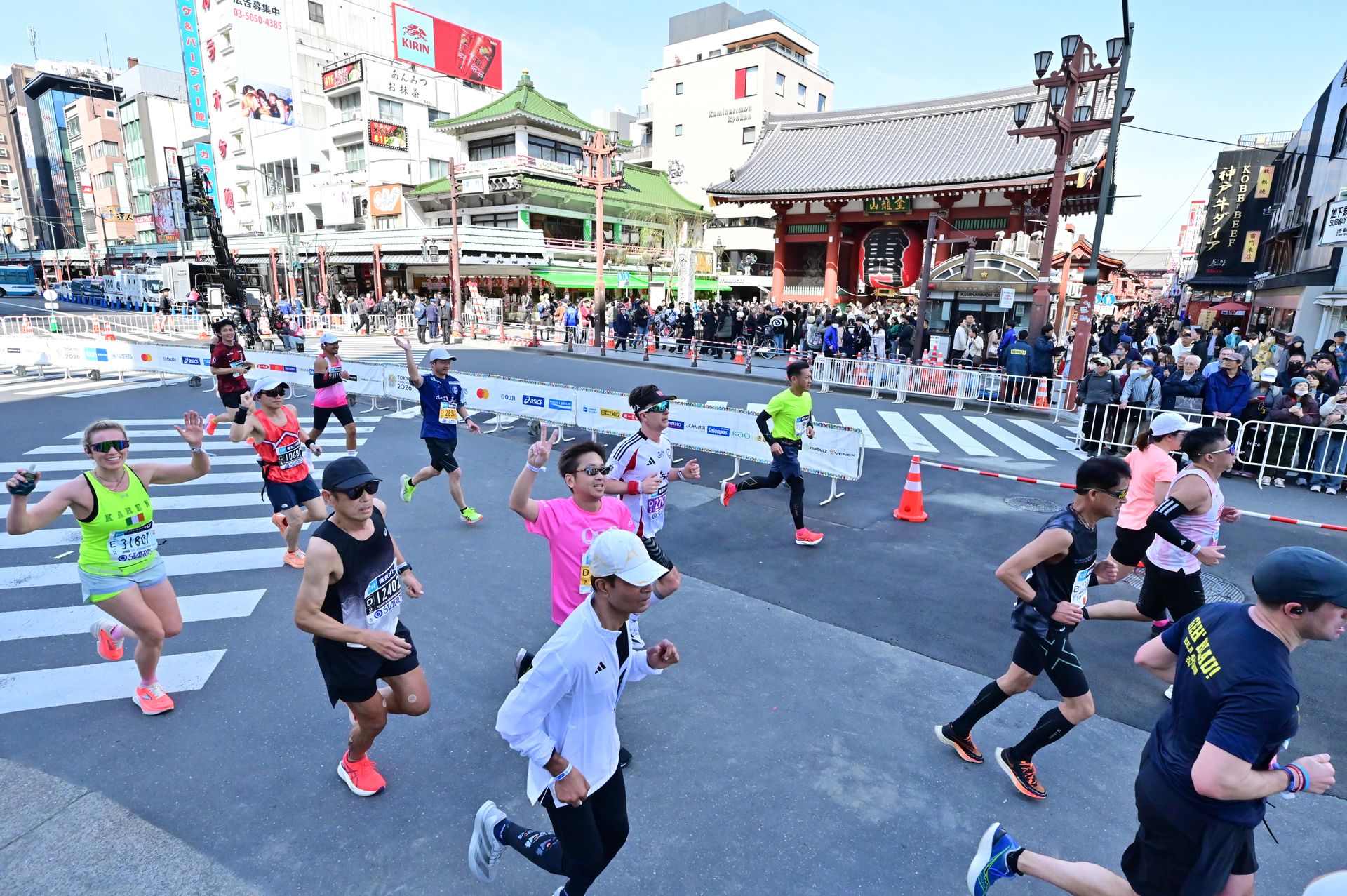
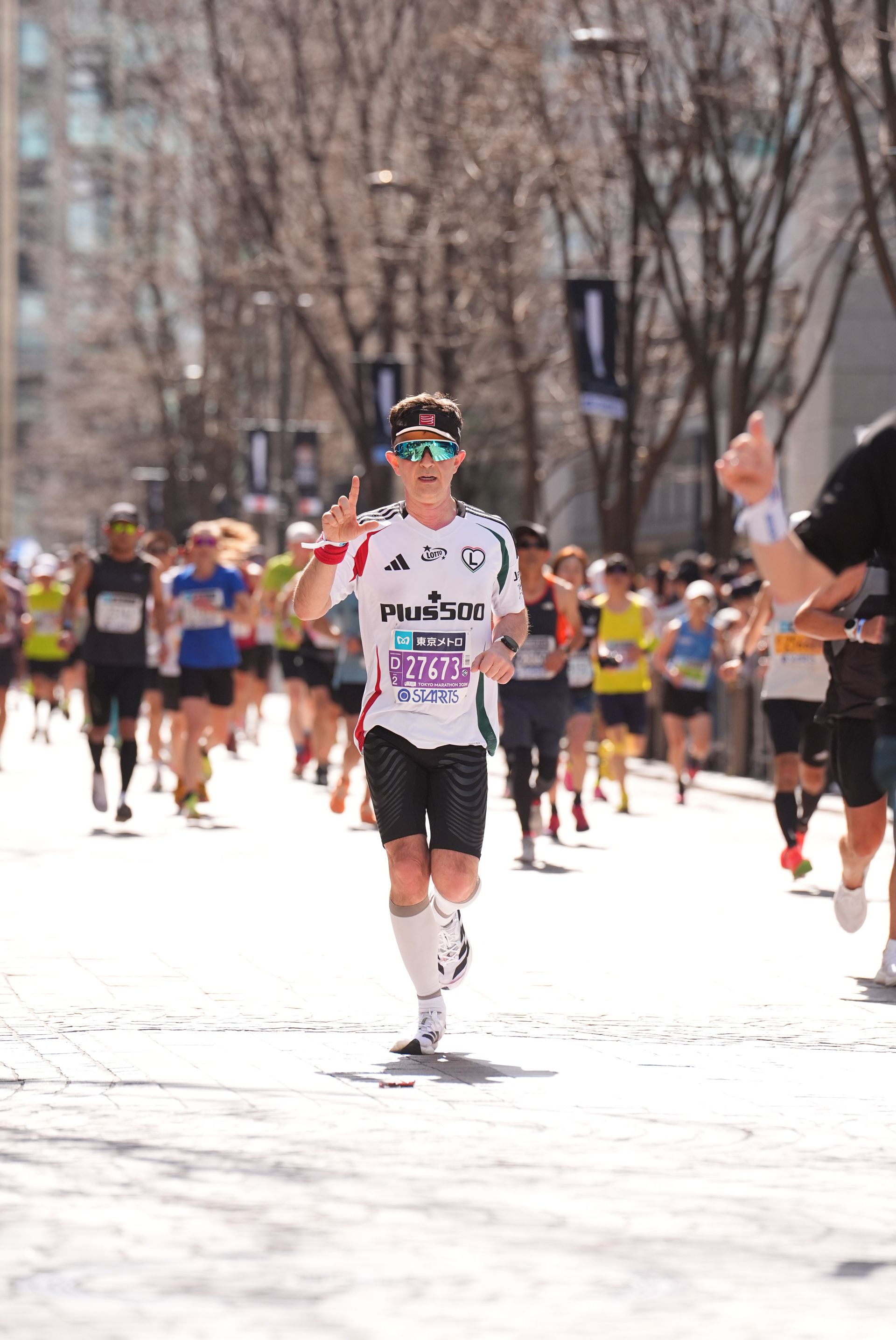
I run and, in my head, build a chain of small goals. First meeting with my wife — just after the first kilometre. Another kilometre, then the tram tracks. A downhill stretch, a bridge, a bend, and I’m at 10 km. Water stations. Halfway.
At the midpoint, the organisers announce over the PA that the temperature and humidity are rising. "Take care of yourselves. You may expect slower times," they say. I look at my watch and realise they're wrong. If I hold this pace to 30 km, I can go after my personal best — 3 hours and 27 minutes, set at the Nice–Cannes Marathon in 2019. But I don't want to think about that yet.
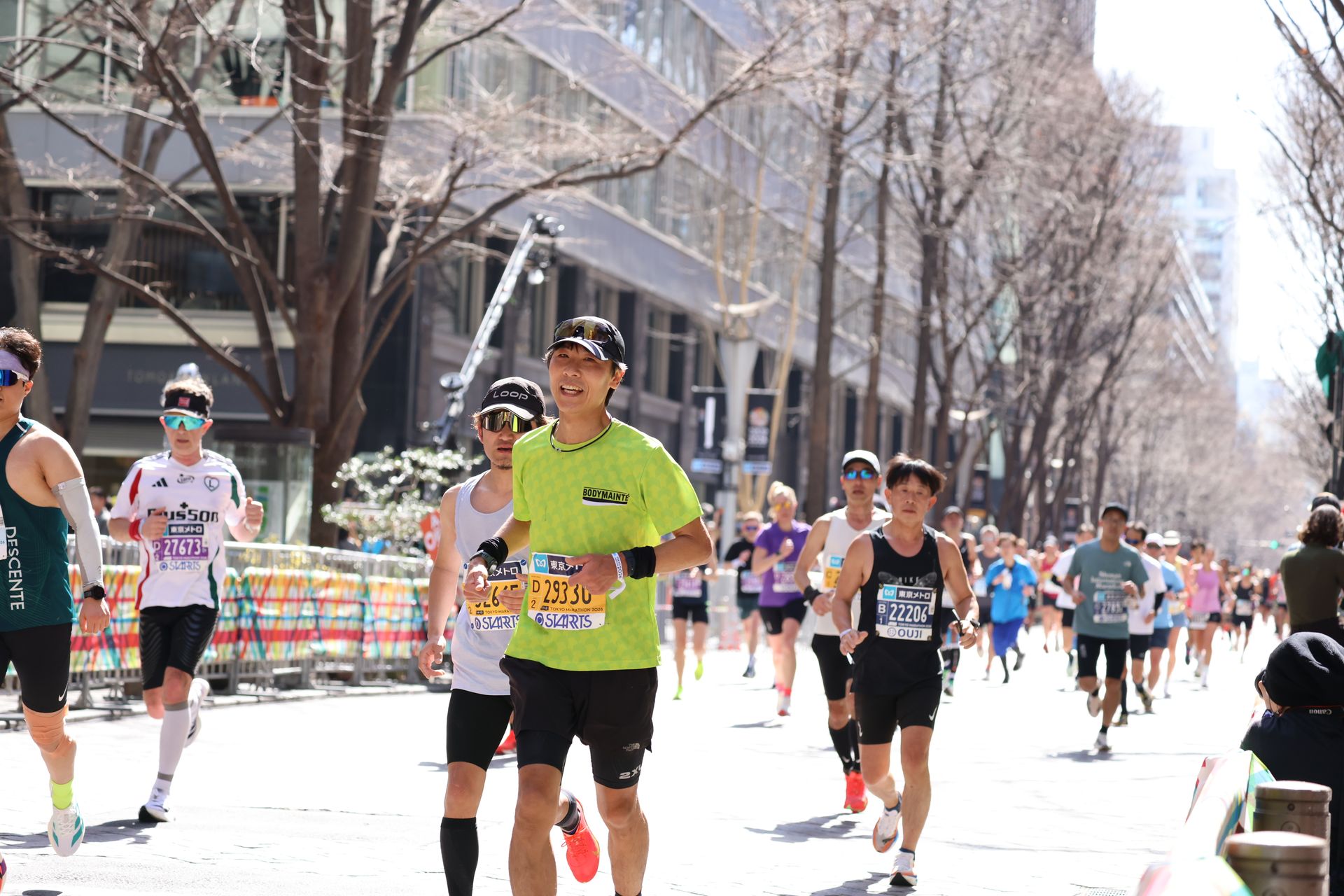
At the 29th kilometre, I pass my wife. From kilometre 30, I start to believe. I start counting down: 1/12, 1/6, 1/4, 1/3 — half of the final 12-kilometre stretch behind me. Every subsequent kilometre is faster. Somewhere near the TV Tower in Roppongi, past the 39th kilometre, my stomach speaks up. Breakfast was too early, and between the food and the gels I'had taken on too many simple sugars. I have to stop — but only for 15 seconds. I wait for the pain to ease,then push on.
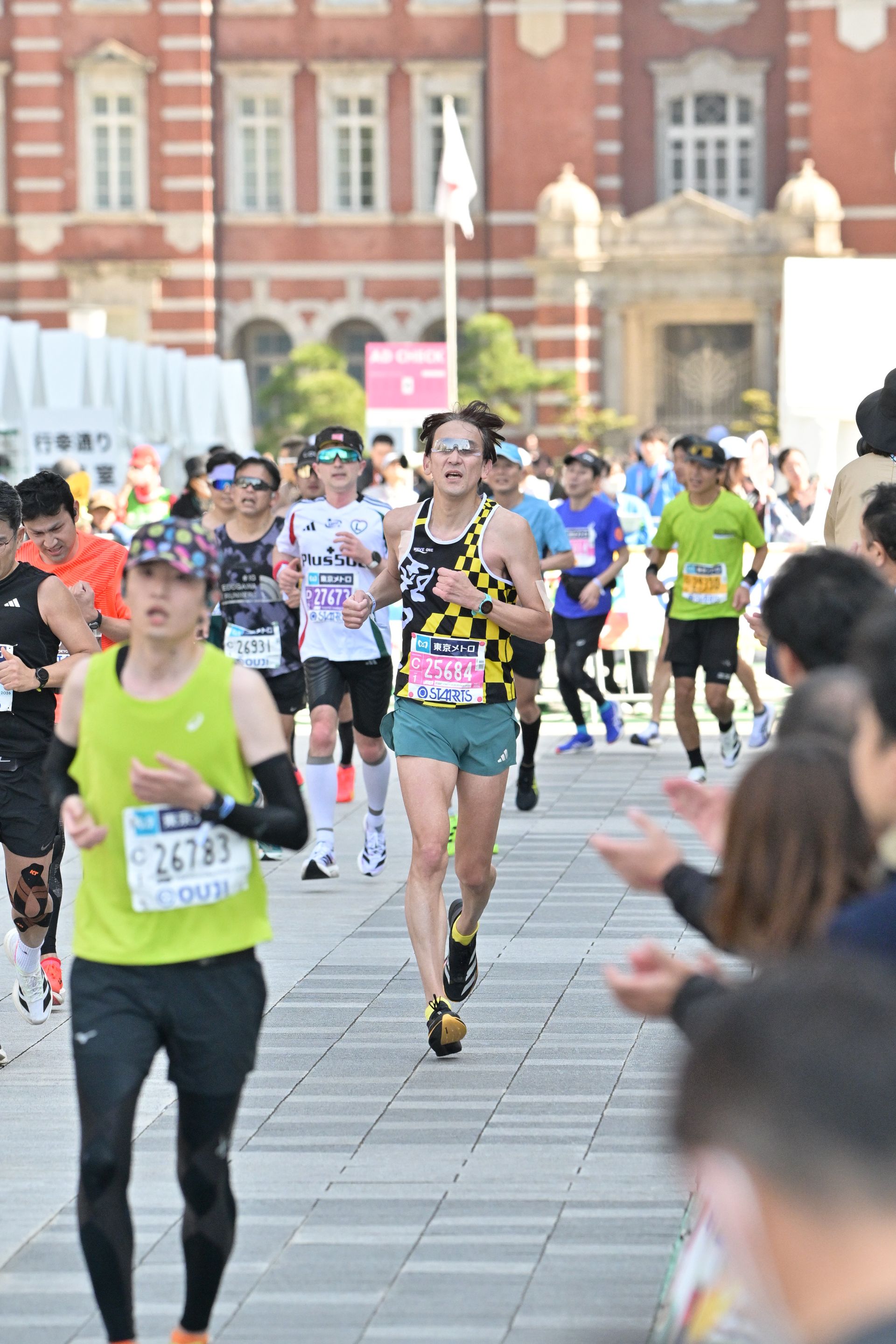
The last kilometre I run with real power. The final metres I sprint.
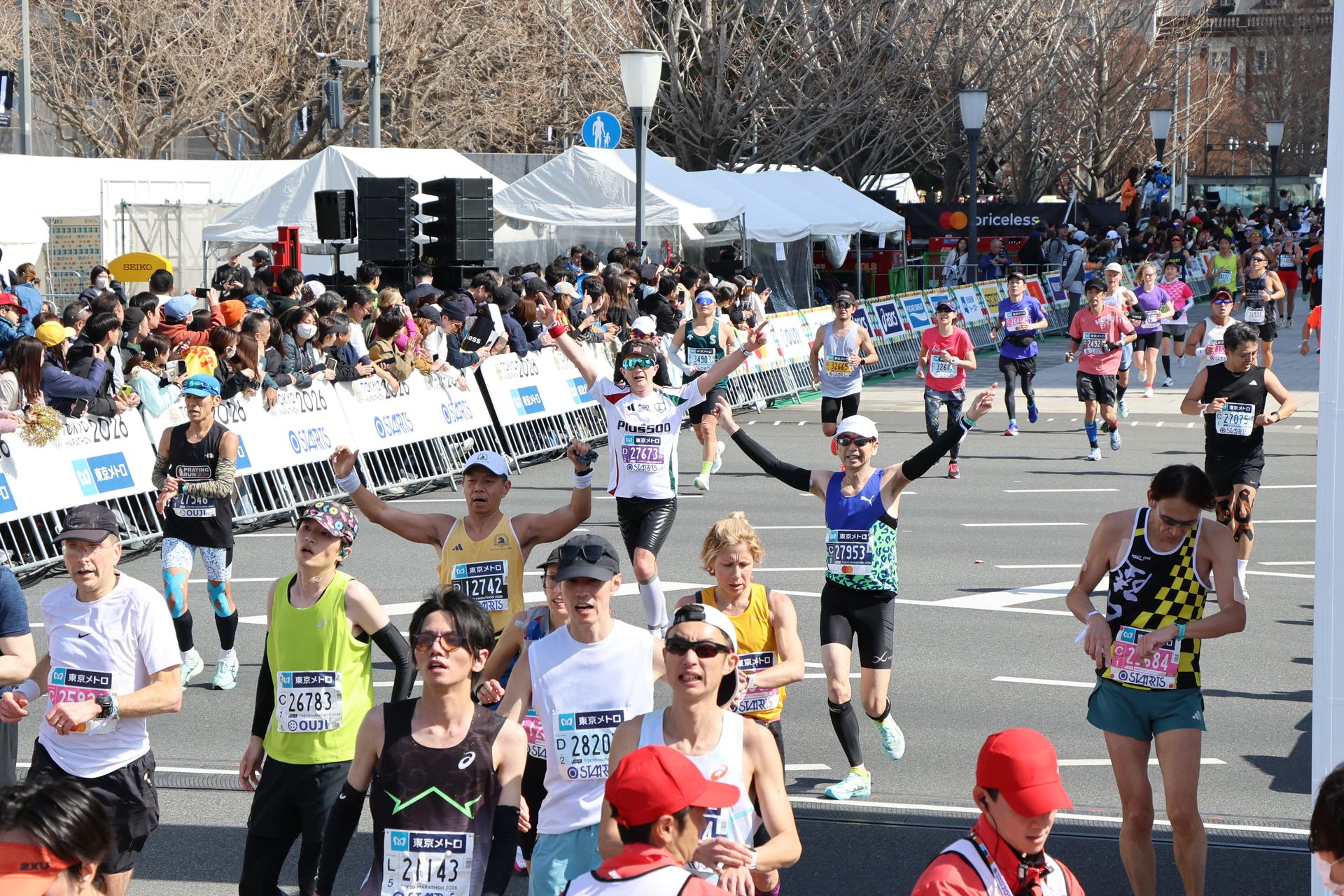
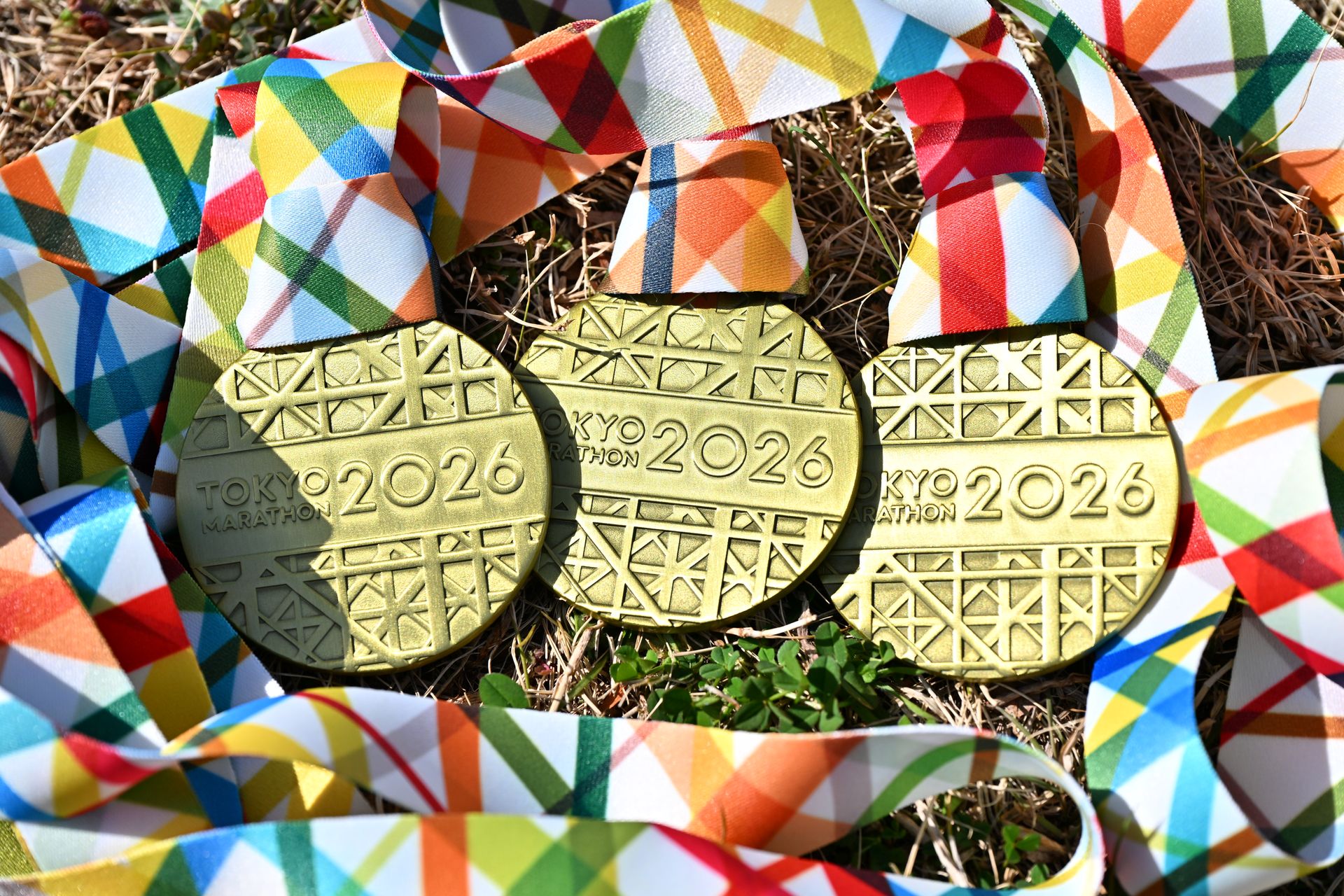
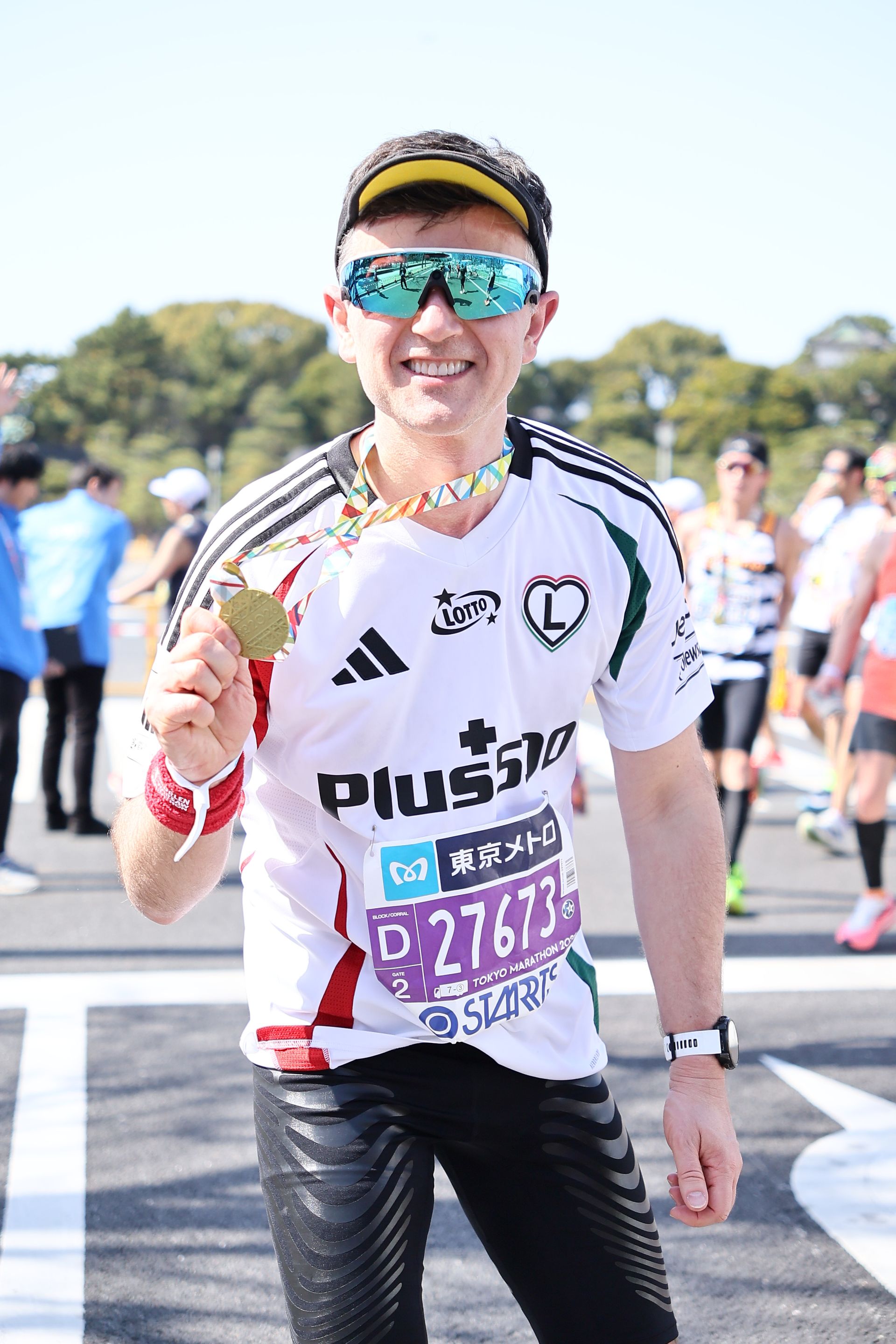
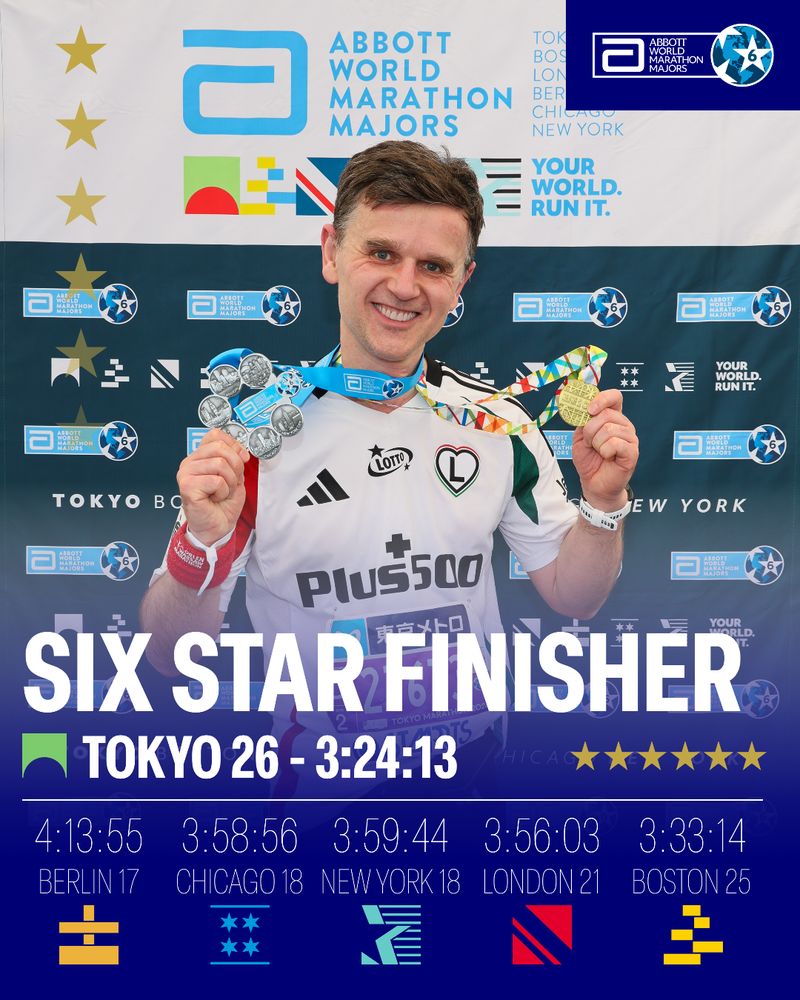
With a time of 3:24:13 I break my personal best by three minutes.
Before I get to the money — which is ultimately what this piece is about — a word on the numbers from my Garmin. What happened in Tokyo, not just on the course but in the data, matters more to me than the medal itself.
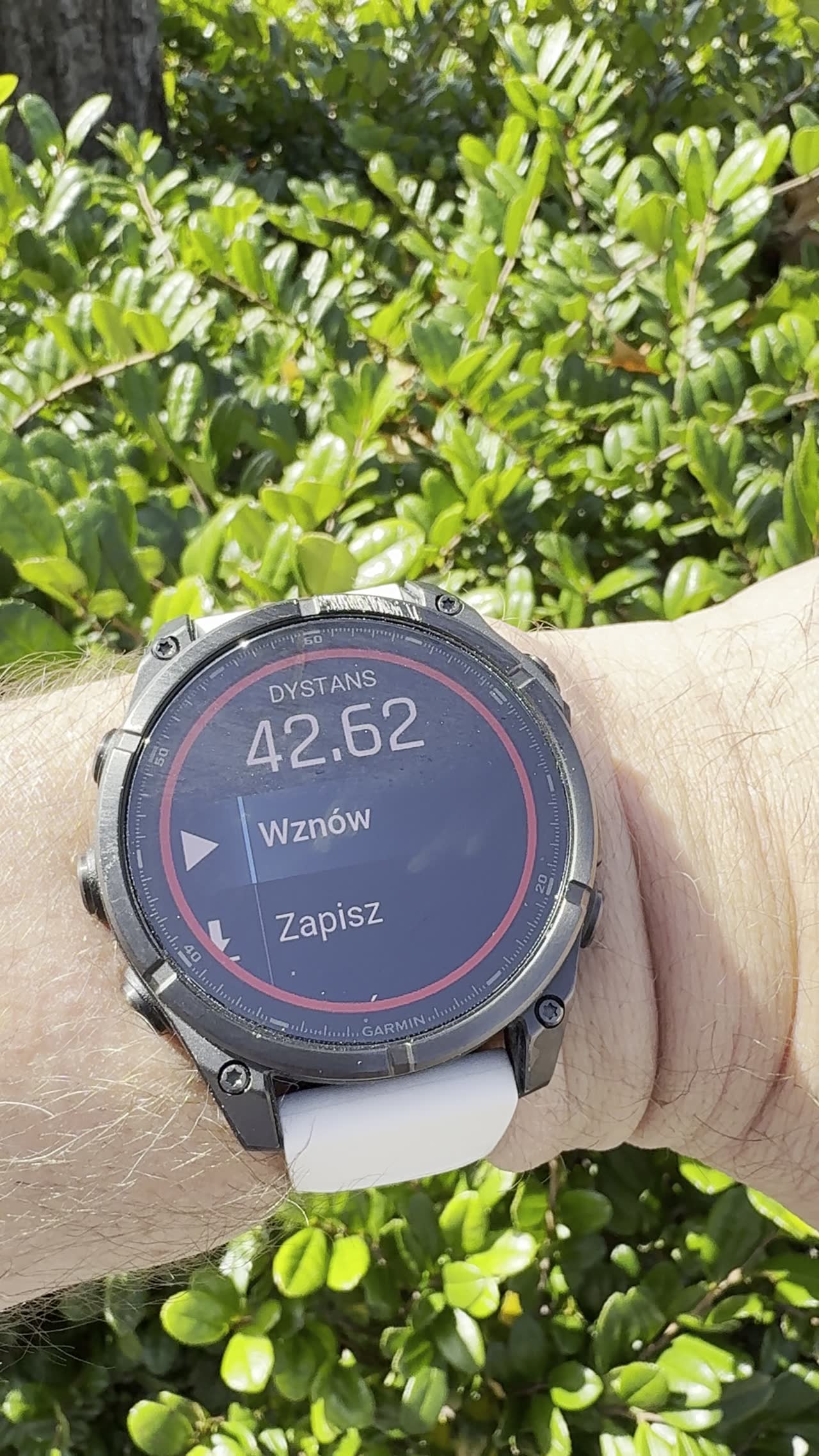
My Garmin recorded: 3:24:15, an average pace of 4:47/km, average heart rate of 140 bpm — the lowest heart rate of any of the dozen-plus marathons I've run. Average pace in the first half: 4:46/km; in the second: 4:48/km. A two-second difference is an almost perfect split. My coach would later say I went out for a light jog.
For comparison, at Boston in 2025 — less than a year earlier — my second half pace was 23 seconds per kilometre slower. So there's progress.
What surprised me most, though, were the stride metrics. My average stride length in Tokyo was 120.9 cm. In the final phase (km 35–42), it was 119.1 cm — a decline of 2.5%. My power output dropped by 3% over those closing kilometres.
The Boston comparison is flattering. That same phase there, my stride collapsed by 11% and my power dropped by 14.4%. Someone will say Tokyo is flat — but this, ladies and gentlemen, is what progress looks like.
As for the single strongest predictor of pace among all the variables I measured, the correlation between stride length and running pace was r = -0.89. The conclusion, at least for me, is straightforward: on the flat Tokyo course, it wasn't cadence or power output that was the decisive performance indicator — it was stride length. That I didn't see coming either.
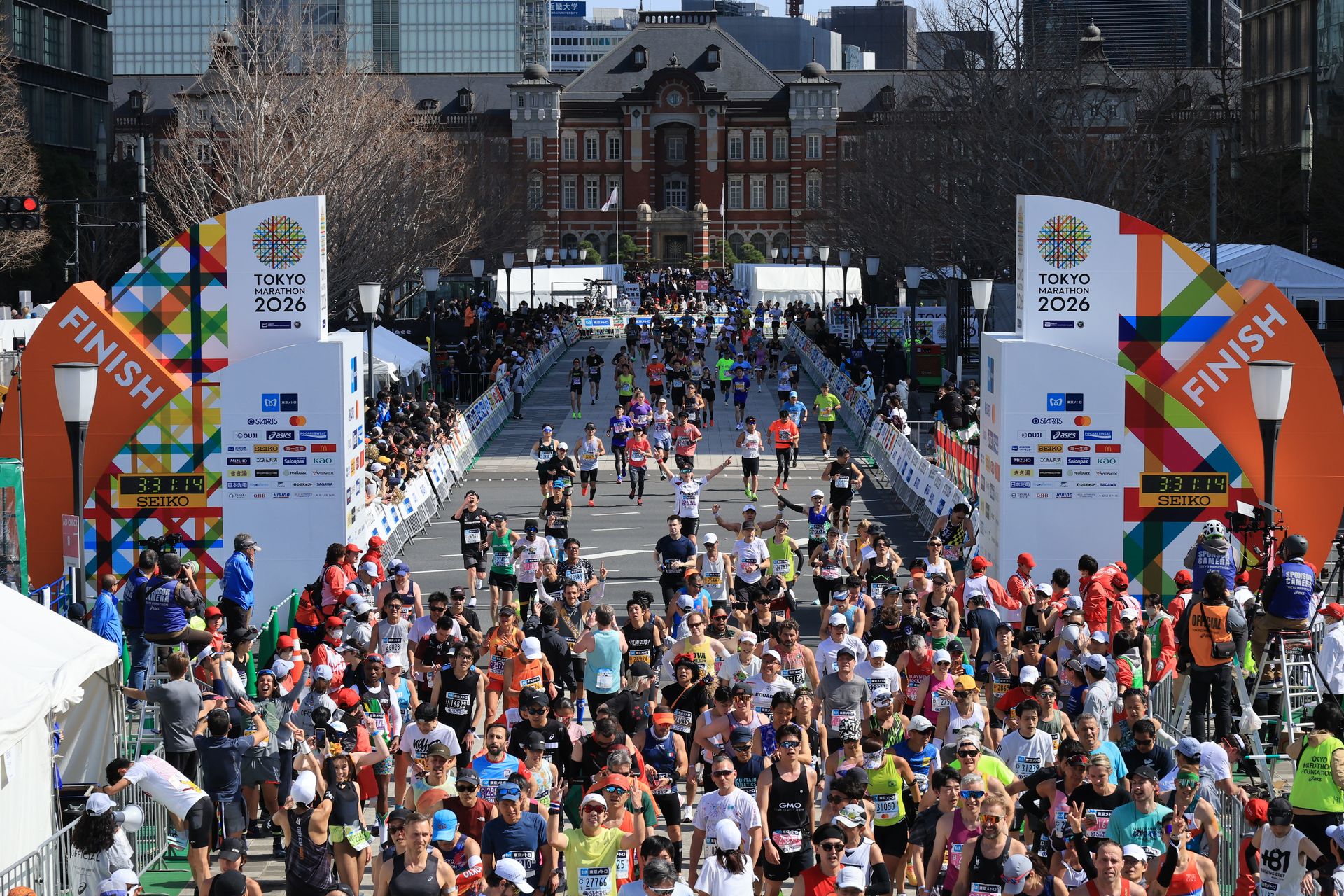
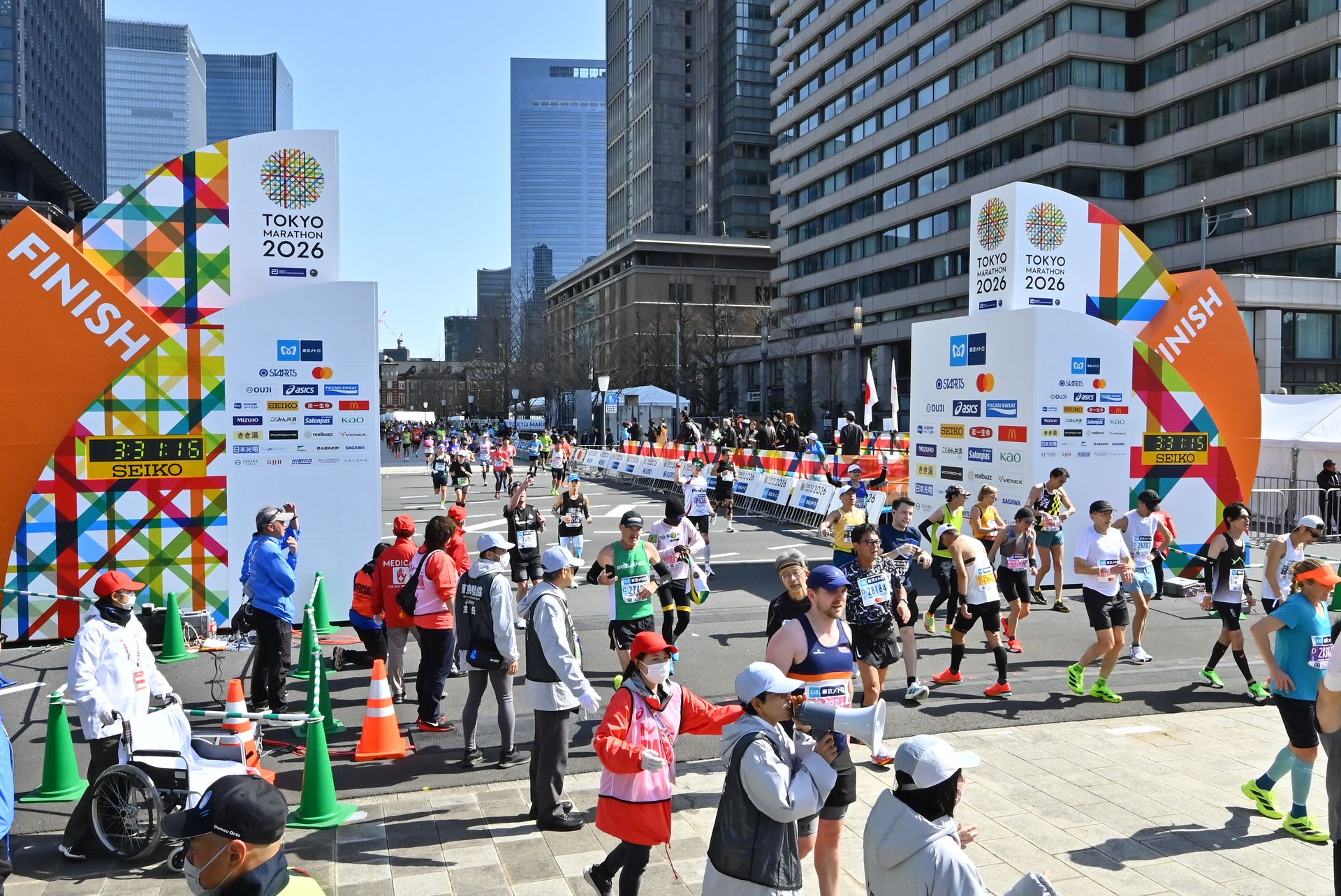
Several hours earlier, the Tokyo Marathon finish line had been crossed by Marcel Hug — the "Silver Bullet" — in a time of 1:21:09. Switzerland's unbeaten wheelchair marathon champion had broken away at kilometre 15 and ridden solo, into the headwind, for nearly 27 kilometres. Some time after him, Tadese Takele crossed the line to win the elite race. An hour later I did too, somewhere in a crowd of forty thousand runners.
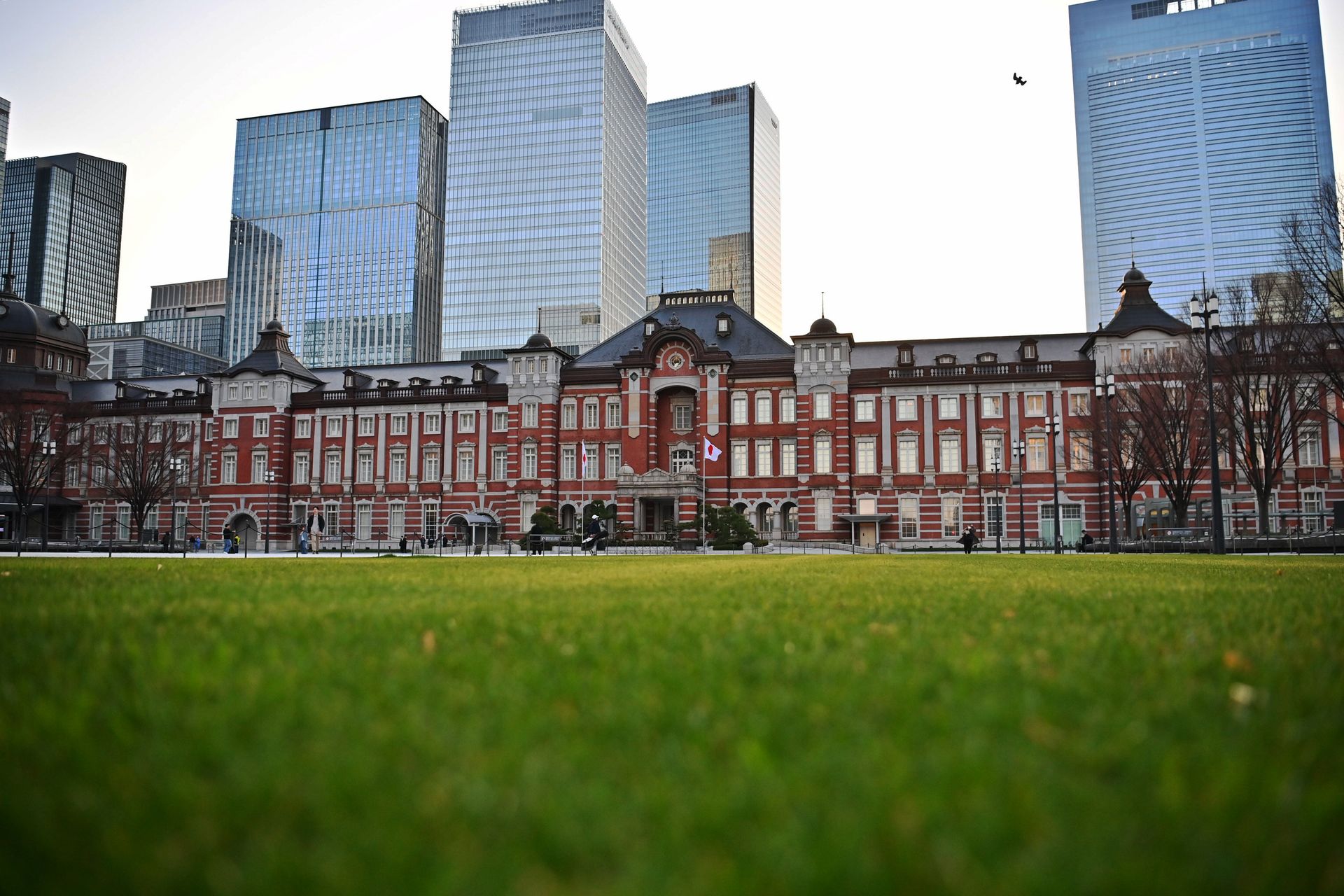
The organisers had laid on buses near the Imperial Palace for international participants returning to the Keio Plaza in Shinjuku. Standing in the queue, surrounded by hundreds of people wearing the same smile as me, I felt something I'd felt after each of the previous five Majors: I had taken part in a commercial undertaking that now spans seven of the world's greatest marathons, draws 40,000 participants to a single start, and operates under brands with a combined value approaching one billion dollars. This enormous business machine is turning faster and more efficiently all the time — and that's precisely why it attracts capital.
And my medal and I are a small cog in it.
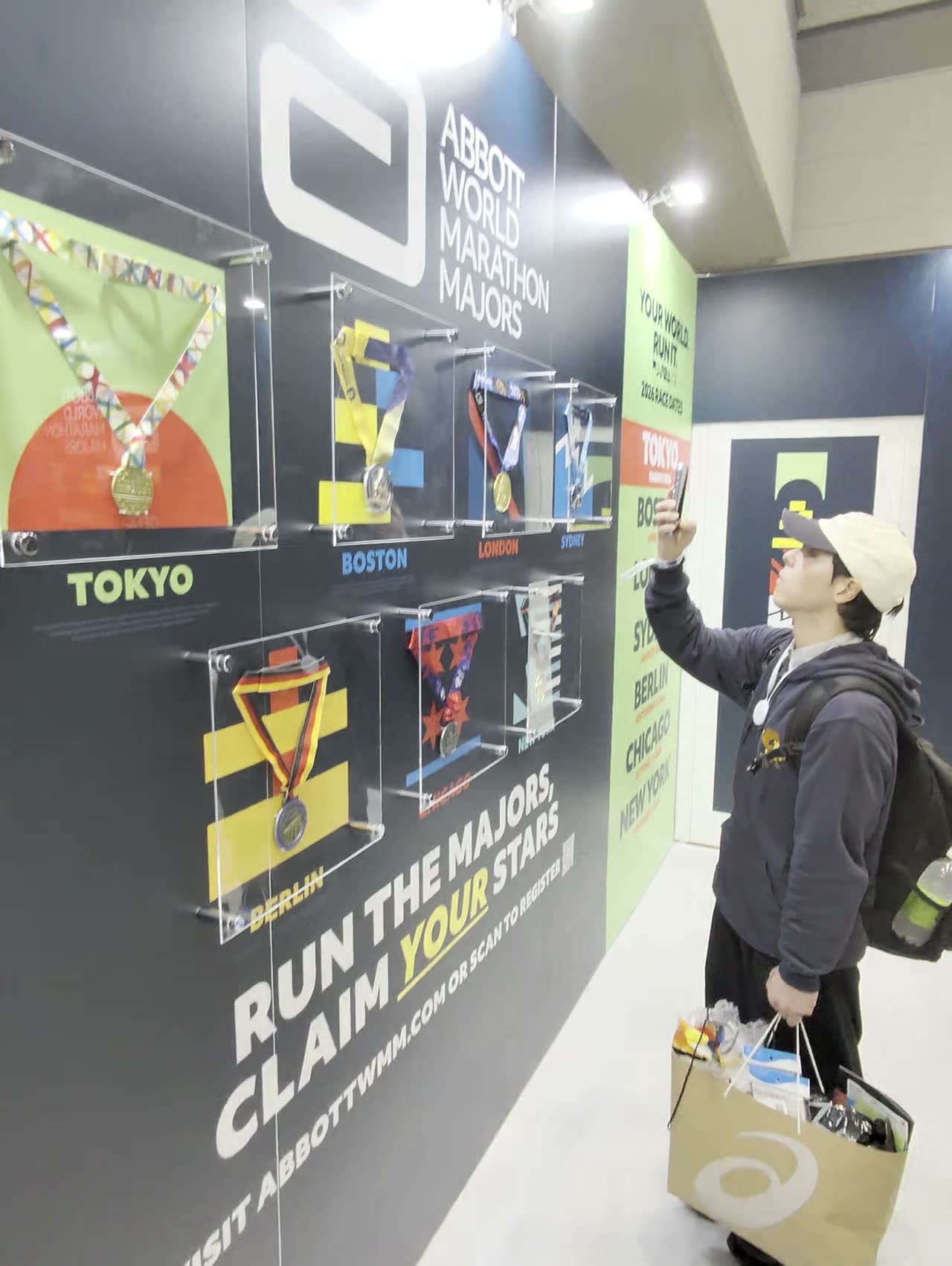
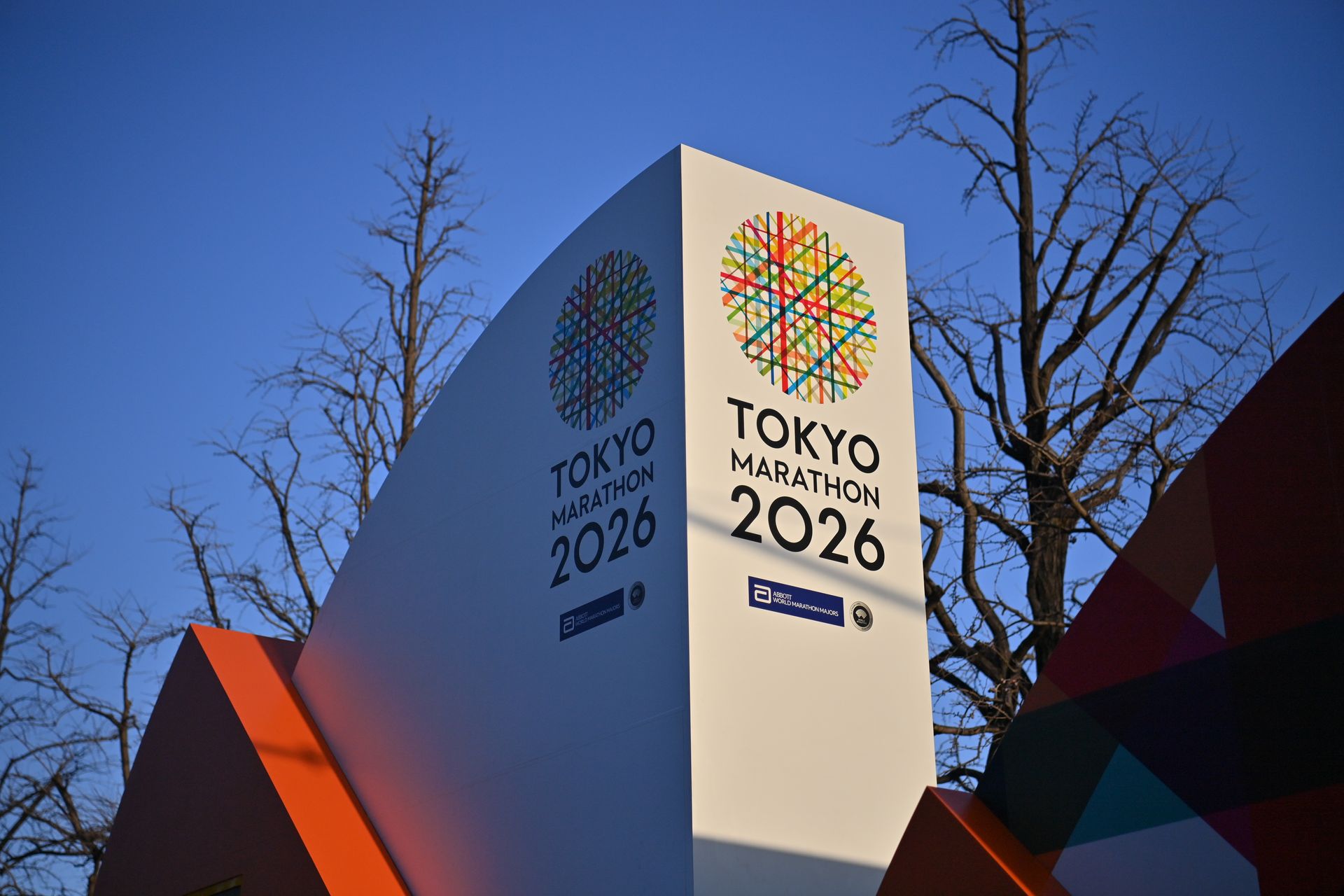
The Abbott World Marathon Majors series was established in 2006. It now brings together seven races: Tokyo, Boston, London, Berlin, Chicago, New York, and — since 2025 — Sydney. Each event draws between 30,000 and 50,000 participants. Entry is gained through a ballot, a qualifying time, a travel package, or a charity place. Far more applicants seek entry than there are places available, and that imbalance isn’t narrowing year by year — it's growing.
WMM declares parity: identical prize pools for women and men, with the wheelchair category treated on a par with the open classification. In practice, however, prize structures are set by individual organisers. In London they are equal across all winners. In Tokyo in 2026, not yet: Marcel Hug received $25,000 for his victory; Tadese Takele received four times as much. Any tension between declared values and the actual prize structure is certainly one of the issues the series will need to address if it wants to grow as a global brand.
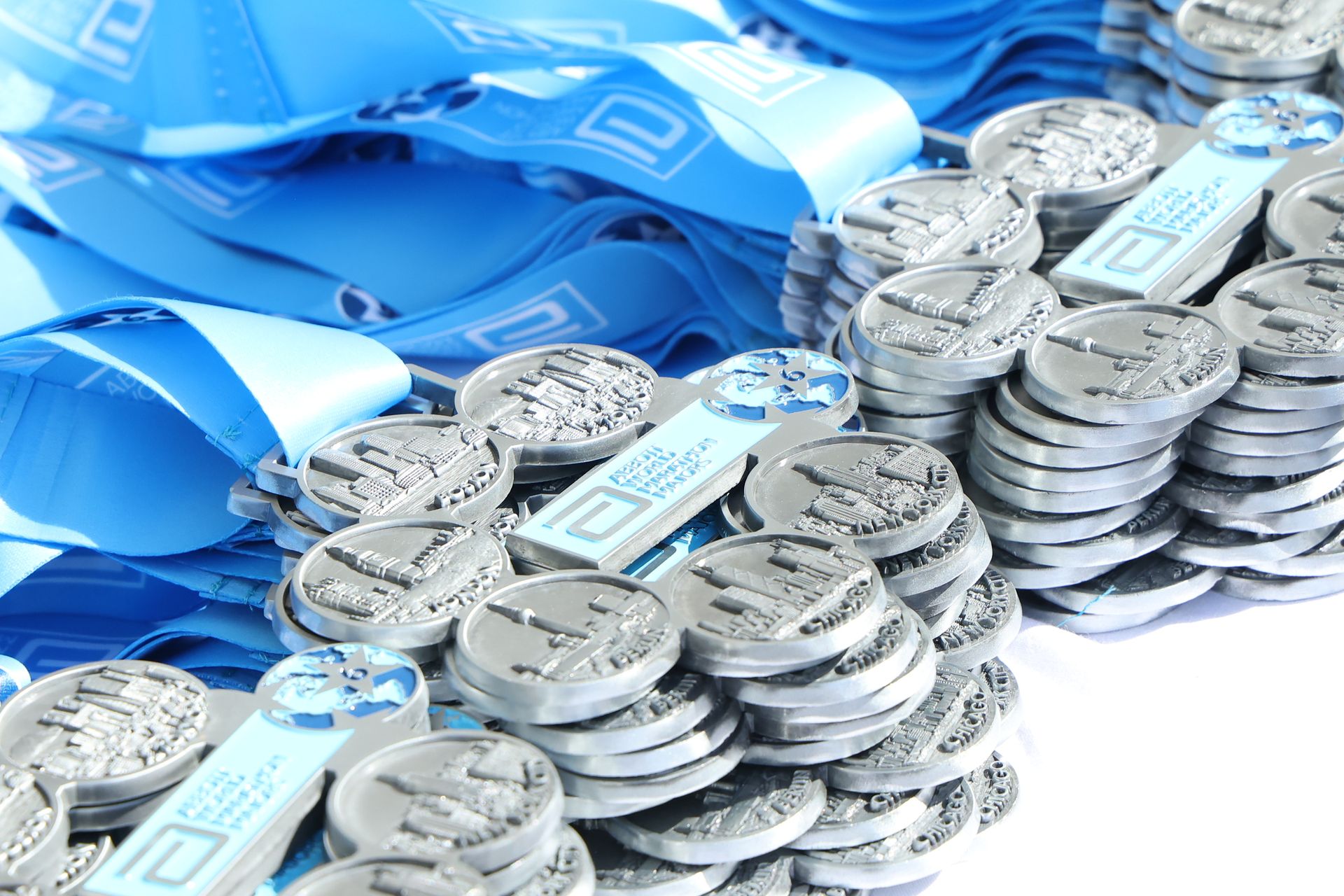
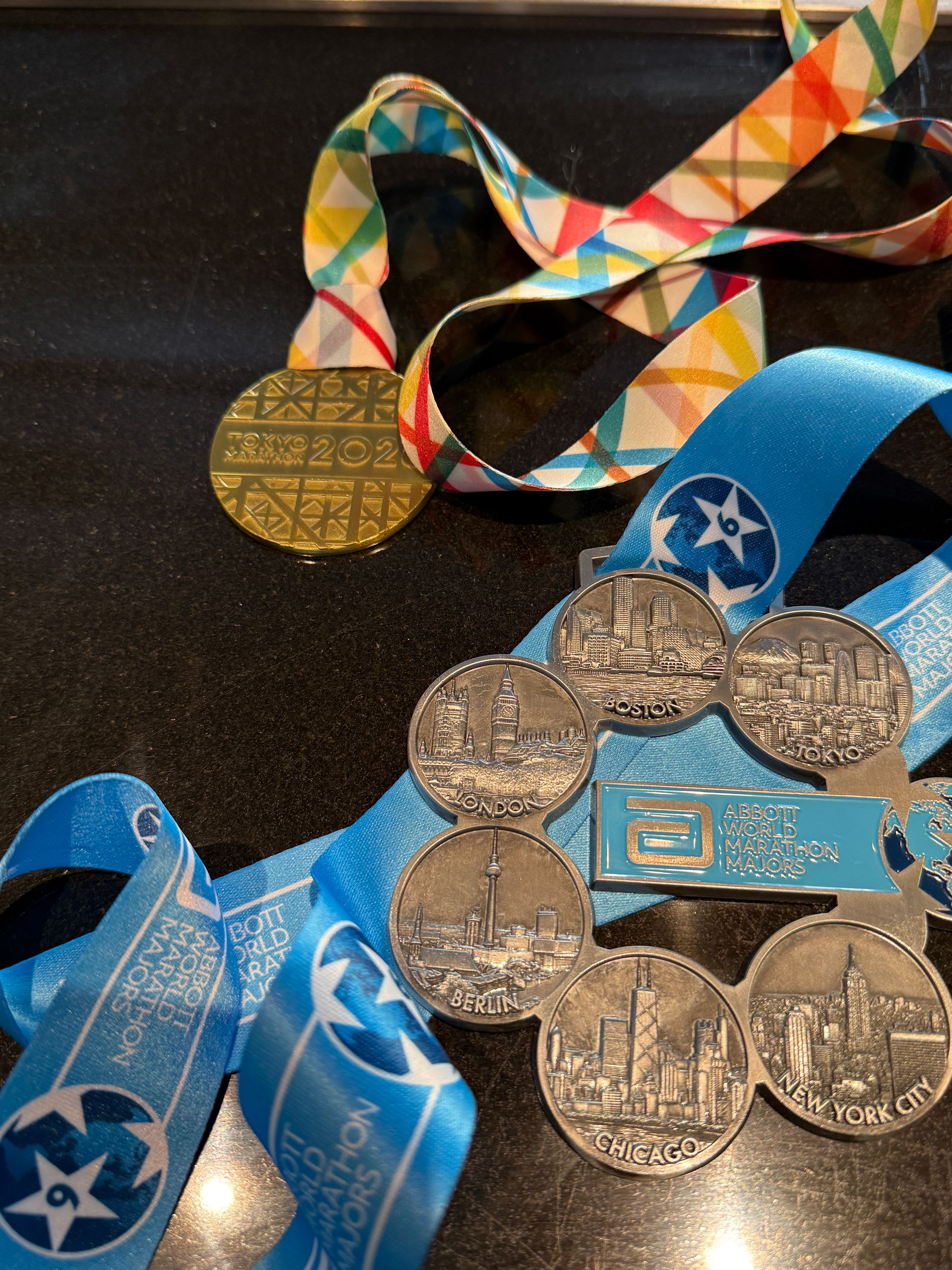
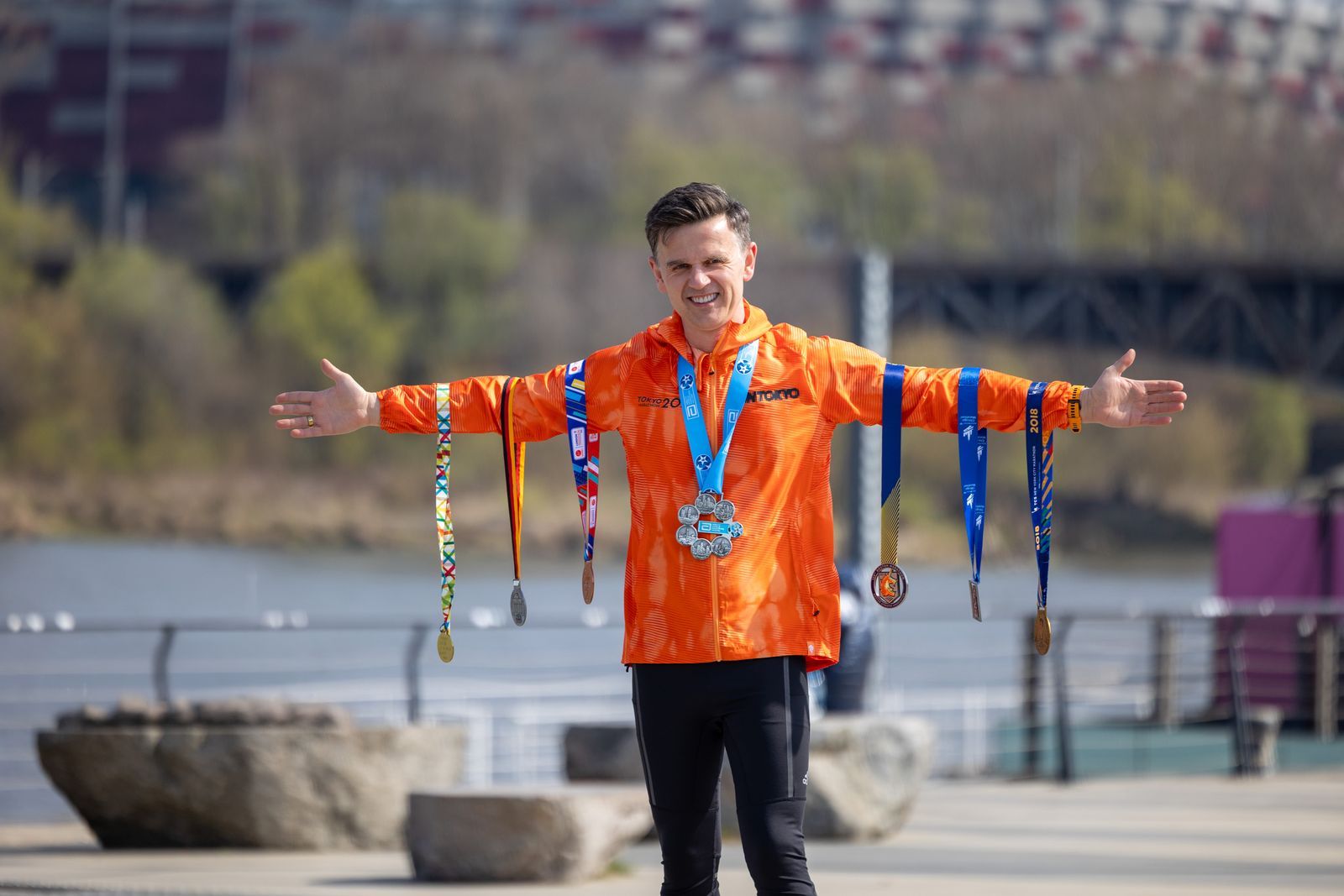
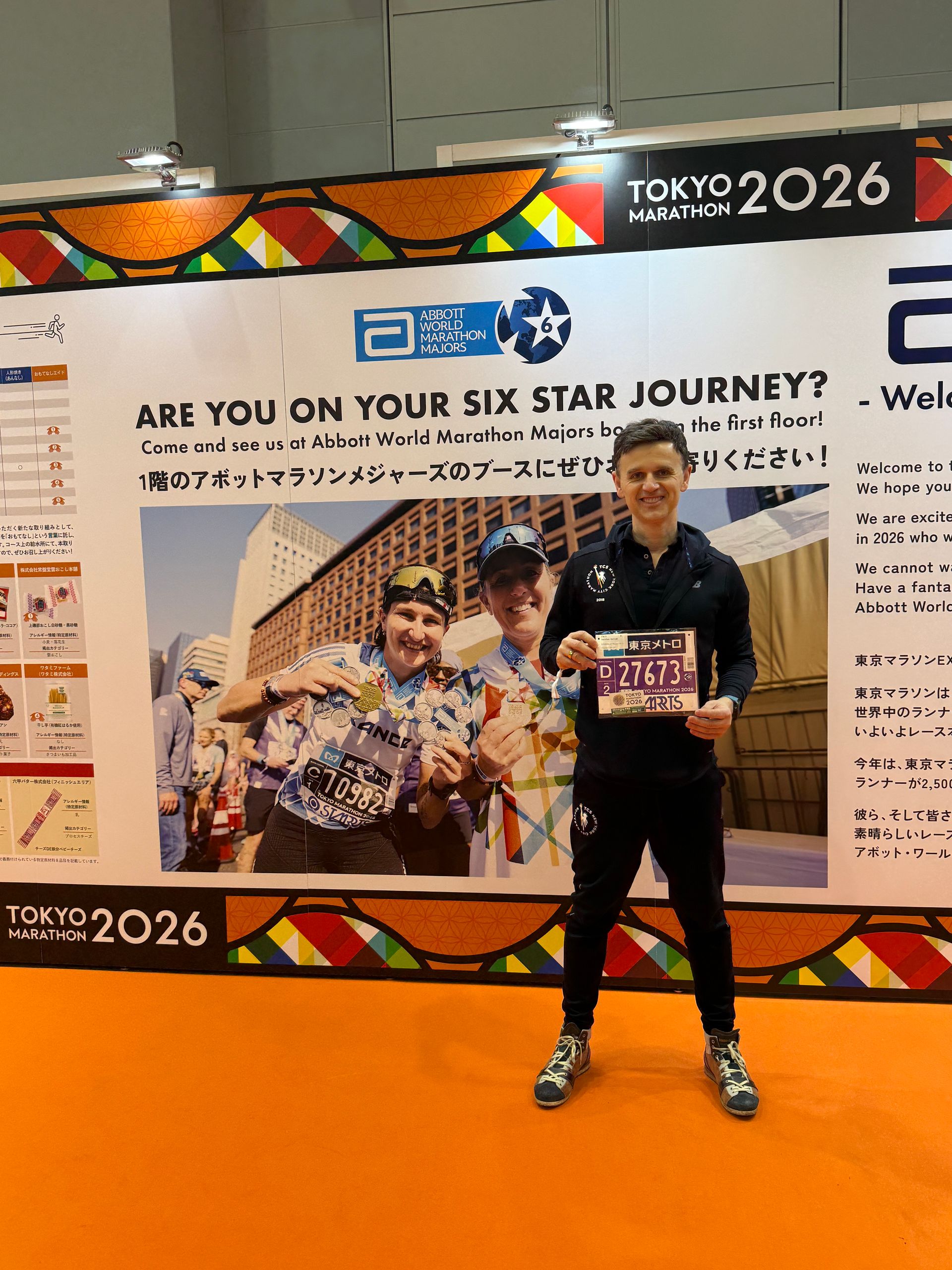
Alongside the races runs the Six Star System — a programme for amateur runners aiming to complete all six original marathons. I've just joined the more than 23,000 runners from 139 countries who've done it. The series is planning to expand to nine Majors: Shanghai and Cape Town are in advanced evaluation, and if they pass the next assessment stage, they will join the series in 2027. At that point, a Nine Star Medal will sit alongside the Six Star.
Back to the machine.
Abbott Laboratories has been the series' title sponsor since 2015, under a contract originally estimated in the seven figures annually. What matters is this: Abbott also sponsors individual races separately — Boston, London, Berlin, Chicago, New York. It pays twice for the same ecosystem. That's not naïve marketing — it's a signal that the sponsor treats the Majors as a defensive, long-term investment in a demographic that no conventional channel concentrates so effectively in one place. With its tagline, "Life. To the fullest", Abbott wants to be associated not only with pharmaceuticals but with active lifestyles and modern medical devices.
Then come the local partners: Mastercard as Tokyo's title sponsor for 2025–2028, BMW, TCS. Demand for places is so high that most entries are allocated by ballot. The entry fee itself is $230 — meaning 38,500 participants generate roughly $8–9 million a year. But the real economic lever is the MTT (Marathon Tour & Travel) packages: $5,000 to $10,000 per person, with a guaranteed place bypassing the ballot. The race EXPO and merchandise add tens of millions more.
Across the whole series, Brand Finance estimated the combined brand value of the seven Majors in 2025 at $937 million. The New York City Marathon is the most valuable individually, at $292 million. Tokyo stands at $100 million — the only Asian marathon brand in the global top 20, for now.
What is the Tokyo Marathon worth? It depends who you ask.
Tokyo Marathon Foundation commissions input-output analyses: every yen spent by a participant circulates through the supply chain and generates a multiplier effect. For the 2025 edition, the result was over $360 million for Tokyo alone. That is not Tokyo's "profit" — it is the total output of the production chain set in motion by the marathon.
Mastercard Economics Institute measures the same thing differently: using hard card-payment data, within a 10-km radius of the finish line, across the three days of the marathon weekend. The 2025 result: $100 million in incremental consumer spending. Hotels in Chiyoda were up 72%, bars in Minato up 57%, theatres and museums in Ginza up 37%. It is worth bearing in mind that Mastercard is the series' title sponsor for 2025–2028 — understating the numbers would not be in its interest.
Brand Finance uses the royalty relief method — what would a licence to use the brand be worth if someone wanted to sell it? Its figure for Tokyo: $100 million. Brand Finance, for its part, works with TCS, another series sponsor.
None of these three parties is fully independent of the asset it is measuring. That does not invalidate their findings — but it does require reading them with that caveat in mind. Three models, three figures, three answers to the same question. As a race participant I became a data point in all three studies of the 2026 edition.
As one of the marathon's organisers, Tokyo bears real costs: security, road closures, replacement transport, street cleaning, additional police and medical personnel. According to 2014 data, the Tokyo Metropolitan Government's direct contribution was approximately ¥1.4 billion (~$9 million) — the city no longer publishes comparable figures. The Foundation's total operating budget for the 2026 edition was approximately ¥6.5 billion (~$43 million), drawn primarily from sponsorship and entry fees.
The gains to local business are easier to measure: $100 million in incremental spending over a single weekend. Notably, more than 83% of that figure came from Tokyo residents and visitors from elsewhere in Japan — the marathon activates the local economy rather than simply generating inbound tourism. And 73% of US and UK participants visited other Japanese cities within a week of the race, spreading the economic footprint well beyond the prefecture. I did exactly the same.
With costs likely running to tens of millions of dollars and $100 million flowing to the local business community, the arithmetic — rough as it is — is clear: the marathon is an investment that pays back to the city, even if not always in strict municipal budget terms. That is why the Tokyo Metropolitan Government issues permits year after year, and why the relationship between the marathon organiser and the city is structurally stable.
Take my case.
I got into Tokyo through an MTT package — the only realistic option for most Europeans unwilling to wait years for ballot results. Cost: PLN 17,700. Included: a guaranteed place, a jacket, and a hotel with breakfast for nearly a week. Plus flights. On the ground, my wife and I spent over $5,000 on travel around Japan, hotels on Naoshima and in Kyoto, food, souvenirs and tourist activities. In total: more than $10,000, all traceable back to a Japanese marathon.
What happened to that money? The entry fee — $230 — went to the Tokyo Marathon Foundation. That is less than 2% of the total. The rest of my MTT was split between the travel operator, a central Tokyo hotel, and airlines. The on-the-ground spending fed Tokyo's shops, restaurants, and museums — not just within 10 km of the course, where MEI measured "incremental consumer spending", but across other cities and regions of Japan too.
I paid $10,000 for an experience that, from where I stand, is priceless. The race organiser received a fraction. The rest went to the city, hospitality, tourism, and aviation. I was simultaneously a Tokyo Marathon Foundation customer, a data point in the MEI report, and — by virtue of my participation — an ambassador for a brand worth $100 million.
All of that for a price I paid out of my own pocket and considered fair.
Before going to Boston, I spent several weeks seriously considering a charity entry. I researched dozens of organisations in Boston, Massachusetts, and across New England, looking for one that felt genuinely close to me. In the end, friends at Adidas — the technical sponsor — gave me a bib, so I didn't have to make that decision after all.
But when I arrived in the city — and during marathon week, all of Boston lives and breathes the race: in the streets, on the subway, along the course — the charity declarations were everywhere. Race vests bearing names, photographs pinned to runners' backs: "Running for my mum." "Running for my friend going through chemo." Something hard to dismiss.
The WMM charity model is intelligently designed. A runner who didn't get a ballot place can earn one by raising a specified amount for a chosen cause. The charity acquires funding without the cost of donor acquisition. The sponsor builds an image consistent with its customers' values.
Since 2011, the Tokyo Marathon has raised approximately $37 million in total. In 2024, the seven Majors together raised $276 million — more than half of all funds raised by the 50 largest marathons in the world. The London Marathon has generated over £1.3 billion for charitable causes since 1981. Some investors may read those figures as a barrier to commercialisation. They can equally be read the other way: as evidence of deep community engagement and emotional connection on a scale that exists in no other mass-participation sport.
That is the question I started asking myself on the bus by the Imperial Palace, medal around my neck, calves beginning to ache.
The participatory sports market has moved through its first wave of institutionalisation in recent years. The IRONMAN triathlon franchise — now part of Advance Publications — passed through Providence Equity Partners and Wanda Sports before landing with its current owner in 2020 for $730 million. Spartan Race acquired Tough Mudder out of insolvency proceedings. For years the two brands competed fiercely; under one owner, a substantial slice of the obstacle-race segment now operates as a single business.
The marathon market is starting to resemble the film distribution industry. There was once a landscape of small, independent local cinemas — think smaller running events. Each marathon had its own ticket, its own character, sometimes its own local sponsor. Then intermediaries on the scale of major distribution networks emerged, analogous to Infront and Wanda. From 2014, managing the commercial rights of World Marathon Majors, they began packaging running as a global "healthy lifestyle" product and selling it to brands as a coherent, multi-year presence across the world's largest races — with a growing participant base and increasingly sophisticated monetisation.
The result: over a decade, what had been a scattered collection of local events became an ordered portfolio with a clear hierarchy — from mass-participation city runs up to the top tier of Tokyo, London, and Berlin — managed according to the logic of media and sponsorship rights, not just the passion of individual organisers.
Now the largest players, such as the London Marathon's organisers, are building platforms of their own. On a continental scale, European Marathon Classics is becoming exactly that — following London's acquisition of the Frankfurt Marathon in April 2026. The ambition is to create a single ecosystem of registration, privileges, and status, so that a runner effectively pays a subscription to one platform for the full experience.
The Warsaw Marathon, drawn on one side into the WMM age-group qualification system within the Masters World Championships — where only the best invited amateur runners compete for WMM age-group world titles at one designated race each year (Cape Town in 2026, Tokyo in 2027) — and on the other into the emerging European Marathon Classics, is finding its place in this structure as one title in a growing content library: a local film that suddenly lands on a global platform and has to learn to play by its rules.
Deloitte's 2025 Sports Investment Outlook notes that institutional capital is now seeking assets in two categories simultaneously: mature premium brands with predictable cash flow, and sports with high participation growth. WMM fits both.
According to an Oliver Wyman report prepared for the World Economic Forum, the global sports economy will grow from $2.3 trillion to $8.8 trillion by 2050. Sport tourism is projected to account for 60% of total revenue growth by 2030. A marathon in the centre of Tokyo, London, or New York is no longer just a race. It is the anchor event around which tens of thousands of participants from around the world build multi-day journeys.
First and foremost: structural supply inelasticity against permanent excess demand. London drew more than 1,133,813 applications for 50,000 places — and no algorithm or private capital can widen the course through central London. That is a natural barrier to entry that requires zero capex to maintain.
Demand among young adults is rising: in 2025 Gen Z runners accounted for 33% of all marathon finishers, and 75% said that signing up for a race is their primary motivator for regular training. That is a generational pipeline that will be feeding the London waiting list for the next two decades.
The revenue model also offers high visibility and predictability. Entry fees, MTT packages, EXPO, brand licences, media and streaming rights, charity programmes — these streams recur annually on a fixed calendar. Infront manages the series' integrated sponsorship platform and gives its clients year-round, intercontinental access to a precisely defined demographic of affluent, active consumers — an audience that premium brands pay far more to reach through other channels.
Meanwhile, the Six Star Medal and, in time, the Nine Star Medal function as multi-year loyalty programmes with built-in retention. Each successive race is not a one-off event but a step on a customer journey that spans years and costs tens of thousands of dollars.
The sector has also demonstrated resilience to shocks. After COVID-19 zeroed out event revenues in 2020, marathons recovered faster than most areas of the events industry — demand for London and Tokyo returned to pre-pandemic levels at the first full editions back. That is a characteristic every PE investor building a long-hold portfolio will value.
Every compelling investment case begins with due diligence. With WMM, that is harder than the brand value alone might suggest.
First: the individual marathons currently have separate owners. Tokyo Marathon belongs to the Tokyo Marathon Foundation. Boston belongs to the Boston Athletic Association (BAA), a non-profit established in 1887. London belongs to London Marathon Events Ltd., whose surpluses flow to the London Marathon Foundation. World Marathon Majors (UK) Limited is a separate company coordinating the umbrella brand.
There is no way to acquire "the whole series" in a single transaction. Negotiations would be required with seven separate organisations in seven cities across seven different legal jurisdictions. That is entirely feasible, but it is a fundamentally different kind of deal from acquiring a single company. At the same time, that very complexity is a form of structural protection: no single party can unilaterally dismantle the value of the series.
Second: dependence on city authorities. The marathon runs through the centre of Tokyo, meaning a permit from the Tokyo Metropolitan Government is required for each edition. Security, licensing, and infrastructure sit outside any buyer's control. That is a genuine risk — though a symmetrical one: cities have their own reasons to protect their marathons, since the return on investment is, net of costs, as legible to them as it is to private capital.
Third: the non-profit status of key organisers. Both the BAA in Boston and LME in London operate under legal frameworks that restrict or preclude profit distribution. A conventional leveraged buyout is de facto impossible without a profound structural change and acute sensitivity to local public and charitable concerns. This is not a technical footnote — it is foundational to the model. It also means that the most natural point of entry for a prospective investor is not the organiser itself, but the commercial layer of the ecosystem: media rights, the sponsorship platform, MTT packages, event technology — a layer already partially occupied by Infront.
Fourth: a pricing ceiling that exists but cannot yet be quantified. Amateur runners pay for the experience and the goal, not for status. They are a different type of customer from a Formula 1 hospitality-suite guest. The price-tolerance threshold is unknown — but MTT is intelligently structured to extract a premium from those who want it, rather than from everyone.
If a consolidation play in WMM were to happen, it would most likely take the form not of a classic acquisition but of a series of capital positions in the commercial layer of the ecosystem. The working template is already visible: Infront has managed the series' sponsorship rights since 2014, meaning there is already an intermediary layer through which capital can access the ecosystem without having to acquire the organisers themselves.
A realistic scenario: a strategic investor or PE firm builds a position in the entity managing media and sponsorship rights — along the lines of models used in football or cycling — and signs long-term agreements with each of the seven organisers. In the background, the digital layer grows: streaming, participant data, technology partnerships, an expanded MTT offering. The Six Star and Nine Star function as loyalty programmes with built-in retention and a multi-year spending funnel.
London Marathon Events has just demonstrated that at least one member of the WMM ecosystem has an appetite for expansion — albeit at a continental rather than global scale. The Frankfurt Marathon acquisition, announced on 5 April 2026, is a signal. If LME builds a second event platform under the European Marathon Classics brand, the whole picture becomes more legible to an outside investor.
I came back to Warsaw with a new personal best, a Six Star medal, and an investment thesis I had never anticipated. In 2016, at my first New York, I was purely emotionally engaged — I didn't even feel like a cog in a big machine. A decade on, I look at this phenomenon and try to work out what the marathon machine is worth today — and what it could be worth.
In that time, WMM has grown from an elite club of a handful of marathons into a global ecosystem with its own product pyramid, loyalty programmes, and running tourism as its primary engine. The "big city race" is becoming a node in an entire experience economy: from airlines and hotels to technology, insurance, and capital — including institutional capital.
The machine is accelerating, not slowing. Marathons in New York, London, and Tokyo increasingly resemble product and technology platforms: a runner's account, a race history, and who knows, perhaps soon dynamic pricing, a progress bar from the first Major to Nine Star. For the runner, it is still one day on the Verrazano Bridge or under the Brandenburger Tor. But around that one day, layers accumulate — not just of emotion, but of subscriptions, data, and long-term brand relationships.
In the same period, races like the Warsaw Marathon have been moving steadily towards the centre of this system. Warsaw is now a WMM age-group qualifier for the Masters World Championships —something of a curiosity for now — but it is also part of the emerging European Marathon Classics. In ten years' time, the Polish capital could be one of the main nodes in a European network of major races: for some, a first stepping stone before the Majors; for others, a more affordable but no less meaningful finish line. The city has an opportunity to use its marathon as a consistent driver of footfall and as a chapter in Warsaw's story as a place to live — and to run — if it gets the policy, the partnerships, and the brand right.
WMM sits at the heart of an accelerating sports tourism market, and its significance will keep growing — for runners, who gain a framework for their personal stories, and for business, which gains a predictable, scalable model. And I, as one small cog, can now see that 249 days of preparation for Tokyo closed not only my own private project, but a decade of transformation in an entire market.