
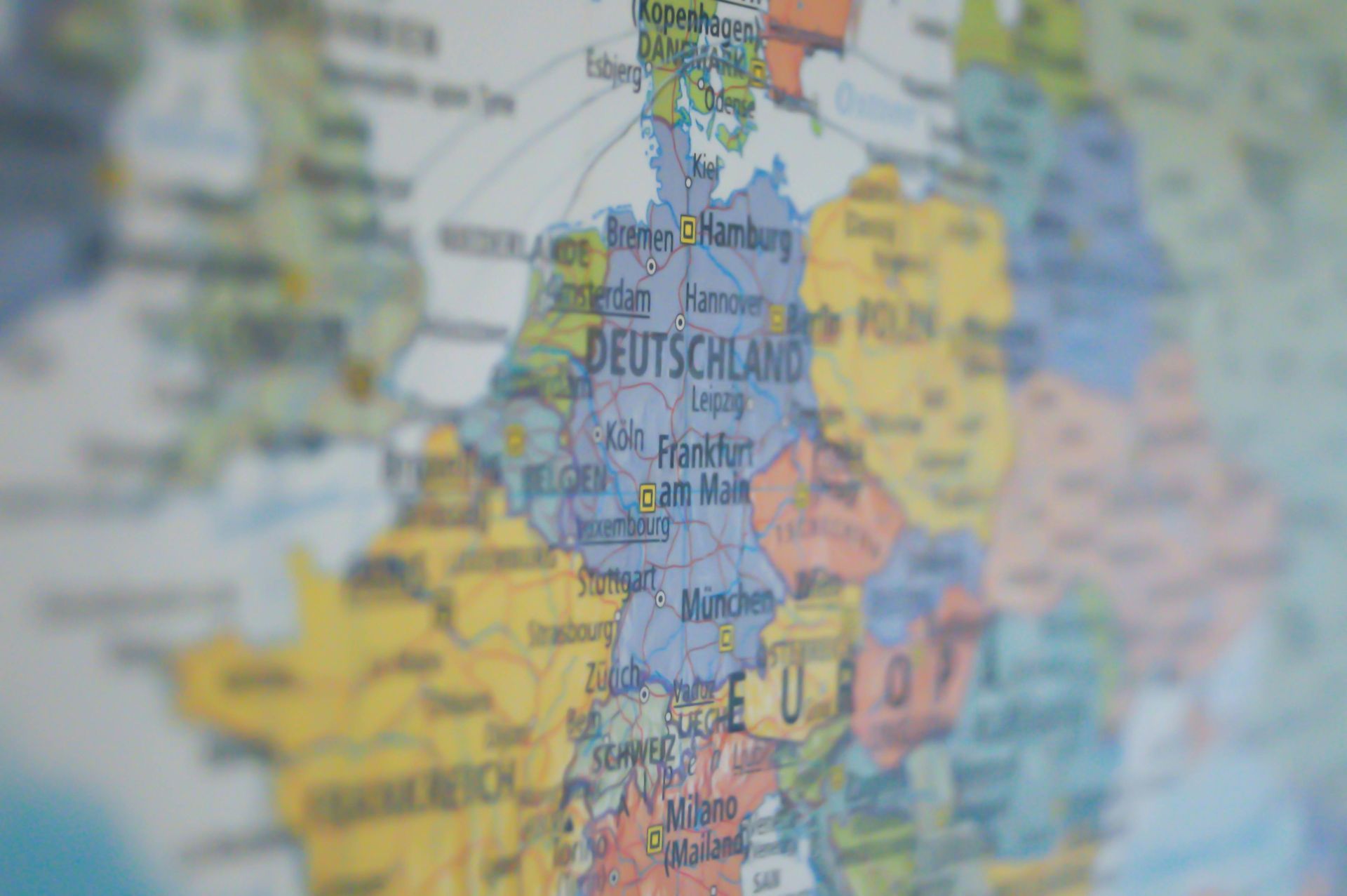
What happens to football clubs, leagues and entire football associations when state borders change? How does the game adapt to new geopolitical realities? And what role do bodies such as FIFA and UEFA play in that process? These questions feel especially pertinent this week, in the wake of Legia Warsaw’s match yesterday.
Legia beat Shakhtar Donetsk 2-1 in an absorbing contest against a club that has spent more than a decade in footballing exile. Formally, Shakhtar remains a team from Donbas. In practice, international politics has forced it from its home ground. Since 2014, when Russian-backed separatism engulfed eastern Ukraine, the club has been unable to play in Donetsk. It has since become itinerant, staging domestic matches in Kyiv, Lviv and Kharkiv, and European fixtures in Warsaw — at Legia’s stadium on Łazienkowska Street — as well as in Hamburg, Gelsenkirchen and, most recently, Kraków, where it will officially host Legia.
Shakhtar’s story — that of a club without a home, but not without an identity — shows that in football political and institutional borders do not always run along the same lines. Territorial change can be both a consequence and a harbinger of shifts in the footballing order: in its federations, leagues and competition structures. What appears arbitrary in politics often finds an equally arbitrary reflection in the game. Clubs and federations are frequently forced to redefine where they belong before a new political order has even settled. In that sense, Shakhtar is not an outlier but part of a longer story — one that has acquired fresh relevance amid rising geopolitical tensions, the evolution of Europe’s football architecture and a debate, still largely outside the mainstream, about the creation of transnational leagues. This article is about precisely that: the fluidity of football’s borders, and the consequences that follow.
Perhaps the most dramatic change in Europe’s football geography came after December 26th 1991, when the Union of Soviet Socialist Republics passed into history. Before its collapse, Soviet football had functioned as a single entity. The so-called Top League featured leading clubs from across the country — Spartak Moscow, Dynamo Kyiv and Žalgiris Vilnius among them — and in the 1988/89 season it ranked as the second-strongest league in UEFA. The USSR also had a single national team, the Sbornaya, which regularly appeared at World Cups and European Championships and enjoyed considerable international success: European champions in 1960 and runners-up in 1964, 1972 and 1988.
When the Soviet Union disappeared, football faced an urgent question: what should become of the Soviet league, the national team and its players? The game had to move quickly, not least because Euro 1992 was fast approaching and the Soviet side had already qualified.
With UEFA’s approval, a temporary fix was devised: the Commonwealth of Independent States team, built out of the remnants of the Soviet side. In January 1992 representatives of nine former republics met in Moscow and established the CIS Football Federation, allowing the CIS team to appear at Euro 1992. It played under a neutral CIS flag and drew players from 11 former republics, including Russia, Ukraine, Belarus, Kazakhstan and Armenia. The Baltic states — Estonia, Latvia and Lithuania — refused to take part, as they were not members of the CIS and wanted no association with the Soviet legacy. Georgia, though not formally part of the CIS, had one player in the squad, Kakhaber Tskhadadze. The experiment was brief. After a disappointing tournament, in which the CIS collected only two points in the group stage, the team was dissolved.
Permanent organisational decisions followed soon afterwards. In the summer of 1992 FIFA officially recognised Russia as the legal successor to both the USSR and CIS teams. Russia was also awarded the Soviet place in the ongoing qualifying campaign for the 1994 World Cup, meaning that the other former Soviet republics could not enter that competition and had to wait for later qualification cycles. The decision by FIFA and UEFA proved contentious. The Ukrainian Football Federation regarded it as an unfair privileging of Russia.
For Ukraine and other new federations, there was a further blow: players were allowed to choose freely which national team they wished to represent. FIFA permitted footballers born in the USSR to decide for themselves which new country they would play for. Many leading players of Ukrainian origin opted for Russia, calculating that it offered a better chance of appearing at major tournaments. Viktor Onopko, Andrei Kanchelskis, Igor Dobrovolski, Ilya Tsymbalar and Sergei Yuran — all born in Ukraine — chose to represent Russia. Those individual decisions deprived the newly formed Ukrainian national team of a number of experienced players and complicated its early years. Ukraine failed to qualify for either a World Cup or a European Championship during the 1990s.
At the same time, independent football associations were being built across all 15 states that emerged from the Soviet Union. In practice, Russia inherited the former Soviet structures, while the remaining 14 republics created their own federations and began the process of joining FIFA and the relevant confederations. Nine countries located geographically in Europe — including Ukraine, Belarus, the Baltic states, Moldova and the South Caucasian republics of Georgia, Armenia and Azerbaijan — joined UEFA, most of them in 1992 or 1993. Estonia, for instance, was admitted to UEFA in 1992 and played its first official match on June 3rd of that year, drawing 1-1 with Slovenia. Armenia founded its association in January 1992 and joined both FIFA and UEFA later that same year.
The new federations from the eastern reaches of the former USSR joined the Asian Football Confederation instead. Uzbekistan, Turkmenistan and Kyrgyzstan, among others, completed their accession to FIFA and the AFC by 1994. Kazakhstan is a particularly interesting case: it initially competed in Asia, but switched to UEFA in 2002, citing geopolitical and sporting reasons.
Another controversy in eastern European football followed Russia’s annexation of Crimea in 2014. It presented the football world with an unprecedented legal dilemma: to which federation should clubs from the Crimean peninsula belong?
Before 2014, Crimean clubs — led by Tavriya Simferopol, Ukraine’s first post-independence champion in 1992 — competed normally in Ukrainian competitions, and their players held Ukrainian registrations. But once Russia took control of Crimea, local clubs attempted to enter the Russian league system, prompting a fierce objection from the Ukrainian football authorities. Although the international community did not recognise Russia’s seizure of Crimea — the UN and the overwhelming majority of states still regard the peninsula as part of Ukraine — the Russian Football Union registered three leading Crimean clubs, SKChF Sevastopol, Tavriya Simferopol and Zhemchuzhina Yalta, for Russia’s third tier in the 2014/15 season. They were even admitted to the Russian Cup, which Ukraine’s football authorities described as “theft of clubs” and a breach of FIFA and UEFA rules.
Under FIFA and UEFA statutes, clubs may not change federation without the consent of their home association. In this case, no such consent had been given, making Russia’s actions a breach of the rules. UEFA intervened in December 2014. At a meeting of its Executive Committee in Nyon, it banned Crimean clubs from taking part in competitions organised under the auspices of the Russian Football Union from January 1st 2015. UEFA threatened disciplinary sanctions for non-compliance, forcing Sevastopol, Tavriya and Yalta out of the Russian league. At the same time, European football’s governing body proposed a compromise: Crimea was declared a “special football zone”, outside the jurisdiction of both Russia and Ukraine. UEFA also undertook to support the development of football on the peninsula financially.
In practice, this meant the creation of an independent Crimean league operating under UEFA supervision but belonging to neither Russia nor Ukraine. In July 2015 the Crimean Football Union was established, a body with special status created in line with UEFA’s decision of December 2014. It organised the Crimean Premier League, an eight-team competition on the peninsula. The league is professional and formally recognised by UEFA — unlike, for instance, amateur competitions in territories controlled by unrecognised states. Yet Crimean clubs are barred from European competitions and from the Russian and Ukrainian league systems. The former Tavriya Simferopol now plays as TSK-Tavriya in the Crimean league, while the old Sevastopol side competes under the traditional name FC Sevastopol. Both operate only at a regional level.
This state of suspension has serious sporting and organisational consequences for Crimean players. First, the standard of the isolated Crimean league is limited. Local officials concede that professional football on the peninsula has effectively withered for lack of meaningful competition. Talented players who want to compete at a higher level have to leave. Some have moved to Ukraine; others have taken Russian citizenship and tried their luck in Russian clubs. One example is Redvan Osmanov, a product of Crimean football who received a Russian passport after 2014 and eventually made his debut in the Russian league for KAMAZ Naberezhnye Chelny. Such players, however, lose the right to represent Ukraine, and their decisions are viewed in Kyiv as betrayal.
Conversely, young players who retained Ukrainian citizenship have faced problems changing clubs. In UEFA’s system, their documents are tied to the Ukrainian federation, complicating transfers to teams abroad. Moreover, the lack of access to international competition means a lack of exposure. Scouts rarely watch matches in Crimea, and players cannot test themselves against stronger opponents from outside the region.
The situation remains tense. The Ukrainian Football Association has repeatedly appealed to FIFA and UEFA to punish Russia for its attempts to integrate Crimean clubs. In mid-2023 the dispute escalated again, when two Crimean clubs, Rubin Yalta and FC Sevastopol, unilaterally entered Russia’s fourth tier. The Ukrainian federation called this a “gross violation of FIFA and UEFA statutes” and demanded that Russia be suspended or expelled from international football. The Russian federation argued that the league in question was amateur and formally outside its jurisdiction. Yet the presence of the clubs in the official Russian football structure, including on the RFU website, undermines that claim. The matter remains unresolved. UEFA, for now, maintains its ban: Crimea is to remain an isolated “special zone” until the political conflict is settled.
The dissolution of the Socialist Federal Republic of Yugoslavia in the early 1990s also transformed the football landscape of southern Europe. The old Yugoslav Football Association, founded in 1919, disappeared. In its place came several new national bodies. In 1992, after Slovenia, Croatia, Macedonia and Bosnia and Herzegovina declared independence, each established its own football federation. Most were admitted to FIFA and UEFA almost immediately. Croatia and Slovenia joined FIFA in July 1992; Bosnia and Herzegovina followed in 1996, having previously operated under provisional arrangements.
Football itself had already offered a grim premonition of Yugoslavia’s collapse. The violent clashes between Croatian and Serbian supporters during Dinamo Zagreb’s match against Red Star Belgrade on May 13th 1990 became a dark foreshadowing of what would soon engulf the Balkans.
At first, the Federal Republic of Yugoslavia — Serbia and Montenegro, which continued some of the structures of socialist Yugoslavia — was expected to compete internationally in place of the old state. Its national team was even drawn into the qualifying groups for the 1994 World Cup. But the Balkan wars and UN sanctions changed everything. In 1992 FIFA and UEFA barred Yugoslavia from international competition. As a result, FR Yugoslavia was excluded from Euro 1992 shortly before the tournament began. Denmark took its place and went on to win the championship. The 1994 World Cup qualifiers also proceeded without Yugoslavia, which was disqualified by FIFA. Only later, after the Dayton peace accords, did Yugoslavia — under the name Serbia and Montenegro — return to international football, appearing at the 1998 World Cup.
The newly formed national teams of the former Yugoslav republics initially faced very different challenges. Croatia and Slovenia quickly made their debuts in qualifying for Euro 1996, with Croatia later reaching the semi-finals of the 1998 World Cup. Bosnia and Herzegovina, because of war and incomplete recognition, had to wait longer; its first qualifying campaign was for the 1998 World Cup. Macedonia, formally then known as the Former Yugoslav Republic of Macedonia and today as North Macedonia, also began international competition in the mid-1990s. Each country had to build a domestic league from scratch, often amid economic crisis and the physical devastation left by war.
Curiously, the Yugoslav Football Association formally continued as the federation of Serbia and Montenegro until 2006. That year Montenegro declared independence, marking the end of the last institutional trace of the old Yugoslav football order. Two separate associations emerged: the Football Association of Serbia and the Football Association of Montenegro. Both were swiftly recognised by FIFA and UEFA. Montenegro became FIFA’s 208th member in 2007. Thus the disintegration of Yugoslav football stretched across almost 15 years, from 1991 to 2006, and produced seven national teams: Serbia, Croatia, Slovenia, Bosnia and Herzegovina, Montenegro, North Macedonia and, until 2003, the FR Yugoslavia/Serbia and Montenegro side.
In the Yugoslav case, the defining fact was that the political collapse was violent. The hatred that consumed the Balkans in the 1990s made compromise almost impossible. In football, as in politics, facts on the ground mattered more than negotiated solutions.
In Kosovo’s case, football also had to wait on politics. Kosovo, formerly an autonomous province of Serbia, declared independence in 2008. But international recognition was, and remains, incomplete: Serbia, Russia and even Spain, among others, do not recognise its statehood. For years Kosovo fought to be admitted to international football. Long before that, from 1992 onwards, ethnic Albanians in Kosovo had run independent amateur leagues, boycotting the official Yugoslav and Serbian competitions.
The decisive breakthrough came only in the present decade. In 2016 UEFA voted to admit Kosovo as its 55th national association, by 28 votes to 24. A few days later, in May 2016, FIFA also approved the membership of the Football Federation of Kosovo, despite protests from Serbia, which argued that Kosovo was not universally recognised by UN member states. Since then, Kosovo’s national team has been allowed to take part in European Championship and World Cup qualifiers, while Kosovar clubs have gained access to European club competitions, starting in the qualifying rounds.
Kosovo played its first official matches in qualifying for the 2018 World Cup. Its league system was also incorporated into UEFA’s rankings, although clubs from Pristina or Mitrovica have had to build their coefficient from scratch. The challenges remain considerable: Kosovar football starts from a lower financial and infrastructural base and is still shadowed by political uncertainty. The Serbian Football Association continues to oppose the existence of the Kosovar federation and has refused, for example, to release players of Kosovar origin to the new national team. Even so, many footballers with Kosovar roots enthusiastically embraced the chance to represent the blue and yellow. Several had previously played for the youth teams of Switzerland, Albania or Serbia, but took advantage of the opportunity to switch allegiance.
UEFA also introduced special rules. For security reasons Kosovo and Serbia — as well as Kosovo and Bosnia, or Kosovo and Spain — are not drawn into the same qualifying groups, in order to avoid politically charged fixtures. Similar restrictions apply in club competitions, where Kosovar and Serbian teams are kept apart in UEFA draws. Still, the existence of Kosovo’s national team is now a fact. Its early successes — including wins in the UEFA Nations League and an impressive unbeaten run in 2018-19 — won it the sympathy of many supporters. For Kosovo itself, admission to FIFA and UEFA has become an important element of international legitimation, illustrating just how closely football and politics are intertwined.
In the 1990s, German football also underwent profound change. For more than four decades there had been two national teams, West Germany and East Germany, as well as two separate football associations. After the fall of the Berlin Wall and the reunification of the German state, the natural step was institutional integration. The German Football Association, the DFB, absorbed its East German counterpart, the DFV. East Germany played its final official match in November 1990, after which the team was dissolved and its players became eligible for the unified German national side. East Germany’s history and trophies were not folded into the DFB’s official record; they were treated as a closed chapter in German football history.
Clubs from the former GDR were incorporated into the West German league system. The strongest teams, such as Dynamo Dresden and Hansa Rostock, entered the Bundesliga or 2. Bundesliga from the 1991/92 season. The rest were placed in lower divisions. It was an unprecedented process: the East German leagues were dissolved, and players and coaches had to find their place in the new reality of a unified league.
Integration was not without difficulty. Eastern clubs suffered from financial and infrastructural weaknesses compared with their wealthier western counterparts. In the years that followed, most dropped into lower divisions, unable to compete economically with clubs from the west. Even so, reunification allowed several former East German players to shine for the united Germany team. Matthias Sammer, a European champion in 1996 and a key figure in the national side, and Ulf Kirsten are the most prominent examples. Legally, the DFB remained the sole member of FIFA and UEFA. The GDR had never belonged to UEFA, though its national team had taken part in World Cup and European Championship qualifying as a FIFA member from 1952 to 1990.
The division of Czechoslovakia into two separate states, the Czech Republic and Slovakia, on January 1st 1993 was relatively amicable. That made the transformation of football easier too. The common Czechoslovak national team played for the last time in late 1992, during qualifying for the 1994 World Cup, and was then dissolved. Interestingly, during those qualifiers it competed under the neutral name “Representation of Czechs and Slovaks”, emphasising the team’s temporary character.
FIFA decided that neither new state would be treated as the direct successor of the Czechoslovak team. Both Czechia and Slovakia had to establish new football associations and apply for membership of FIFA and UEFA. The process was swift: the Czech Football Association and the Slovak Football Association were admitted to FIFA in 1993.
Sportingly, Czechia effectively inherited Czechoslovakia’s place in qualifying for the 1994 World Cup, as the larger share of the population and player base came from the Czech lands. Slovakia had to begin from the next cycle, Euro 1996 qualifying. The early years after the split proved highly successful for the Czechs. In 1996 they became European Championship runners-up, surprisingly reaching the final of Euro 96 in England. Slovakia needed longer to make its mark at a major tournament, qualifying for a World Cup only in 2010.
The Czechoslovak league split into two domestic competitions. Leading Czech clubs — Sparta Prague, Slavia Prague and Baník Ostrava among them — formed the Czech First League. Leading Slovak clubs, including Slovan Bratislava and DAC Dunajská Streda, began competing in the Slovak top flight. As in other cases, the initial challenge was one of imbalance. Czech clubs and the Czech national team proved considerably stronger than their Slovak counterparts, a disparity reflected in UEFA rankings and international results. Czechia had a club in a UEFA Cup final as early as 1996; Slovakia is still waiting for a comparable achievement.
Formally, FIFA treats Czechoslovakia’s historical record as the common heritage of both new associations. Yet its achievements — the 1976 European Championship title or the 1962 World Cup bronze medal, for example — are usually attributed to Czechoslovakia rather than to either Czechia or Slovakia individually. In Czech and Slovak football culture, the memory of those shared successes before 1993 remains alive, even though on the pitch the two countries have now been rivals for more than three decades.
The history of European football shows that the game can adapt to changing borders: sometimes in an orderly fashion, as after German reunification or the split of Czechoslovakia; sometimes amid chaos and conflict, as after the break-up of Yugoslavia and the Soviet Union. Kosovo demonstrated that sporting recognition can run ahead of political recognition. Crimea showed that football can become trapped in a legal vacuum.
FIFA and UEFA try to protect the coherence of their structures. Yet over time they invariably respond to new realities — through compromise or sanctions — so that competition can continue despite the changing map. Football does not stand still. It adapts.
No one can say today how the war in Ukraine will end, or what will happen to Donbas and Crimea. But history suggests that every conflict eventually reaches an end, and football finds a way to begin again. What is happening to Ukrainian football, and to Shakhtar Donetsk, is not an exception. It is another chapter in the story of a game that increasingly reaches beyond political borders. Perhaps football’s future will not bring revolution, but rather a deeper interweaving of national and transnational structures — wherever the sporting community proves more durable than the lines drawn on a map.


