Logo
10/07/2025
6 Reasons Why Castiglione’s Book of the Courtier Still Matters Today
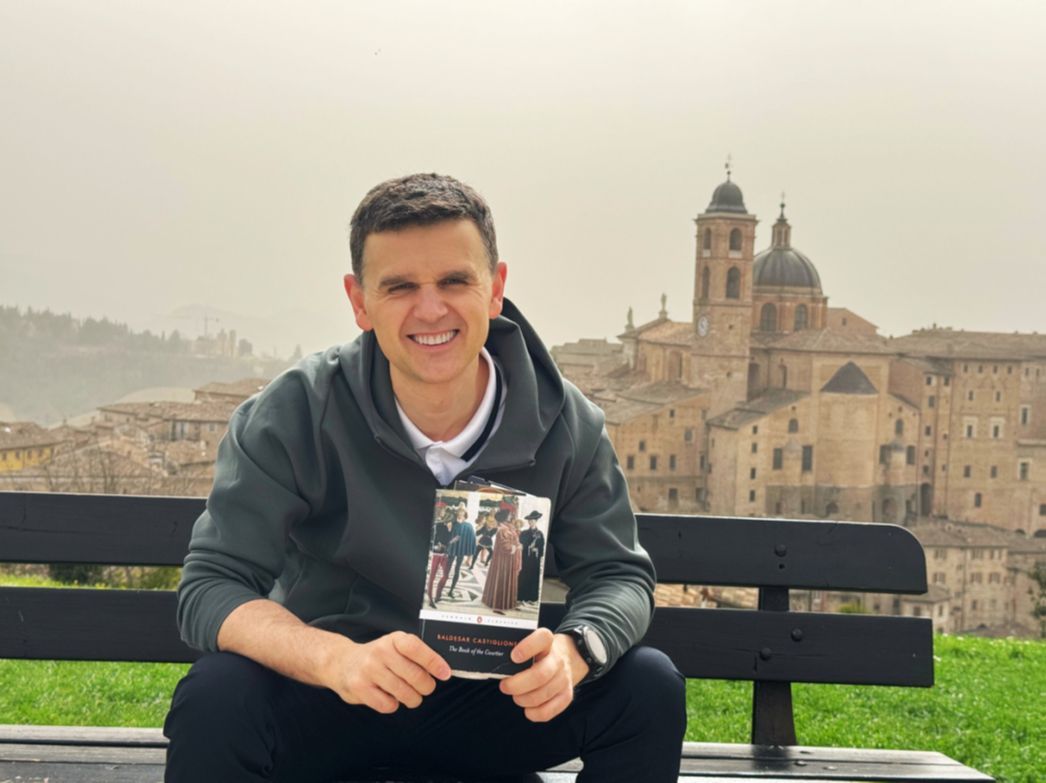
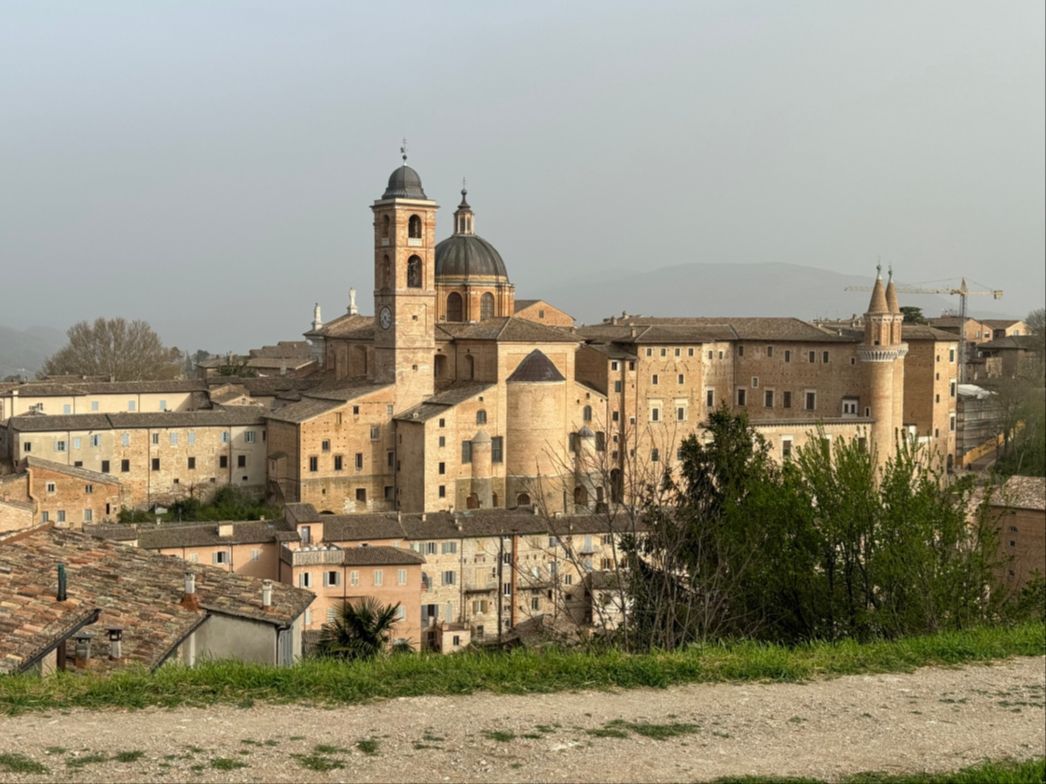
“A timeless view of the Palazzo Ducale in Urbino—its towers, domes, and honey-colored stone rising with quiet majesty above the Renaissance town that inspired Castiglione’s vision of the ideal court.”
common.coverImageAlt
Urbino, Marche
Why a 16th-century guide to courtly manners still speaks to modern minds—and why its lessons continue to shape how we think about leadership, education, and elegance today.

Ever since I read the Castiglione’s book I’ve wanted to travel to Urbino to see for myself the palace, the court and the scenes where the book’s dialogues between the Prince’s court members took place and spur my imagination of how the historical elegance and grace described in Castiglione’s book could have looked like back in the day. As I wandered together with my family through the narrow alleys and wide piazzas, while my kids played hide and seek behind the columns of the courtyard of Pallazzo Ducale, I was wondering how much of the Renaissance thought remains still valid today.


When Baldassare Castiglione penned The Book of the Courtier in 1528, he created more than a portrait of Renaissance court life. He offered a reflection on values—poise, intellect, discretion and human dignity—that are still relevant today. Through four evenings of fictional dialogue set at the court of Urbino, Castiglione draws on classical wisdom and contemporary experience to shape an ideal of conduct that continues to inspire. The book’s themes—how to live, how to lead, how to influence others with integrity—are as applicable today as they were 500 years ago. Rather than being a historical relic, The Book of the Courtier serves as a mirror for anyone navigating public and private roles in the modern world. Here are my six reasons why Castiglione’s work still matters: 
1. The Art of Sprezzatura

One of Castiglione’s most enduring ideas is sprezzatura, introduced in Book I, Chapter 26. It refers to a kind of cultivated effortlessness—the art of concealing the art. Castiglione’s ideal courtier must excel in many disciplines, but never show the strain it takes to do so: “I have found quite a universal rule which in this matter seems to me valid above all others... to practice in all things a certain nonchalance (sprezzatura), so as to conceal all art and make whatever is done or said appear to be without effort.” —says Count Baldassare during discussion on the ideal gentleman’s qualities. In the Book I, Chapter 26,


Sprezzatura is more than grace; it’s a philosophy of moderation. Applied today in a world that screams for attention, likes and follows, it still offers a useful, and indeed timeless, guide to how we present ourselves in professional, social, and creative fields. The leaders we admire most often carry themselves with quiet confidence. Artists, athletes, and public figures alike benefit from this ideal: to let skill shine without overt display. 

2. Influence with Integrity

The courtier in Castiglione’s vision isn’t just a flattering yes-man. He is an advisor— thoughtful, loyal, honest. He knows how to speak truth to power, even when it’s risky. That’s a lesson many in today’s political and corporate worlds seem to forget when it matters most. The book reminds us that influence is not just about access—it’s about responsibility. In Book IV, Ottaviano Fregoso, Doge of the Republic of Genoa, shares what may be the courtier’s highest function—to shape the ruler toward wisdom and justice. This is done not through flattery, but through discreet and sincere counsel: “Let him always seek to tell the truth, yet in such fashion that he offend not; and let him beware of offering advice unless asked, and even then let him give it modestly, always mingling pleasant speech with useful, after the manner of wise physicians who often smear the edge of the cup with honey when giving bitter medicine to children.”— Book IV, Chapter 10


Castiglione’s courtier is not just a decorative presence—he is a moral actor within the sphere of power. Today, this idea remains deeply relevantin politics, business, and civic life, influence must be guided by integrity. Advisors, consultants, and confidants still face the same dilemma—how to remain close to power without being consumed by it. Castiglione shows that the courtier’s true strength lies in quiet courage and ethical conviction.

3. Education as a Way of Being

Castiglione’s courtier is not a specialist. He’s a polymath—well-read, musically inclined, athletic, and articulate. He represents an ideal of holistic education rooted in Renaissance humanism. Castiglione outlines his educational vision: “I would have our Courtier be more than passably well trained in the humanities, at least in those studies which are called the humanities; and not only in the Latin tongue but also in the Greek, because of the many and various things that have been admirably written in it. Let him be well grounded in the poets, and no less in the orators and historians, and also proficient in writing verse and prose, especially in our own tongue.— Book I, Chapter 22


But Castiglione’s ideal education is not just about knowledge—it’s about character. The goal is to shape a whole person capable of judgment, empathy, and discernment. In today’s educational debates, this broader vision deserves renewed attention. As we rush to specialize and optimize, we risk neglecting the moral and aesthetic dimensions of learning. Castiglione believes that true education cultivates not just minds, but, essentially, souls. 

4. Conversation as a Moral Practice

Much of The Book of the Courtier is, in fact, a conversation—and it’s not a coincidence. For Castiglione, conversation was a moral activity, a way to exchange ideas, sharpen intellect, and build mutual respect. It’s a stark contrast to today’s spats on X and comment-section feuds. Eloquence, listening, and timing mattered to Castiglione’s courtiers. Perhaps it’s time we relearned the art of talking—not just posting. The entire structure of The Book of the Courtier is a celebration of dialogue. In Book II, Giuliano de’ Medici, one of the rulers of Florence, outlines how conversation can elevate both speaker and listener. Witty, respectful, and full of nuance, the courtier’s speech must suit the moment and the audience: “Let him be able to converse with grace and elegance, and be possessed of ready and agreeable speech, accommodating himself to the character of those with whom he is speaking, and attuning his discourse to their temper and to the occasion.”— Book II, Chapter 10


Today, this emphasis feels radical. In an age of sound bites and online arguments, Castiglione’s devotion to civil discourse reminds us of the lost value of well-tempered exchange. Conversation, when done well, is not mere talk—it is a moral practice.

5.The Role of Sport in Shaping Character and Social Grace

In Book I, Chapters 13–19, Castiglione devotes considerable space to the courtier’s physical training. He must be skilled in horseback riding, fencing, swimming, dancing, and wrestling— not as a brute, but as someone who understands the harmony between body and spirit: "...it seems to me proper now to say how he should behave in bodily exercises, in riding, in handling weapons, and in wrestling." — Book III, Chapter 3


Sports, in Castiglione’s world, are not just noble pursuits—they are moral disciplines. Athletic ability reflects inner character: resilience, courage, balance, and composure. A man who trains his body also disciplines his mind and emotions. Movement and physical effort cultivate a sense of timing, presence, and control that enhances a courtier’s ability to perform under pressure. Castiglione links physical training to aesthetic appreciation. The ideal courtier should move with elegance, posture, and purpose—his athleticism contributes to his visual harmony. This reinforces the Renaissance belief that beauty and virtue are intertwined. In today’s world, where digital environments often take precedence over physical interaction, this vision reminds us of the timeless value of sports—not only for health and performance but for the development of leadership, empathy, and self-awareness. The gym, the field, or the studio becomes a modern arena where the courtier’s spirit is still forged. 

6. A Renaissance Look at Women

Book III is devoted to the role of women—a radical gesture for the time. Women are not only praised for their intelligence and virtue; they lead the dialogue. Emilia Pia, a noble woman and the daughter of the Duke of Urbino, known for her wit, intelligence, and refined manners moderates the entire discussion, and her insights steer the tone and direction of the text. “You must admit that women are endowed with the same intellectual capacity as men, and where intellect is concerned there is little difference between them.”— Book III, Chapter 36


This fictional arrangement reflected historical reality. At the time, after the death of Guidobaldo da Montefeltro and while his heir was still a child, the court of Urbino was led by women: Elisabetta Gonzaga, the Duchess of Urbino, and Emilia Pia. Their real influence gave Castiglione a powerful model for integrating women into civic and cultural life. In the dialogues, women are not passive listeners or objects of praise. They actively critique, question, and guide the conversation, commanding respect not through formality, but through wit and insight. This signals an acknowledgment, even if limited by class and context of the Renaissance Italy, of women's intellectual and social capacities. The courtier is not complete without his female counterpart, whose role is foundational. While this equality was confined to aristocratic circles, it was nonetheless forward-thinking.

7. Power Guided by Virtue

Castiglione’s courtier must learn to navigate power—gently, ethically, and without corruption. In Book IV, Ottaviano insists that the courtier’s ultimate task is to help the prince rule justly and wisely. Unlike Machiavelli’s The Prince, which emphasizes manipulation and fear as tools of control, Castiglione’s vision is rooted in trust, virtue, and humanist ideals: “when he sees his prince's mind inclined to do something wrong, he may be quick to oppose, and gently to make use of the favour acquired by his good accomplishments, so as to banish every bad intent and lead his prince into the path of virtue. — Book IV, Chapter 5


Castiglione acknowledges that power is dangerous and fragile, but believes that a morally upright advisor can act as a quiet force for good. This figure must embody restraint, tact, discretion, and moral clarity—able to speak hard truths when needed, but in ways that preserve harmony.


In the modern world, this applies to all who operate in close proximity to decision-makers: policy advisors, senior aides, legal counsel, even board members. According to Castiglione, proximity to power is not a privilege for indulgence, but a position of responsibility. To truly advise is to walk a delicate line—to be courageous without arrogance, wise without overreach. Power, used wisely, becomes not a source of vanity, but a form of service.


That is the timeless lesson Castiglione offers in contrast to more cynical realpolitik thinkers of his age. The conversations in Book III also open a deeper discussion about love, virtue, and the roles of men and women in shaping a just society. It’s a reminder that questions about gender, power, and respect are not modern inventions—they are centuries-old debates that Castiglione approached with surprising nuance and respect.


Final Thoughts: Why You Should Still Read This Book

Castiglione doesn’t offer a how-to manual. He presents a vision: a picture of the cultivated life, one marked by balance, beauty, ethics, and discretion. His courtier is not perfect—but always striving. The book encourages us to consider what it means to live gracefully and to lead responsibly.


In a noisy world of instant opinions, The Book of the Courtier suggests something different: that character is forged in conversation, that grace is stronger than ego, and that true power lies in guiding others toward wisdom. The enduring brilliance of Castiglione's work lies in its quiet insistence that external elegance must be matched by internal virtue.


It asks us not only to appear noble but to be noble. This ideal, while shaped by the structures of Renaissance aristocracy, transcends time and status. Whether we work in government, education, business, or the arts, we are constantly challenged to bring diplomacy, reason, and restraint into a world often dominated by force, noise, and spectacle. The courtier, then, is not simply a historical archetype, but a timeless figure—showing how to act with honor when surrounded by ambition, how to speak truth amid flattery, and how to rise by lifting others. In this way, Castiglione's courtier belongs not only to the Renaissance but to every age in which grace, wisdom, and ethical leadership are needed most. 

A Personal Note: Visiting Urbino and Walking in Their Footsteps

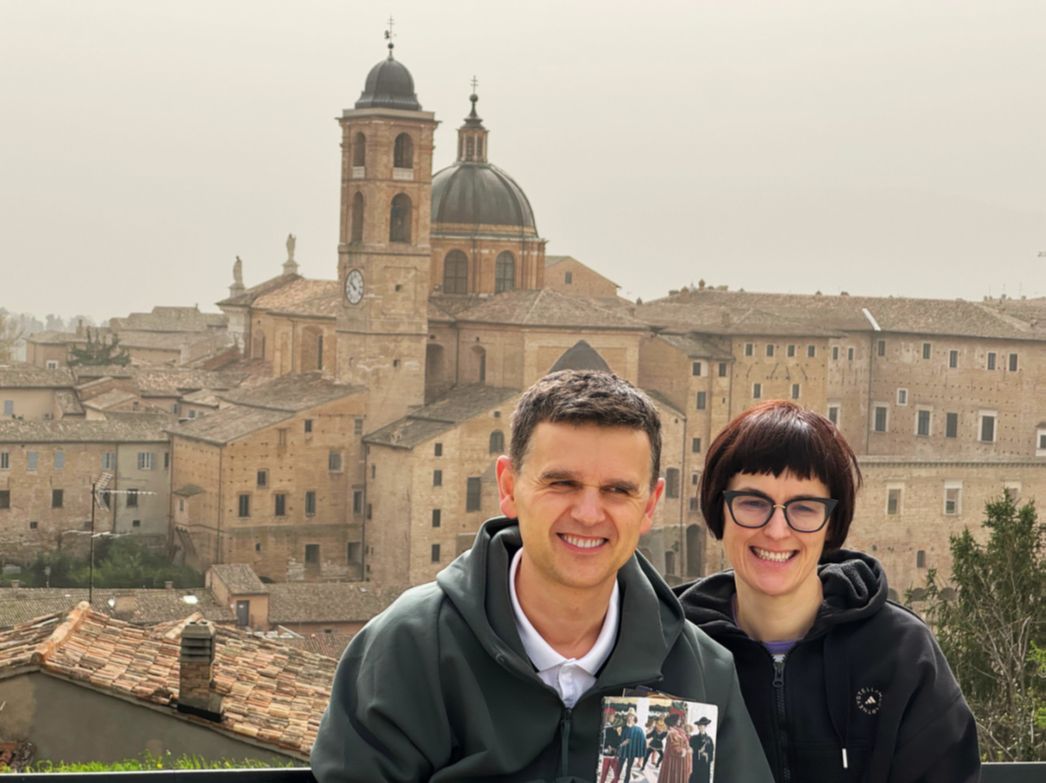
Each of us in my family found something personal in the town’s quiet beauty—whether in the view from a hillside, the soft light inside the palace, or the stillness of its chapels. As part of our journey, I took several photos to document and deepen my understanding of the place.


Here are some key moments that stood out, along with suggested captions for each photo: 

common.galleryImageAlt
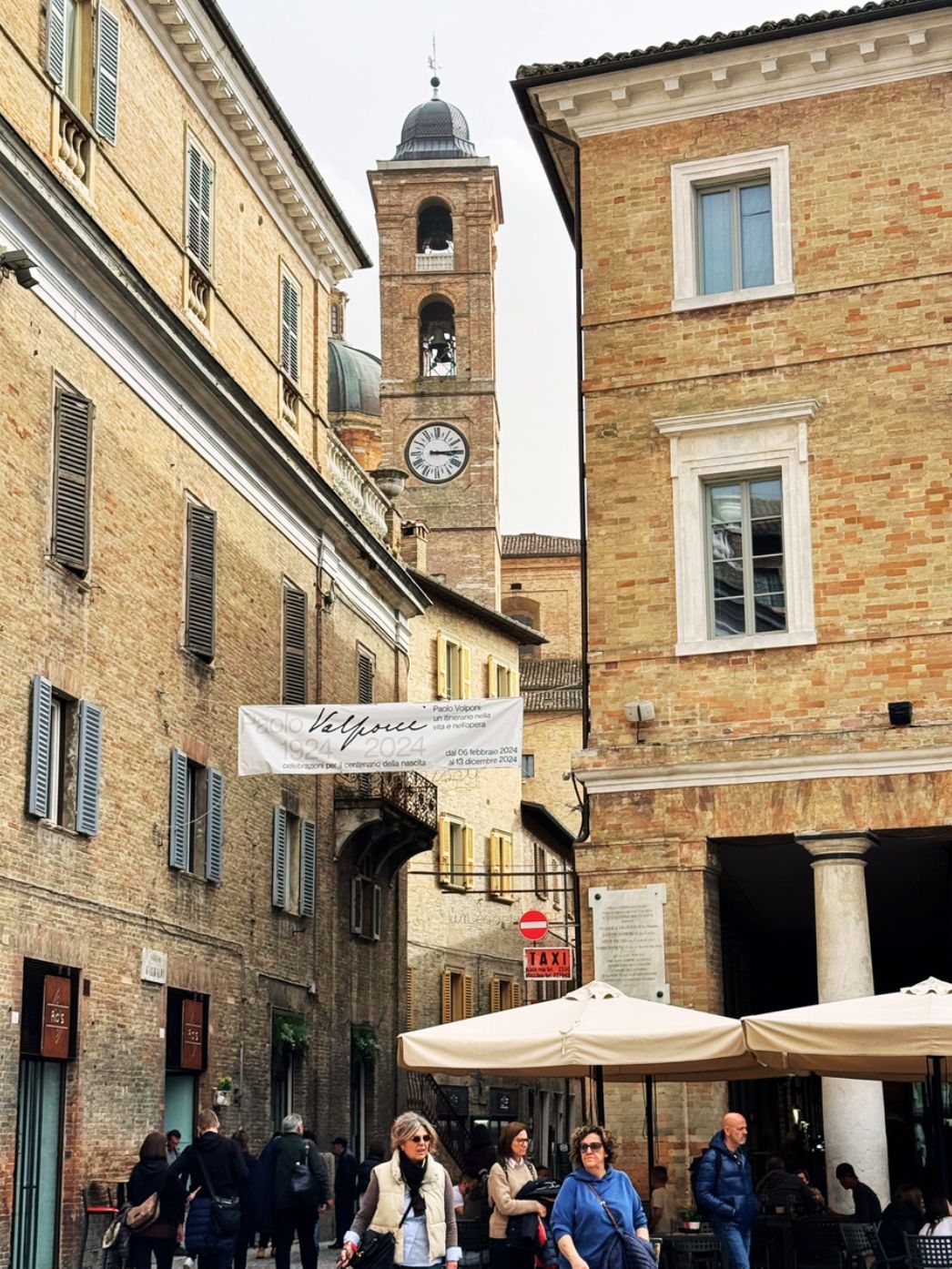
“Climbing this narrow alleyway toward the Palazzo Ducale felt like walking into a living history book.”
common.galleryImageAlt
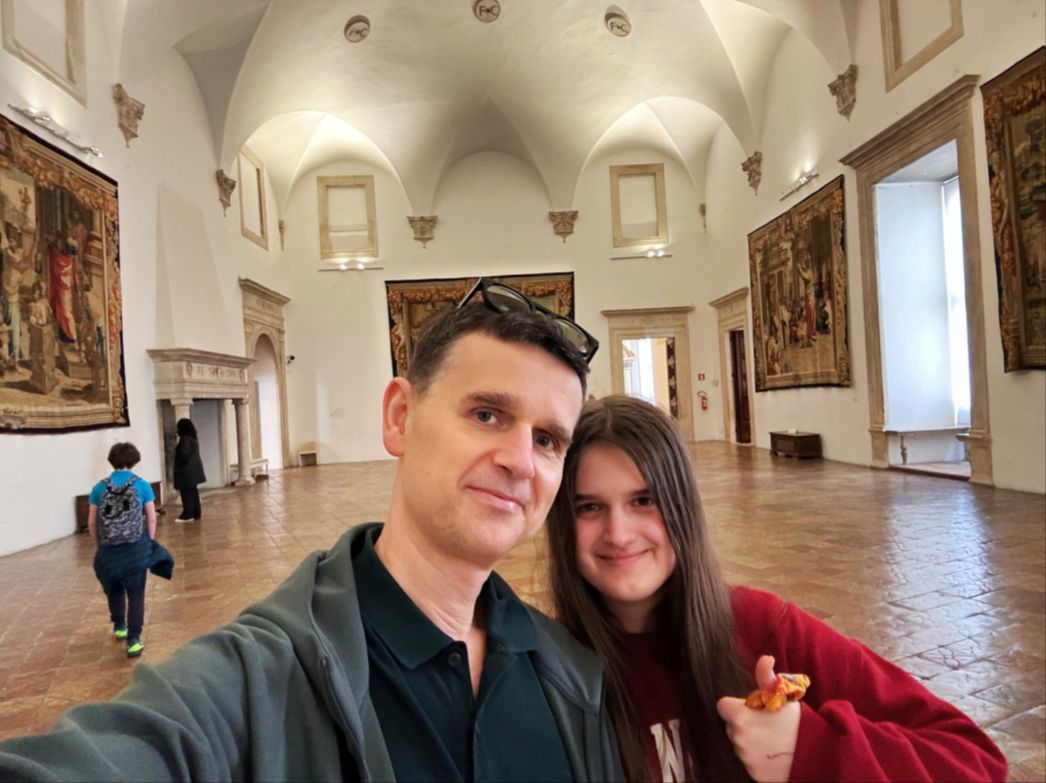
“Standing beneath the vaulted ceilings of Urbino — history whispering from every wall.”
common.galleryImageAlt
“A quiet courtyard inside the palace, perfectly symmetrical—where form and function reflect Castiglione’s balance of grace and reason.”
common.galleryImageAlt
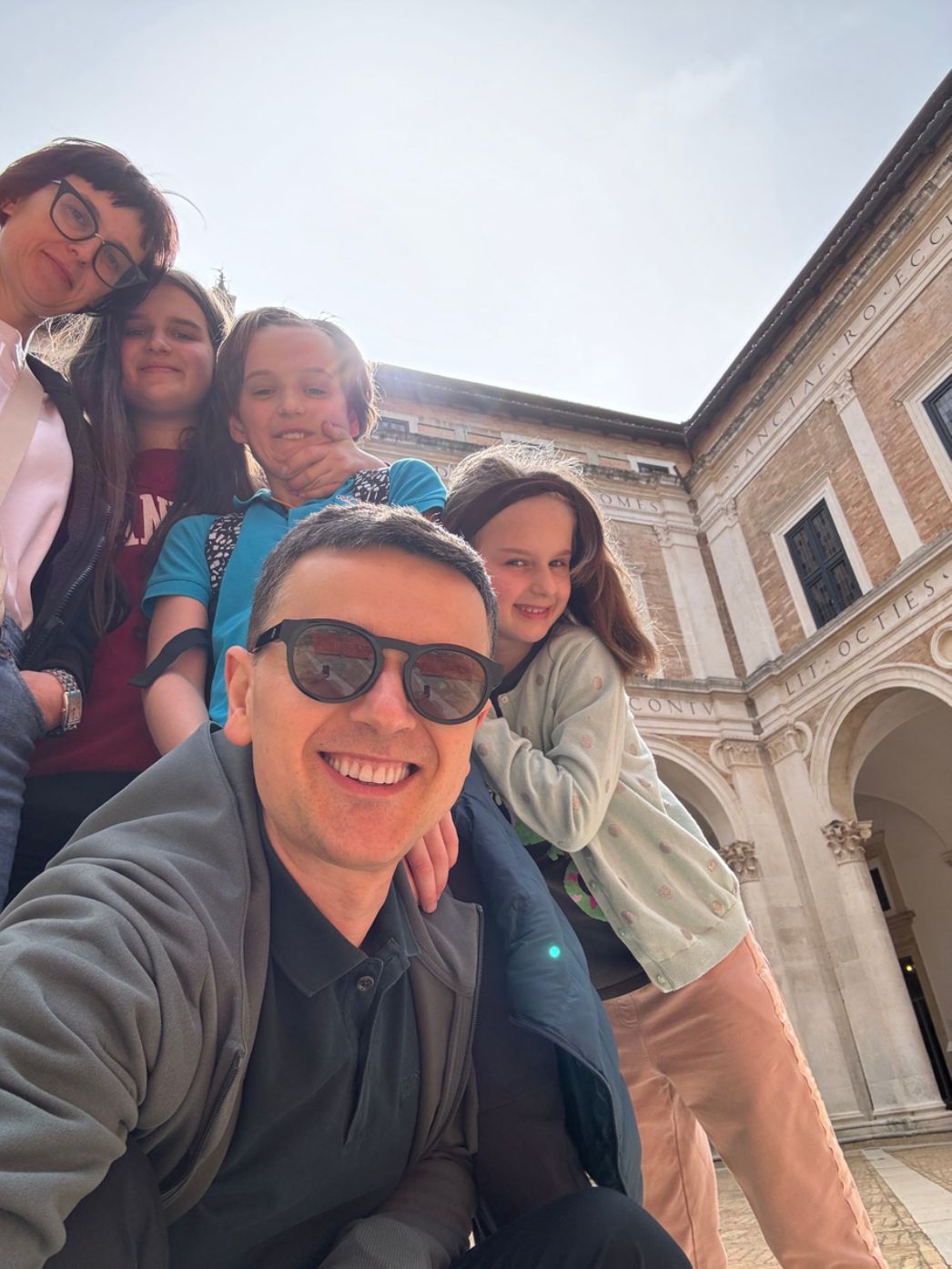
“A family moment in the heart of the Palazzo Ducale —where the spirit of Castiglione’s court lives on in sunlight, conversation, and shared discovery.”
Renaissance Alive

These images, and the act of moving through the same spaces Castiglione once did, made the text come alive. Each photograph is a small testimony to the enduring dignity of this town and the ideals it fostered. Reading Castiglione’s book inspired me to do more than reflect. I wanted to see the setting of the dialogue for myself. 


common.galleryImageAlt
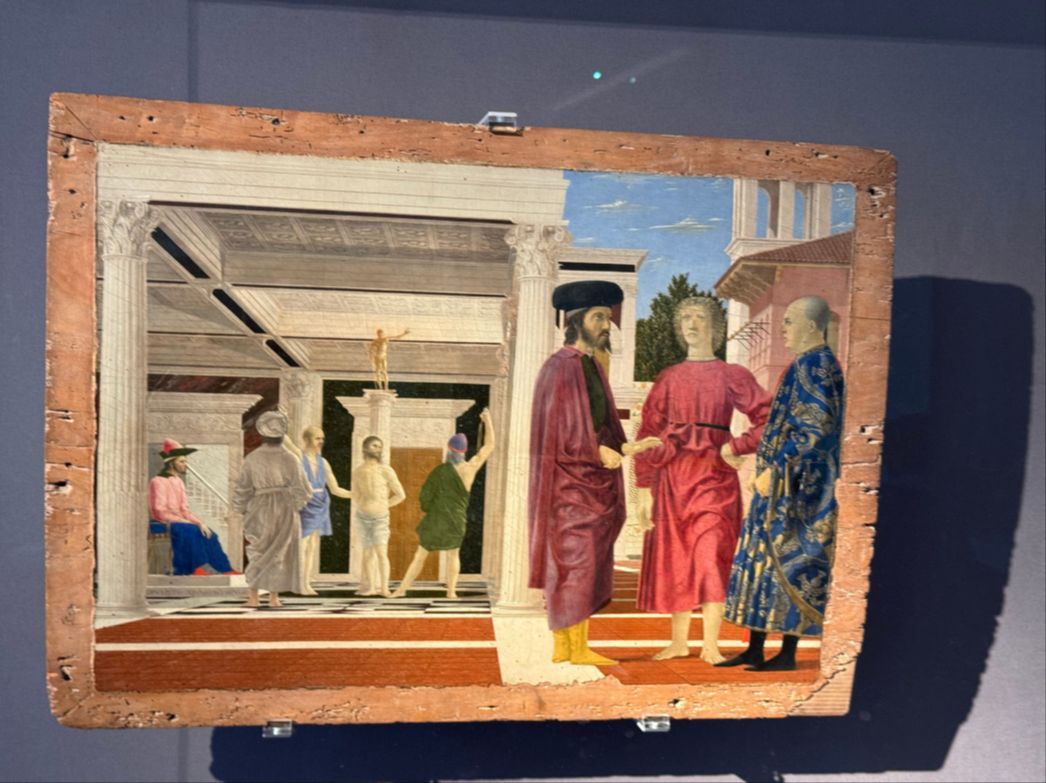
“Piero della Francesca’s Flagellation of Christ"—a striking contrast of sacred suffering and worldly detachment, rendered with perfect perspective.
common.galleryImageAlt
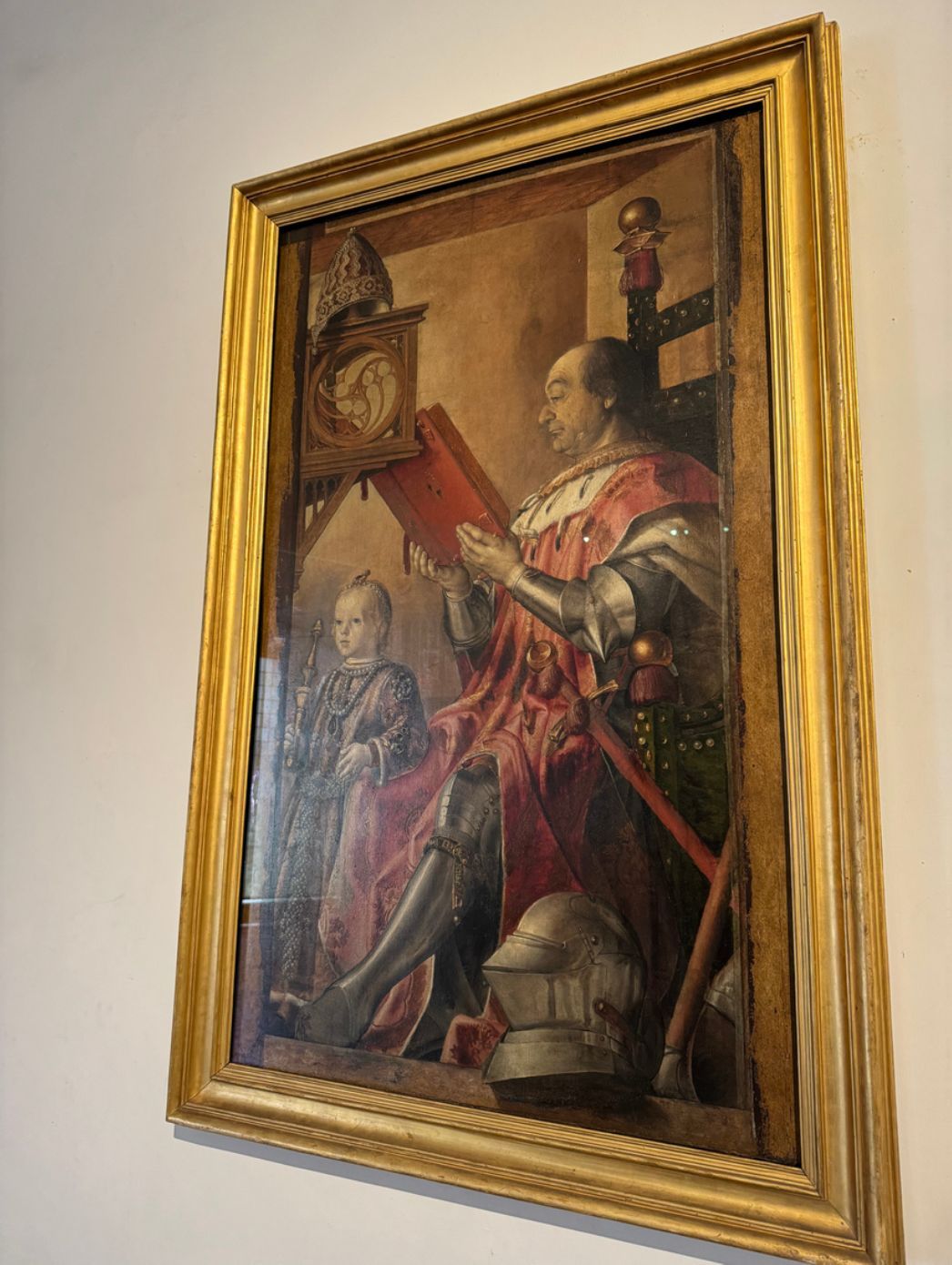
“Federico da Montefeltro with his son Guidobaldo—a portrait of legacy, leadership, and the humanist ideals that shaped Urbino’s golden age.”
common.photoAlt
Urbino—a walled hilltop town in Italy’s Marche region.

Unlike Florence or Rome, Urbino feels untouched. It’s a place of calm symmetry, intellectual depth, and understated beauty. Walking through the Palazzo Ducale, with its twin towers and Federico’s studiolo, I felt immersed in Castiglione’s world. The frescoes, wooden marquetry, and sunlit loggias captured the same balance and elegance that the book so reveres. It wasn’t just a visit—it felt, almost, a return to where I have been in spirit. A confrontation between the imagined world of the book and the stone reality of history felt so positive. And against that backdrop the juxtaposition of the values of the courtier — grace, humility, wisdom with the realities of today’s world —felt more striking than ever.

Coming Soon: A full photo essay and travelogue from Urbino and the Palazzo Ducale, including where to stay, what to see, and how to feel like a Renaissance courtier for a day.

© 2026 Jarek Jurczak