
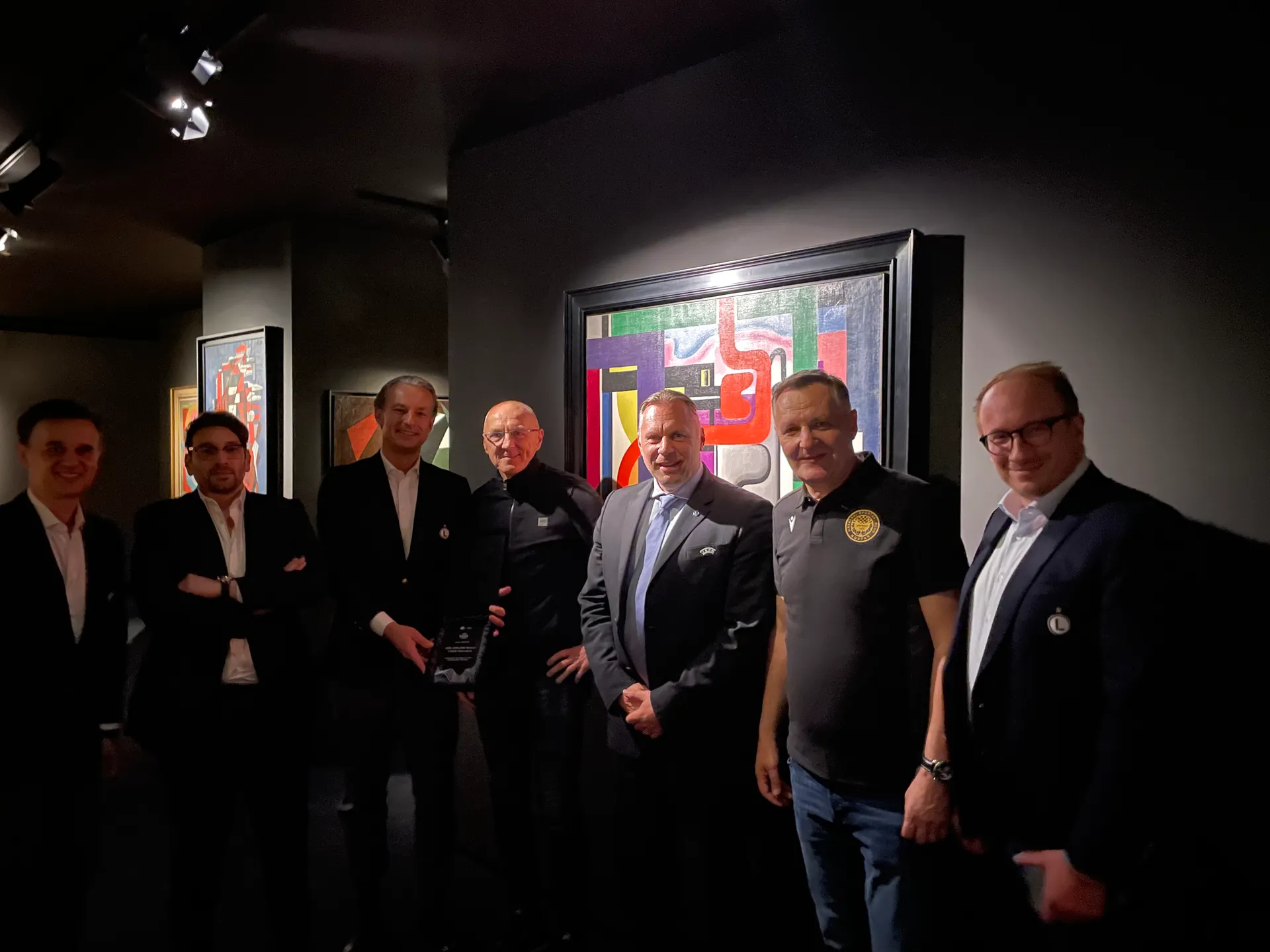
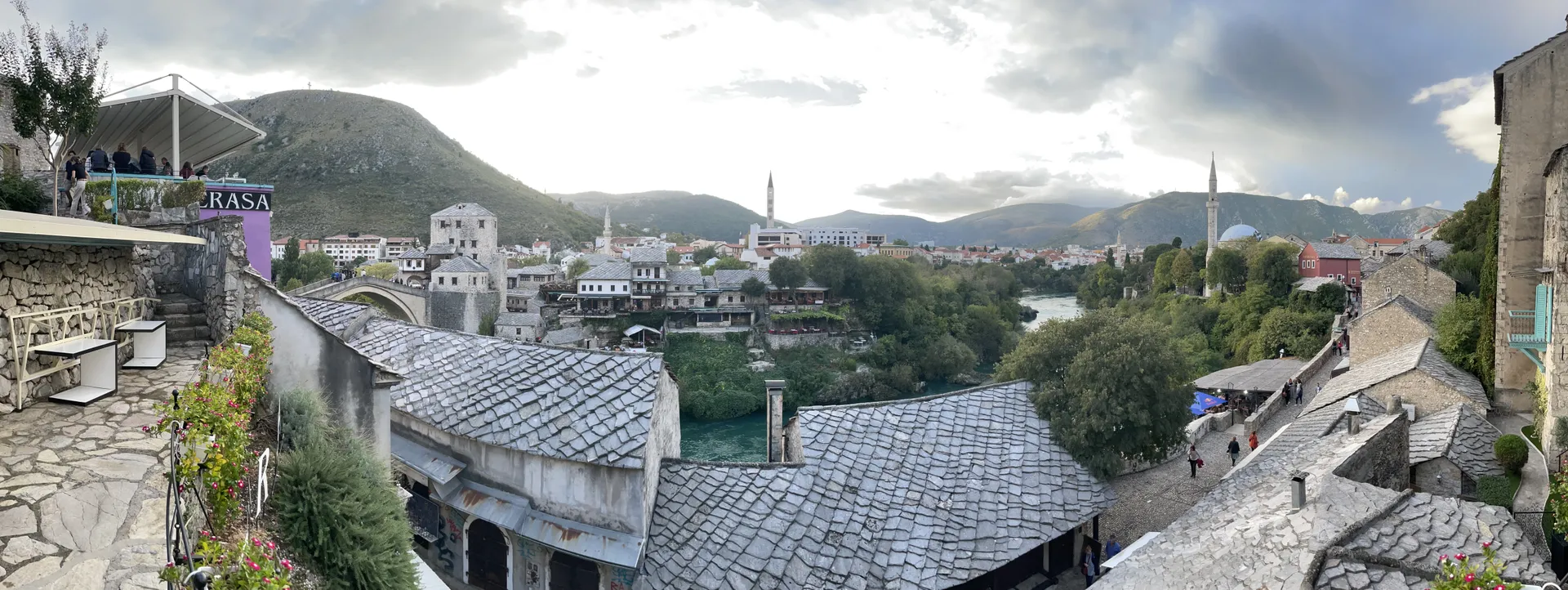
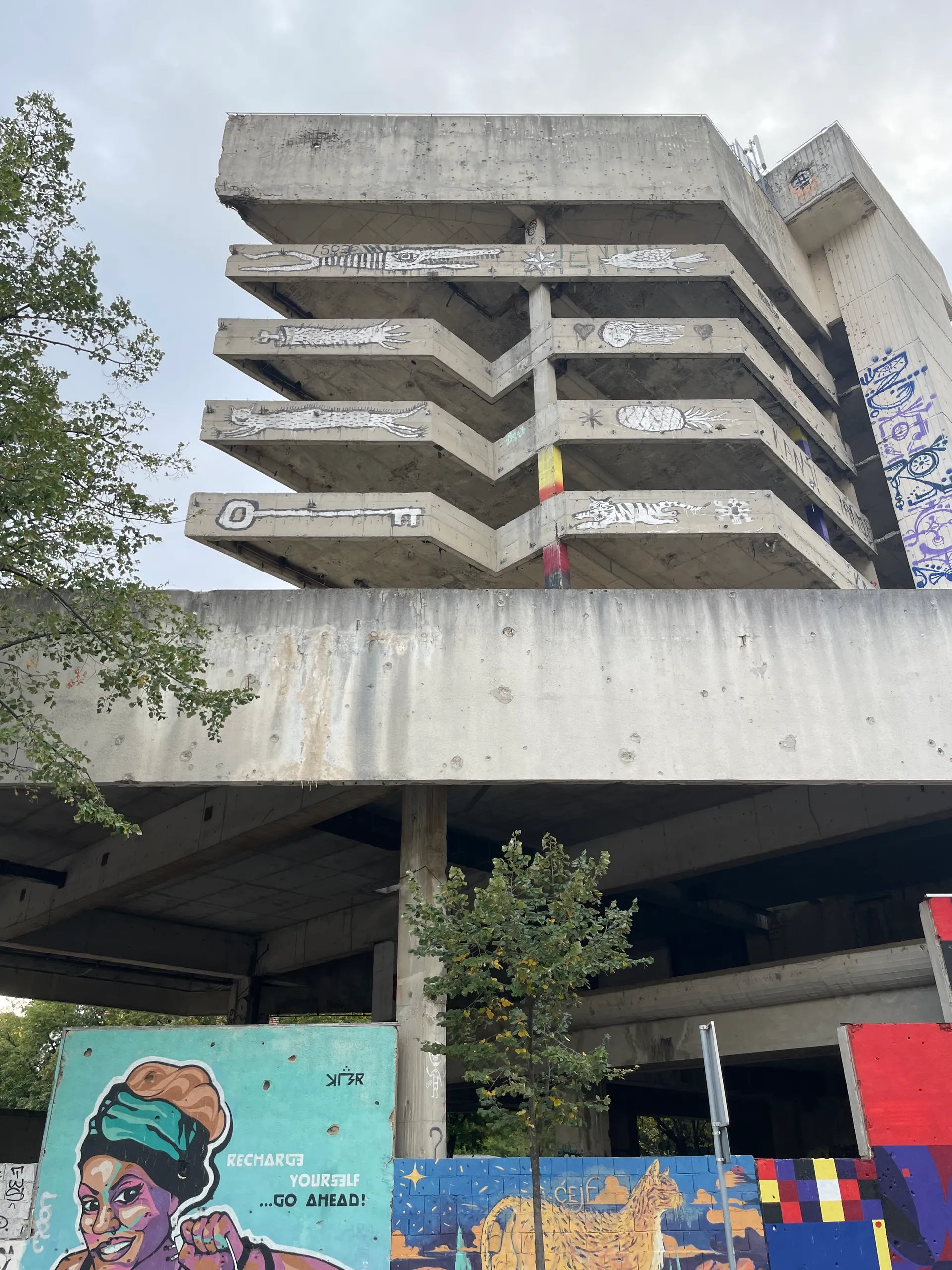
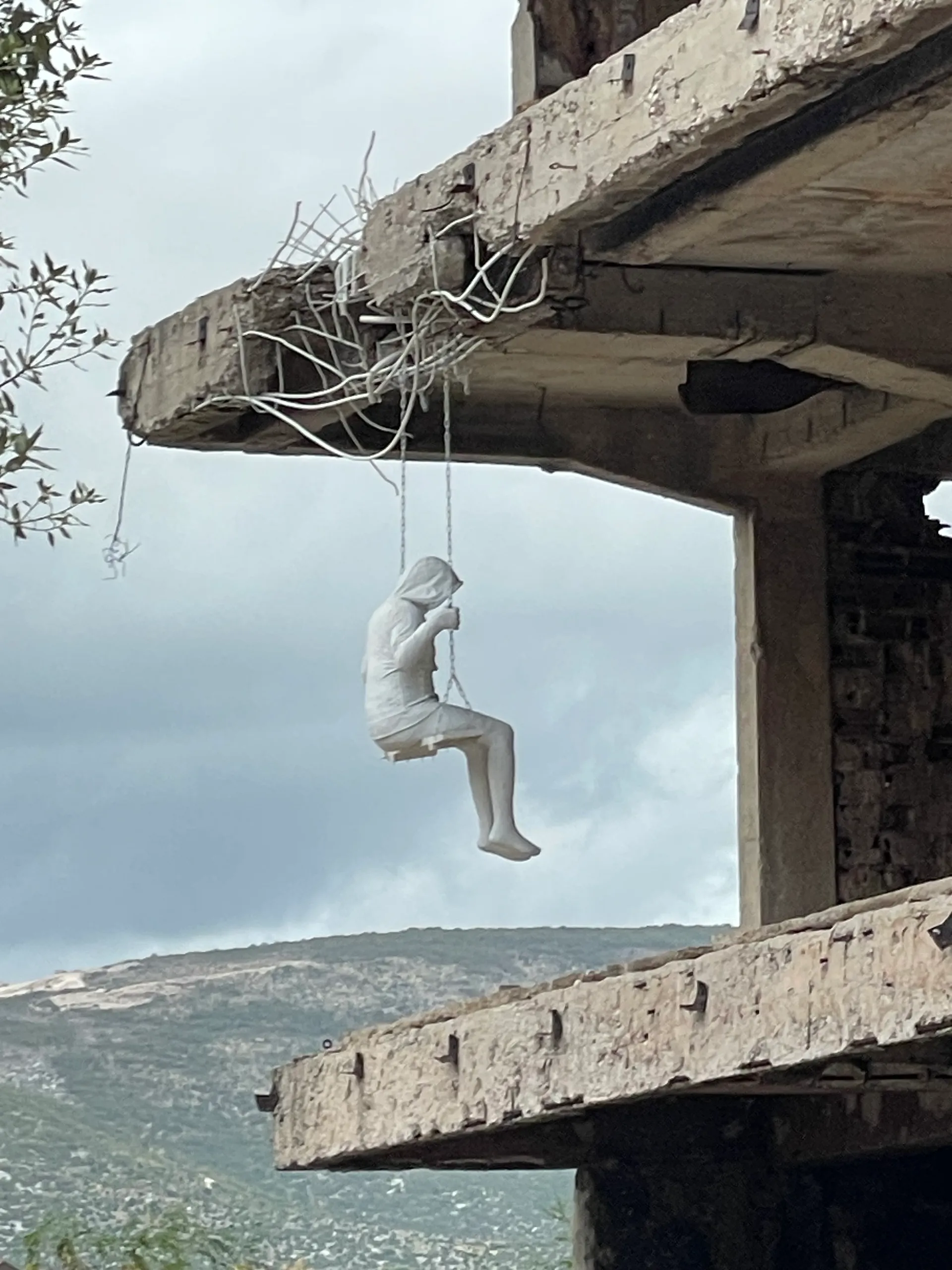
Mostar, a city marked by the scars of its past, is often associated with Ottoman architecture and lingering traces of the conflict in the former Yugoslavia. The Hub of Fine Arts stands out against this backdrop, adding a bold accent to the city’s narrative. Through its vivid colors of modernism, it brings an unexpected breath of freshness into an atmosphere as dense as the cigarette smoke drifting through its cafés. The gallery is located in an area that once suffered greatly during the war in Bosnia and Herzegovina, yet today it shines as a symbol of strength and renewal, openly challenging the entrenched perception of Mostar as a city defined solely by its turbulent history.
Imagine walking through the streets of Mostar, a city steeped in history, and stumbling upon a hidden gem that redefines your understanding of art and culture. That was exactly my experience with The Hub, a place filled with modern art tucked away in the heart this historic Bosnian city. My visit, initially prompted by an invitation to an official UEFA lunch within its walls, turned into an artistic and cultural journey that allowed me to witness, in a truly unique way, Mostar’s vibrant cultural renaissance.
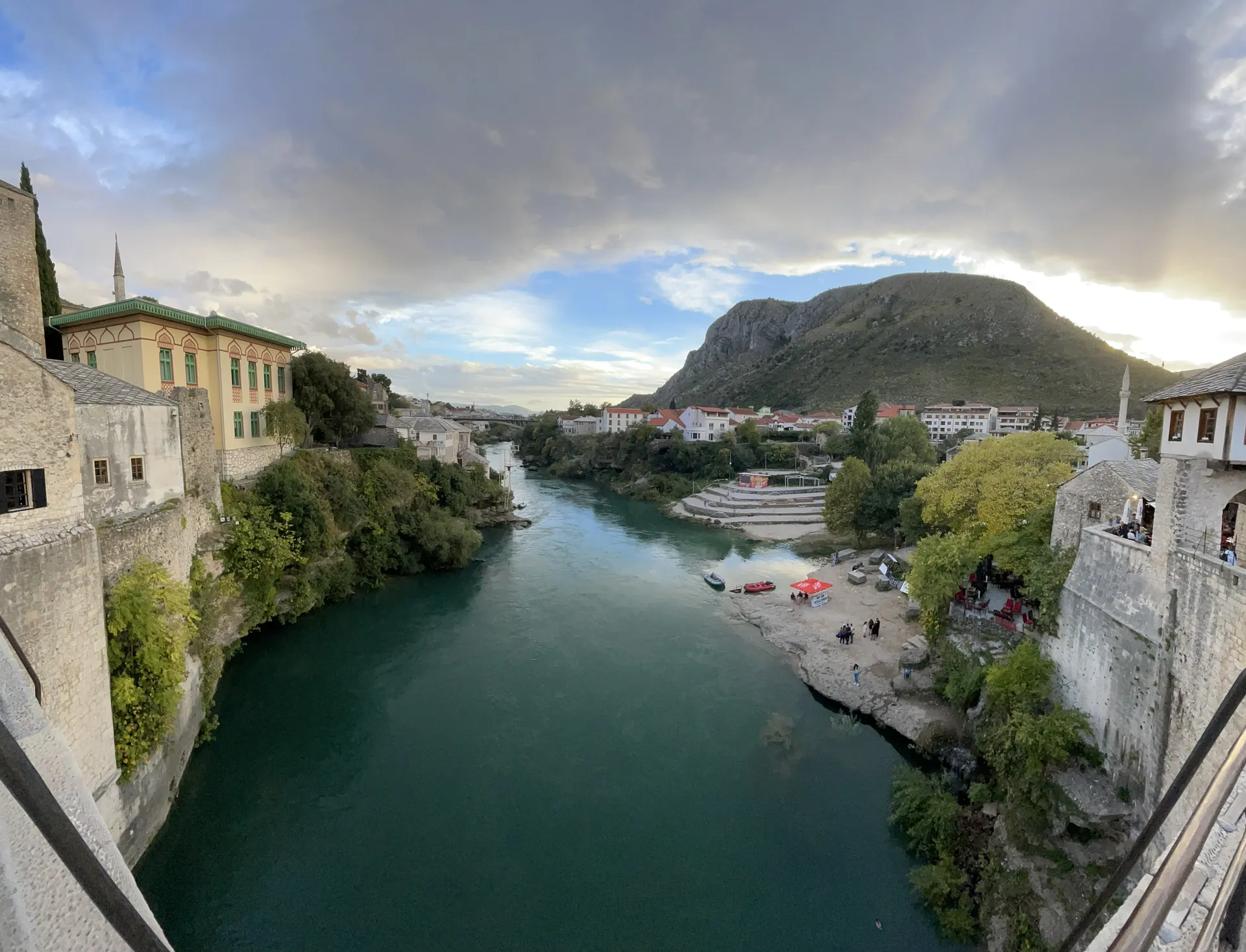
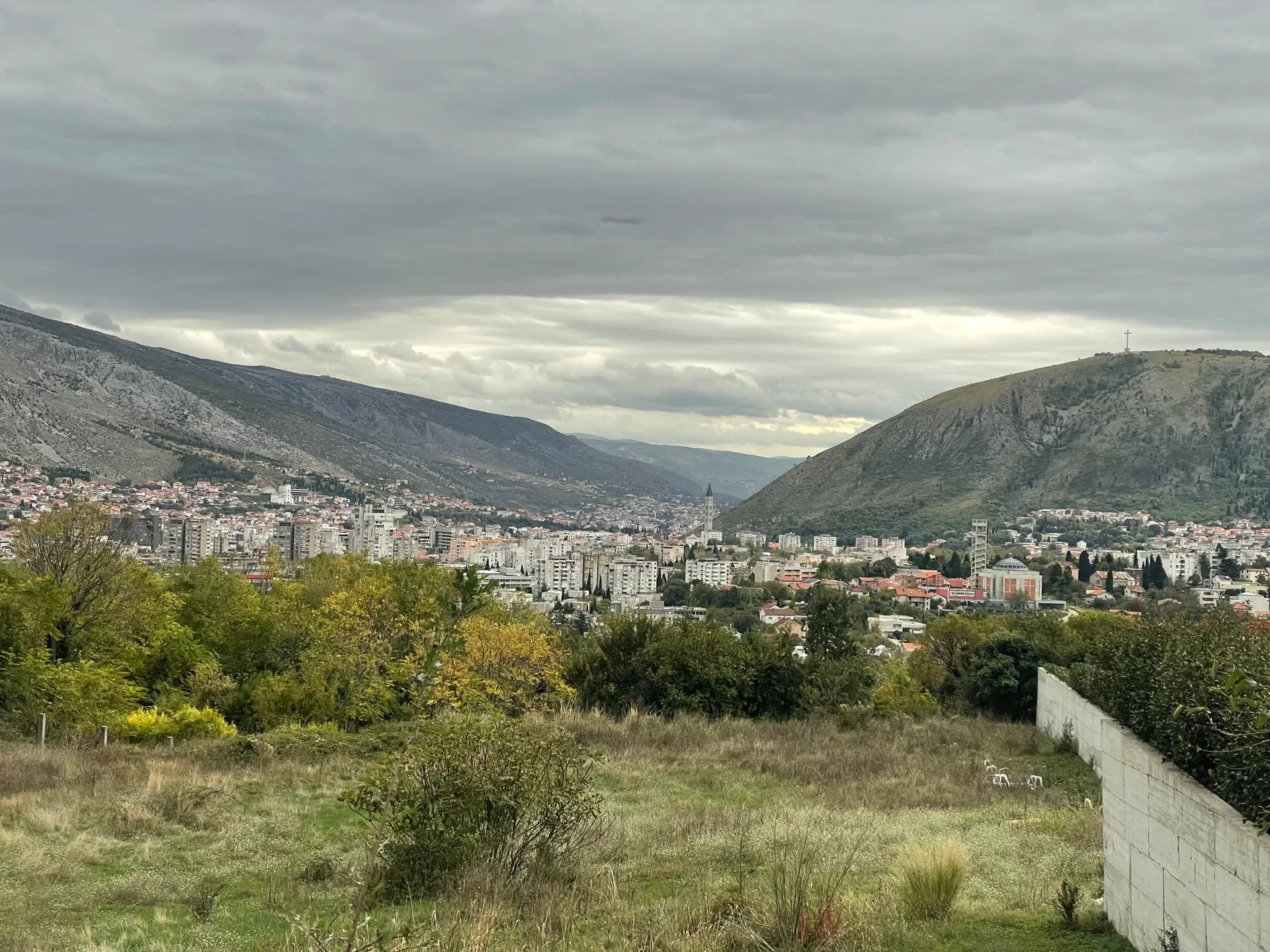
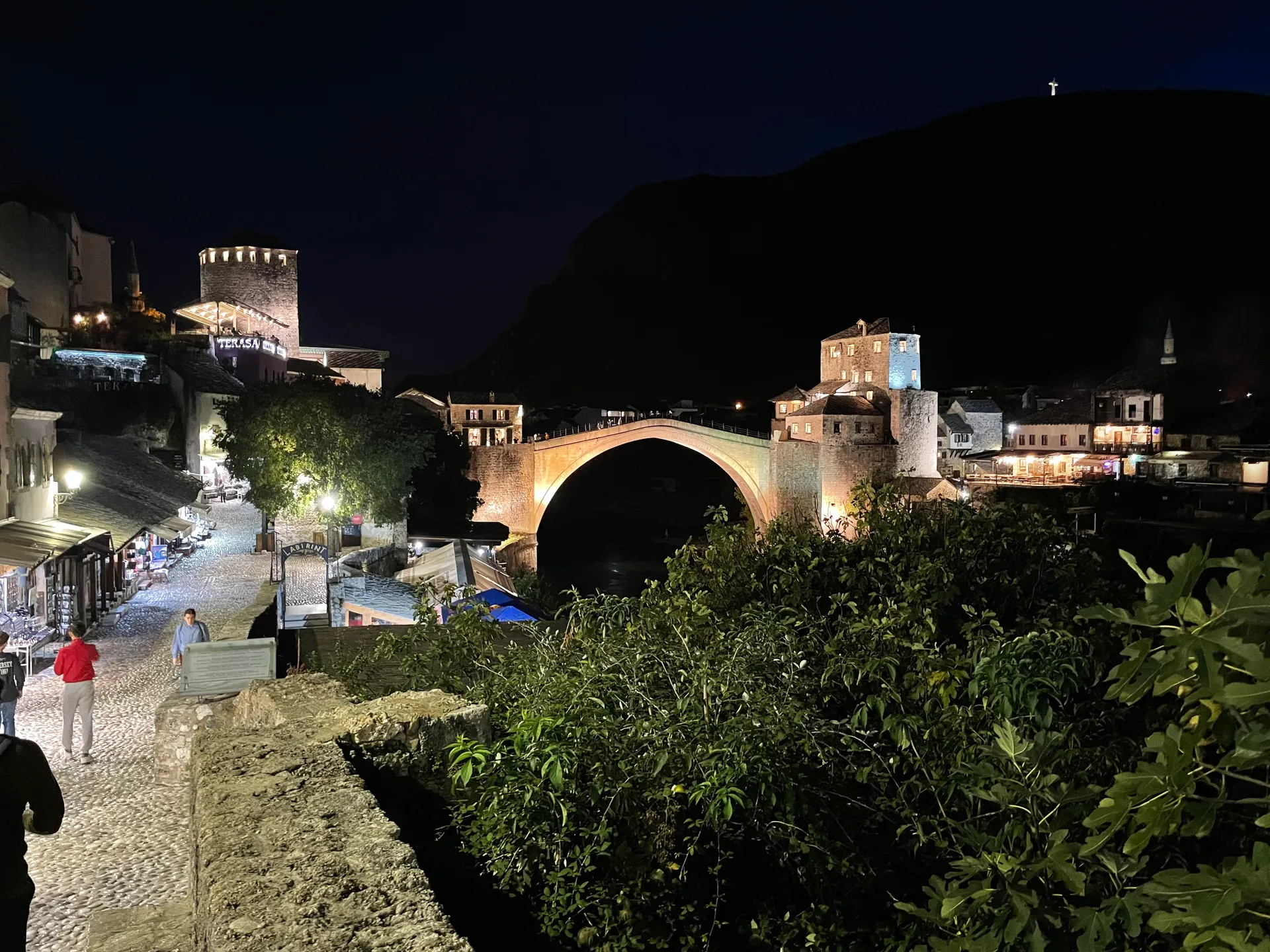
The hosts’ decision to hold the official UEFA lunch at The Hub gave an extraordinary dimension to the event. In this setting, an intriguing fusion took place: the dynamic world of European football, the contemplative reality of modern art, and the complex history of the Balkans converged in one time and place. This offered a unique perspective through which I could reflect on each of these elements. This encounter made me realize the gallery’s significance as a cultural landmark, reaching far beyond the role of a traditional art space. For nearly two hours it became a vibrant forum, where different cultural narratives and social spheres interacted, enriching one another. This unexpected convergence allowed me to appreciate the multidimensionality of art and history, embodying the unifying power of cultural institutions in bringing together two separate worlds.
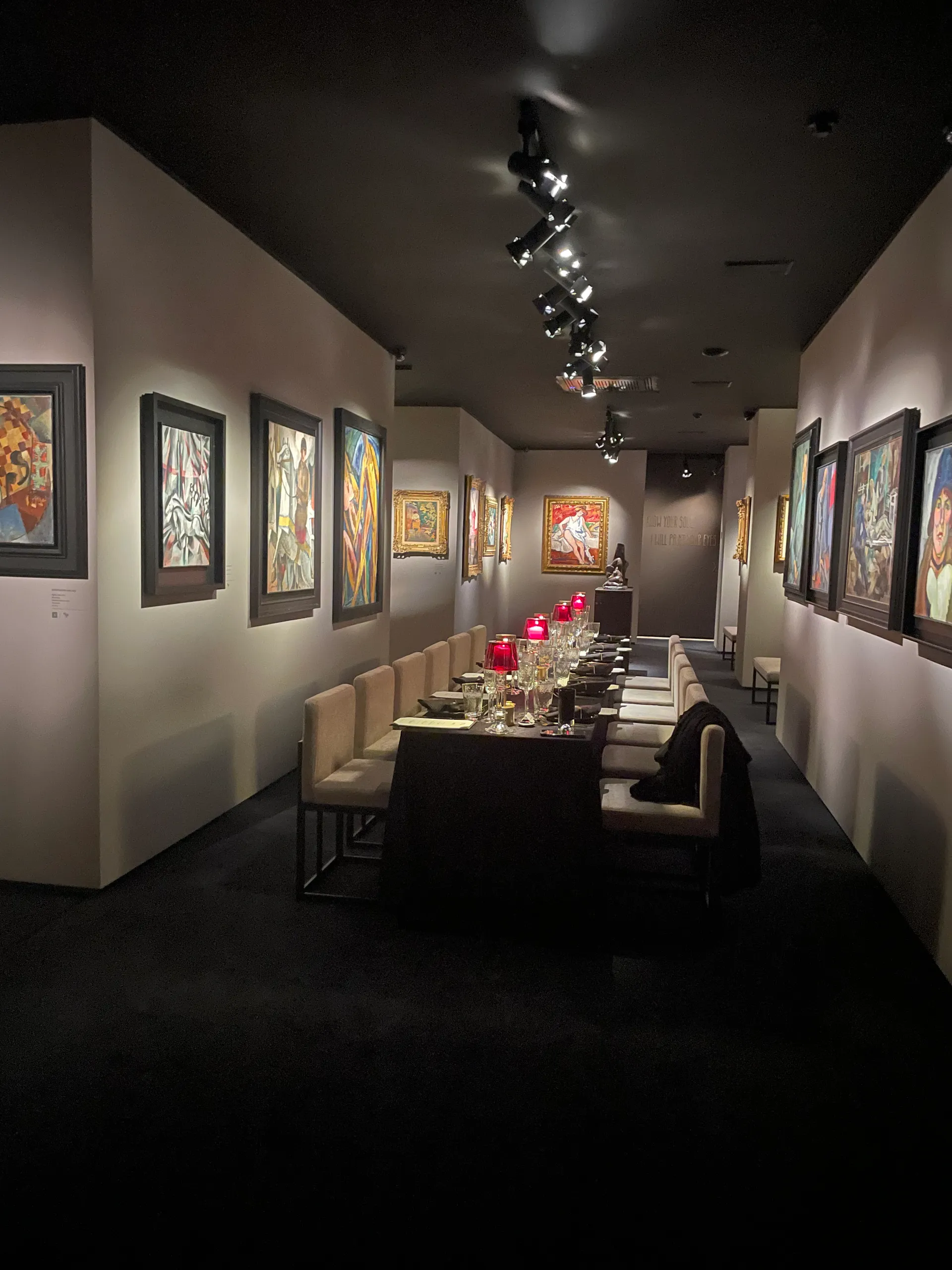
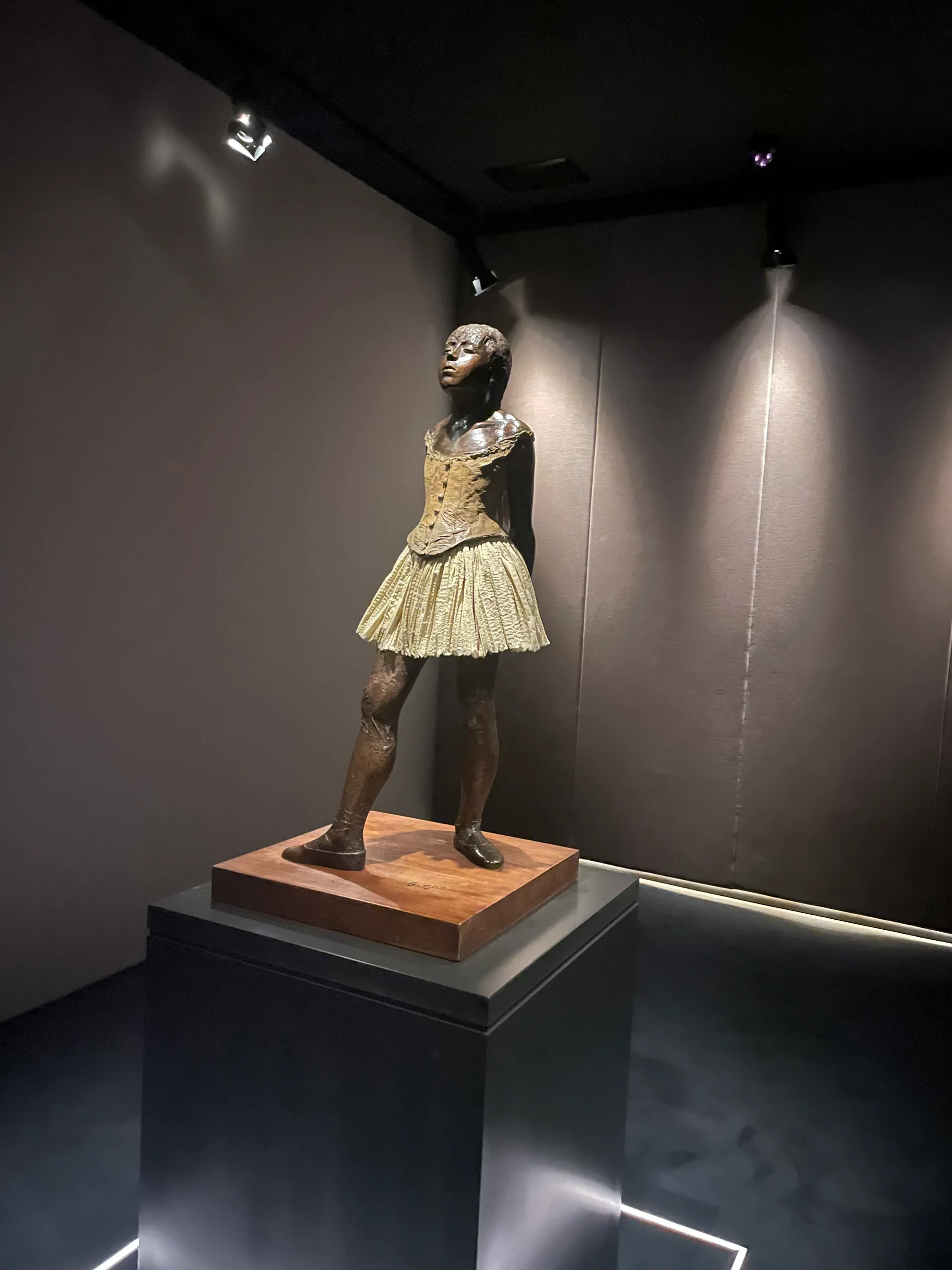
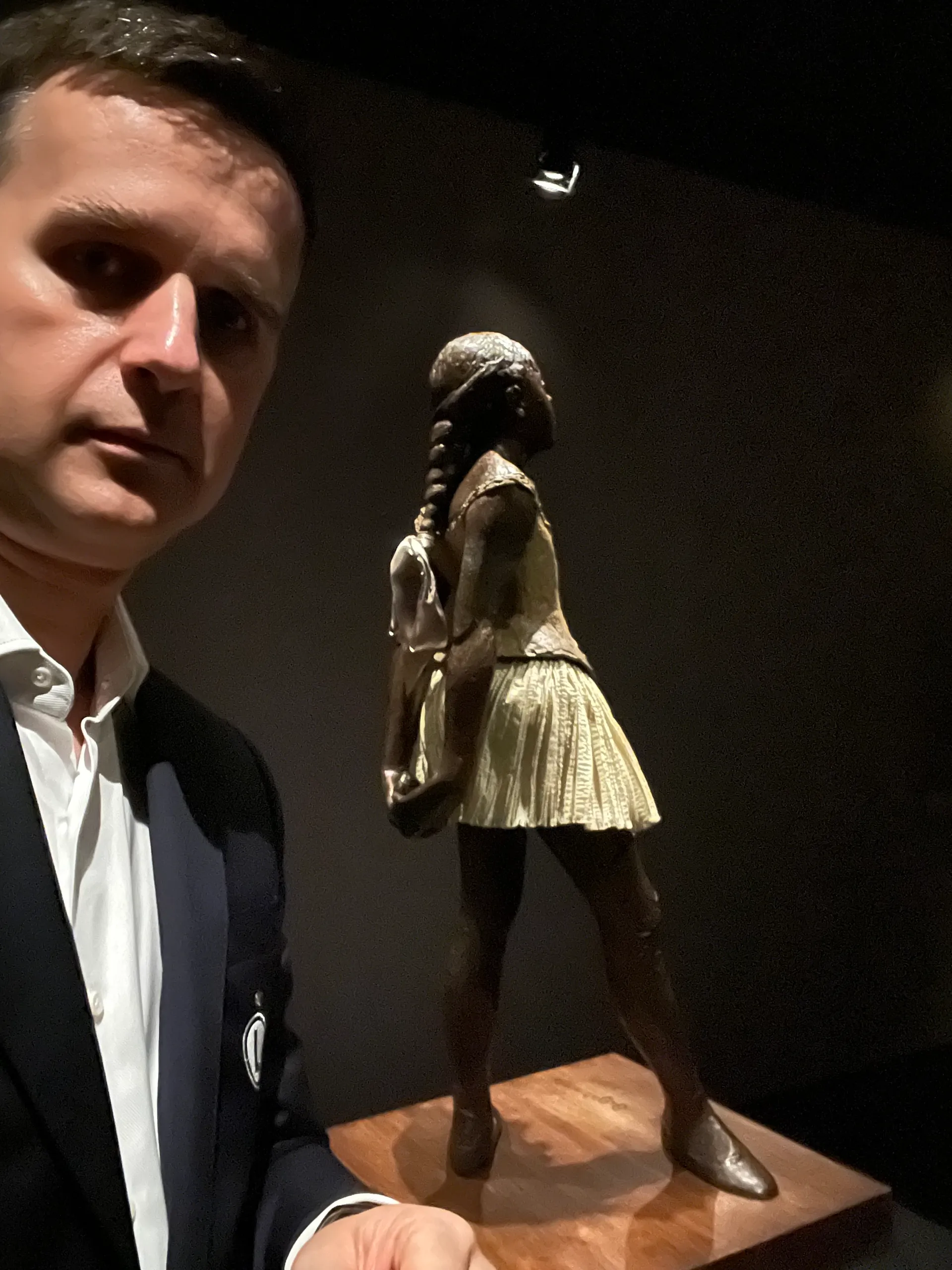
The Hub holds an impressive collection of modern art, spanning works from the late 19th to the 20th century. The legacy of Mansur Tamir Abraham, whose life story is as rich and diverse as the collection itself, can be felt throughout the gallery. From Degas’ "La Petite Danseuse de Quatorze Ans" to the deeply expressive portraits of Modigliani, each piece tells a story of artistic evolution and a dialogue between cultures. The collection is not just an exhibition of artworks, but a narrative of modernist expression, highlighting pivotal moments in the history of art.
Mansur Tamir Abraham, the visionary behind the distinguished collection at The Hub, was a remarkable figure not only in the realm of art but also in cultural and historical terms. Born in 1912 in Aden, Yemen, Abraham grew up in a world where tradition and change were in constant dialogue. His journey to Palestine in the 1920s marked the beginning of a lifelong commitment to preserving and celebrating Jewish heritage—a commitment that profoundly shaped his approach to art collecting.
A self-taught connoisseur with a refined artistic taste, Abraham began forming his collection in the mid-20th century. He was drawn to the aesthetic value of artworks and their ability to narrate the story of a rapidly changing modern world. He sought out works that captured the essence of the human experience, transcending boundaries of time and place. This passion led him to acquire masterpieces by artists such as Degas, Chagall, and Modigliani, whose works were not only examples of modernist expression but also reflections of an era marked by both turbulence and extraordinary creativity.
For Abraham, building the collection was both a personal mission and an artistic endeavor. He believed that art could serve as a bridge between cultures and histories, a belief reflected in the diversity of his collection. He looked for works that resonated with his own experience of displacement and life across cultures, making the collection deeply personal and yet universally meaningful.
Following Abraham's passing in 1999, his family established the M.T. Abraham Foundation to honor his legacy. The foundation was not only a tribute to his life and passion for art but also a way to ensure that his collection would continue to educate and inspire. The decision to house this collection at The Hub in Mostar was motivated by a desire to place these works in a context where they could speak most powerfully—in a city that, like the art on its walls, bears the marks of endurance and revival.
The M.T. Abraham Collection at The Hub is therefore more than a gathering of masterpieces—it is the physical manifestation of one man’s journey through a century of change, a testament to the way art brings people together, carries meaning, and transcends borders.
Amir G. Kabiri's role as President of the M.T. Abraham Foundation extends far beyond the conventional scope of art patronage, positioning him as a key figure in both the cultural and economic life of Mostar. His diverse background, spanning Israeli sports, local industry, and art curation, embodies a holistic vision for the development of this historically complex region.
Kabiri’s journey through the world of sports, particularly during his tenure as owner of Hapoel Tel Aviv, was marked by navigating financial challenges and the effort to sustain team spirit in difficult times. He brought that experience to Mostar, where he is now closely involved with the football club HŠK Zrinjski Mostar. Here, his passion for sports intersects with the local context, defined by complex ethnic divisions. Kabiri's commitment goes far beyond the traditional role of sports patron—he seeks to use football as a means of building community.
Beyond the football field, Kabiri's role as CEO of Aluminij Industries in Mostar highlights his dedication to the region’s economic development. His work in the aluminum industry goes beyond business growth, reflecting a deeper commitment to fostering economic stability and creating opportunities for local communities. This role is complemented by his cultural initiatives, highlighting his belief that a strong economy is the foundation for lasting cultural and social development.
At The Hub, Kabiri brings together his extensive experience in art, sport and industry, each playing its role in the broader narrative of Mostar's development. Under his guidance, the gallery becomes more than a space for artistic expression—it stands as a symbol of the multidimensional approach needed to address the city’s unique challenges and social complexities. His role is not merely about managing different areas, but about integrating them into a cohesive whole. In doing so, he helps create a new standard in a place defined by such a rich and complex history.
The Hub, located in the heart of Mostar, accomplishes something remarkable—though at first glance it might seem almost counterintuitive. It introduces a narrative of contemporary art, woven from the collection of a Jewish collector, into a city historically divided along Catholic-Muslim ethnic and religious lines. At first, this bold move may appear out of place in a landscape marked by past conflicts and deep-rooted identities, including religious ones. Yet it is precisely this courageous confrontation that gives The Hub its power to transform.
The gallery’s presence extends far beyond the mere display of art—it actively contributes to shaping Mostar's cultural identity. The Hub has become a guiding light, pointing the way toward the city's artistic and cultural renaissance. It draws a diverse audience, challenging entrenched narratives and redefining Mostar's image as a center of contemporary art and cultural exchange. In this way, The Hub not only confronts the city’s historical divisions but also transforms them—perhaps into a frame, on which Mostar paints its story anew, this time in colors of unity.
The Hub Gallery is a meeting point where complex histories, art, and diverse cultural narratives find common ground. My experience that began in the unexpected setting of an official UEFA lunch, evolved into a profound journey through the evolving artistic and cultural soul of the city.
By housing a collection of modern art gathered by Jewish ancestors in Mostar, The Hub does not merely coexist with the city's complex past; it actively confronts it, offering a bold and admirable new perspective. This daring initiative demonstrates the power of art to transcend traditional boundaries, help overcome divisions and inspire change.
The Hub remains a testament to Mostar's resilience and its continuing journey of renewal. In embracing what might initially appear unexpected, The Hub and Mostar together emerge as both a sign of hope and a living canvas for a future rich in possibilities.


